


Among Us: A Social Deduction Game Built Around Trust, Strategy, and Deception
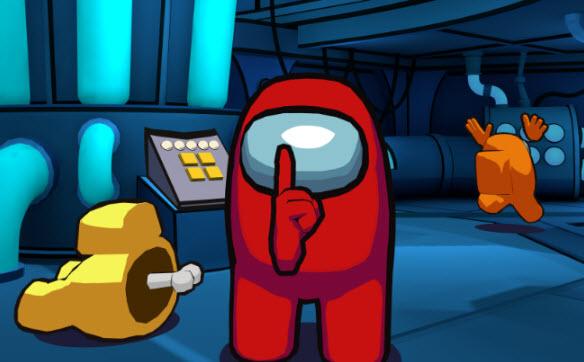
Gaming has changed considerably as multiplayer experiences have become more focused on interaction, communication, and player-driven decisions. Some games rely heavily on fast reflexes or detailed mechanics, while others create excitement through conversation and uncertainty. Among Us belongs to the latter category, turning a simple group of tasks into a tense social deduction experience where players must decide who they can trust.
At first glance, Among Us appears straightforward. A group of players joins a match as Crewmates or Impostors, with each role having a different objective. Crewmates need to complete tasks and identify the Impostors, while Impostors attempt to eliminate Crewmates and disrupt their progress without exposing themselves.
Simple Gameplay With Plenty of Depth
One reason Among Us remains accessible is its relatively simple gameplay structure. Players do not need to master complicated controls before joining a match. Movement, task interaction, emergency meetings, voting, and communication form the foundation of most games.
The simplicity does not mean that every match feels predictable. Player behavior constantly changes the situation. Someone who remains quiet may attract suspicion, while an overly confident accusation can make another player look guilty. Small decisions can therefore have a significant effect on the outcome.
Communication Shapes Every Match
Communication is one of the most important elements of Among Us. During discussions, players compare locations, timelines, task progress, and observations to determine what may have happened.
A useful accusation usually needs more than a simple statement that someone “looks suspicious.” Players can examine who was near a reported body, who entered or left an area, and whether different stories actually fit together. This creates a natural deduction process that rewards careful attention.
For Impostors, communication works differently. They need to participate in discussions without revealing information that contradicts their actions. A convincing explanation can protect an Impostor, while one inconsistent detail may cause the entire lobby to turn against them.
Tasks Create More Than Objectives
Tasks give Crewmates something productive to do while also creating opportunities for observation. Completing objectives can move the team closer to victory, but players also need to remain aware of what is happening around them.
Task locations can become important when reconstructing events after an elimination. Knowing where players were at a particular moment may help establish a timeline and eliminate certain possibilities. This makes ordinary movement around the map more meaningful than it initially appears.
Maps Encourage Different Strategies
Another important part of Among Us is its collection of maps, each offering different layouts and movement patterns. Rooms, corridors, task locations, and special systems influence how players approach a match.
A familiar map can help experienced players recognize suspicious movement more quickly. At the same time, map knowledge can also help Impostors choose better opportunities and understand how quickly other players can reach important areas.
Why Deception Works So Well
The strongest moments in Among Us often happen when players have incomplete information. Nobody normally has the entire picture, so decisions must be made using evidence, timing, and intuition.
This uncertainty creates memorable situations. A player may appear completely trustworthy for several rounds before making one suspicious move. Another may be accused despite being innocent because their route happened to overlap with an important event.
Rather than depending entirely on mechanical skill, the game rewards players who can observe patterns and understand how others behave under pressure.
Strategy Changes With the Lobby
The number of players and role settings can significantly affect the experience. A smaller lobby may make individual actions easier to track, while a larger group creates more uncertainty and competing explanations.
Players can also adjust settings to create different pacing and difficulty. Changes to task numbers, discussion rules, player speed, or Impostor settings can produce a noticeably different style of match.
This flexibility gives communities room to develop their own preferred rules instead of forcing every group to play exactly the same way.
Learning Through Observation
Although Among Us is designed primarily as entertainment, its gameplay naturally encourages several useful habits. Players learn to remember details, compare conflicting information, communicate clearly, and reconsider conclusions when new evidence appears.
Good deduction is rarely about making the first guess. It is usually about collecting enough information to determine which explanation makes the most sense. That makes each meeting a small exercise in reasoning and probability.
Playing Responsibly Online
Because Among Us is a multiplayer game, the quality of the experience also depends on how players interact with one another. Arguments and accusations are part of the gameplay, but personal attacks do not improve the experience.
Keeping discussions focused on what happened during the match helps maintain a healthier environment. Players should also use official or trusted platforms, protect their accounts, and avoid sharing unnecessary personal information with strangers.
A Game That Keeps Conversations Moving
Few multiplayer games can turn a basic set of tasks into such intense conversations. Among Us succeeds because every match creates a different story based on the people involved, their decisions, and the information available at the time.
Whether someone enjoys solving mysteries as a Crewmate or creating carefully planned deception as an Impostor, Among Us offers a simple foundation with considerable room for strategy. Its emphasis on communication, deduction, and unpredictable player behavior continues to make it an engaging choice for multiplayer gaming communities.

 English
 Arabic
 French
 Spanish
 Portuguese
 Deutsch
 Turkish
 Dutch
Dutch
 Italiano
 Russian
 Romaian
 Portuguese (Brazil)
