


Why Does Ergenergy Long-Duration Energy Storage System Matter During Supply Changes
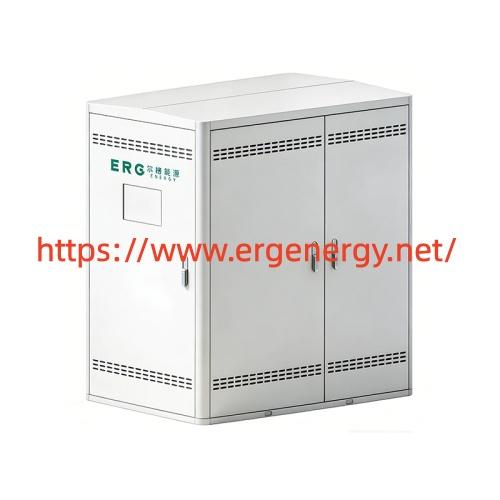
Long-Duration Energy Storage System technology gives renewable power projects another way to respond when generation does not match electricity demand. Solar output changes throughout the day, while wind production can vary with weather conditions. When generation is strong but demand is limited, available power may exceed immediate consumption. At other times, renewable output can fall while demand continues to rise. Storage can help shift available electricity between these periods, giving project operators more flexibility in how generated power is used. This role is becoming increasingly relevant as renewable generation expands and power systems require additional flexibility.
A solar project provides a simple example. During the middle of the day, photovoltaic generation may produce substantial output while local demand remains moderate. Instead of using all available electricity immediately, a storage installation can receive part of that production and hold it for a later period. As sunlight decreases toward evening, stored electricity can then be dispatched according to the operating plan. This approach can help connect daytime generation with evening demand and reduce the mismatch between production schedules and consumption patterns.
Wind generation presents a different operating profile. Turbines can produce strong output during periods when demand is relatively low, while calmer conditions may reduce generation later. Storage can provide an intermediate point between production and consumption. When electricity is available, the system can charge according to project requirements. When renewable output declines, stored power can be released when needed. The exact operating strategy depends on project size, grid conditions, generation forecasts, electricity demand, and commercial arrangements.
Duration is an important consideration when selecting equipment for these applications. A project designed to manage short fluctuations may have different requirements from one intended to shift renewable generation across a longer period. The United States Department of Energy defines long duration storage as systems capable of delivering electricity for 10 hours or more, while its recent planning work also examines durations ranging from 10 hours into multi day applications.
For buyers, capacity should not be considered separately from duration. A project may require a certain power output while also needing sufficient stored energy to maintain that output for a defined period. Control architecture is another practical consideration. Monitoring, energy management, protection functions, charging strategy, discharge scheduling, and grid connection requirements all influence how the installation operates in real conditions.
Integration with renewable generation also deserves attention during project design. Solar arrays, wind turbines, inverters, transformers, grid connections, and storage equipment need to work within a coordinated electrical structure. Forecasting can support this process by helping operators anticipate changes in renewable production and plan charging or discharge activities accordingly. The Department of Energy notes that coordination between storage, transmission expansion, grid technologies, and renewable forecasting can improve operational flexibility.
Another consideration is the local grid environment. A renewable project connected to a constrained network may have different requirements from a project located where transmission capacity is readily available. Congestion can affect how electricity moves from generation assets to consumers. IEA analysis highlights grid connection queues and congestion as growing challenges for renewable generation, storage, and new electricity demand.
This is where a manufacturer can provide value beyond individual equipment specifications. Ergenergy can work around project requirements such as power rating, discharge duration, operating environment, control strategy, and system integration. Instead of treating every application as identical, engineers can evaluate the renewable resource, expected load profile, connection conditions, and operating objectives before defining a suitable configuration.
For commercial and industrial users, this approach can also support more structured energy management. A facility may have periods of high consumption that do not coincide with renewable generation. Storage can provide a method for moving available electricity toward those periods, subject to system design and operating conditions. For utility scale projects, the focus may instead include renewable shifting, grid support, capacity planning, or managing periods of high generation and lower demand. These applications are increasingly relevant as power systems accommodate greater amounts of variable renewable generation.
Choosing the right solution therefore starts with understanding the actual operating profile. Buyers should review expected renewable output, load changes, required discharge duration, connection requirements, environmental conditions, monitoring functions, maintenance arrangements, and future expansion plans. A clear technical assessment can help prevent a mismatch between equipment specifications and project needs.
As a manufacturer focused on energy storage applications, Ergenergy provides solutions designed around practical project requirements and renewable power integration. For businesses evaluating storage for solar, wind, commercial facilities, or grid connected applications, product information and company details are available at https://www.ergenergy.net/ where project requirements can be considered alongside suitable system configurations.

 English
 Arabic
 French
 Spanish
 Portuguese
 Deutsch
 Turkish
 Dutch
Dutch
 Italiano
 Russian
 Romaian
 Greek
Greek
