


Fire Hose Connector Links Hoses And Equipment
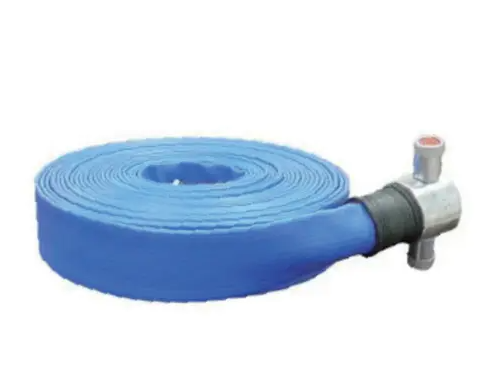
A fire hose can carry water across a considerable distance, but it needs a reliable connection at both ends before it can do its job. That is where a Fire Hose Connector enters the picture. Small compared with the hose itself, the connector creates the mechanical link between hoses, valves, hydrants, pumps, nozzles, or other firefighting equipment.
The basic idea sounds simple: two components need to join securely. In practice, the connector has to match the hose diameter, connection type, pressure requirements, and equipment configuration. A mismatch can create installation problems or prevent water from flowing as intended.
Materials give each Fire Hose Connector a different character. Aluminum alloys are commonly used for applications that call for a relatively lightweight connection, while brass can provide a different combination of strength and corrosion resistance. Stainless steel may also be selected for particular operating conditions. Material choice depends on the intended system rather than appearance alone.
The connection mechanism varies too. Threaded connectors use matching male and female threads to create a mechanical joint. Quick-connect couplings use a different approach, allowing compatible components to be connected and separated more rapidly. Storz-style couplings, for example, use interlocking lugs rather than conventional screw threads.
A sealing element can be just as important as the connector body. Gaskets and sealing rings sit between mating surfaces and help reduce water leakage. Their material and dimensions need to correspond to the connector design and operating conditions.
Size is another practical consideration. Fire hoses are available in different diameters, so a Fire Hose Connector needs to correspond to the selected hose. Connectors can also be designed as adapters when equipment with different connection types needs to work within the same water-delivery system.
Pressure ratings deserve attention as well. When water moves through a hose under pressure, the connector becomes part of that pressurized path. Its body, threads, sealing surfaces, and locking mechanism therefore need to suit the working conditions of the complete system.
A Fire Hose Connector may be easy to overlook, but it forms one of the critical links in a water-delivery path. The hose carries the water, the nozzle directs it, and the connector makes sure these components can actually work together. In a firefighting system, a small fitting can have a very specific and important job.

 English
 Arabic
 French
 Spanish
 Portuguese
 Turkish
 Dutch
Dutch
 Italiano
 Russian
 Romaian
 Portuguese (Brazil)
 Greek
Greek
