


Sudoku Puzzle Challenges That Sharpen Logic and Focus Daily
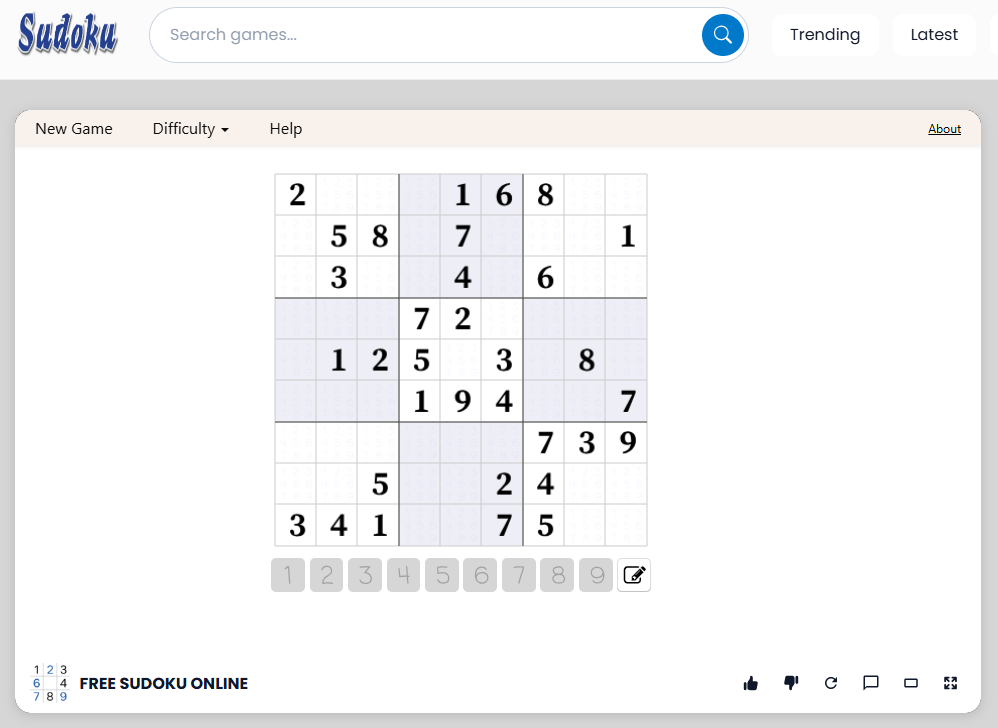
What Makes Sudoku One of the Most Popular Puzzle Games
Sudoku is a number-based logic puzzle that has gained worldwide popularity through newspapers, magazines, mobile applications, and online gaming platforms. Unlike many traditional puzzle games, Sudoku does not require mathematical calculations. Success depends on logic, observation, and pattern recognition.
A standard Sudoku grid contains 81 cells arranged in a 9x9 format. The grid is divided into nine smaller 3x3 sections. The objective is simple: fill every empty cell with a number from 1 to 9 while following a specific set of rules. Each number can appear only once in every row, once in every column, and once in every 3x3 section.
This straightforward concept creates a puzzle experience that is both relaxing and mentally stimulating. Players of all ages can enjoy Sudoku because it combines accessibility with a nearly endless variety of challenges.
The History Behind Sudoku
Early Origins of Number Puzzles
The foundation of Sudoku can be traced back to mathematical puzzle concepts developed centuries ago. Various forms of number arrangement games appeared in Europe during the eighteenth century. These puzzles focused on placing numbers within grids according to specific rules.
Although these early versions shared similarities with modern Sudoku, they lacked the exact structure that defines the game today.
Development of Modern Sudoku
The puzzle format recognized today emerged during the late twentieth century. Puzzle creators refined the grid system and introduced rules that emphasized logic over arithmetic. The game gained significant attention in Japan, where the name "Sudoku" became widely used.
As newspapers and puzzle publications adopted the format, Sudoku spread across continents and eventually became a global phenomenon.
How Sudoku Works
Understanding Sudoku is easy, even for beginners. Every puzzle starts with a partially completed grid. Some numbers are already placed, providing clues for solving the remaining cells.
Core Rules of Sudoku
Each row must contain numbers 1 through 9 without repetition.
Each column must contain numbers 1 through 9 without repetition.
Each 3x3 section must contain numbers 1 through 9 without repetition.
These three rules create the framework for every Sudoku puzzle regardless of difficulty level.
Finding the Correct Numbers
Players analyze existing numbers and identify which values can fit into empty spaces. Logical deduction helps eliminate impossible options until only one valid choice remains.
As more cells are completed, additional clues become available, making it easier to solve the remaining portions of the grid.
Benefits of Playing Sudoku Regularly
Sudoku offers much more than entertainment. Regular practice can support several cognitive skills and provide meaningful mental exercise.
Improved Logical Thinking
Every Sudoku puzzle requires careful reasoning. Players must evaluate possibilities, compare patterns, and make informed decisions based on available information.
This process strengthens analytical thinking and encourages structured problem-solving techniques.
Better Concentration
Completing a Sudoku puzzle requires sustained attention. Players often focus on small details while maintaining awareness of the larger grid structure.
This balance between detail and overview can improve concentration skills over time.
Enhanced Memory Function
Sudoku challenges the brain to track information, remember possibilities, and recognize patterns. Frequent engagement with these activities may contribute to stronger short-term memory performance.
Stress Reduction
Many people view Sudoku as a relaxing activity. The puzzle provides a clear objective and encourages focus on a single task. This mental engagement can create a calming effect and offer a break from daily distractions.
Sudoku Difficulty Levels Explained
One reason for the lasting popularity of Sudoku is the wide range of difficulty options available.
Easy Sudoku
Easy puzzles contain many pre-filled numbers. Beginners can quickly learn solving techniques and build confidence through straightforward challenges.
These puzzles focus on basic logic and simple deduction.
Medium Sudoku
Medium-level puzzles introduce more complex situations. Players must consider multiple possibilities and apply logical elimination more frequently.
This level serves as a bridge between beginner and advanced gameplay.
Hard Sudoku
Hard puzzles provide fewer starting clues and require deeper analysis. Players often need advanced solving methods to complete the grid successfully.
These challenges appeal to experienced Sudoku enthusiasts seeking greater complexity.
Expert Sudoku
Expert-level puzzles test the limits of logical reasoning. Success often depends on sophisticated strategies and careful examination of intricate number relationships.
These puzzles can take significant time and effort to solve.
Effective Strategies for Solving Sudoku
Successful Sudoku players rely on proven techniques rather than guessing.
Scan Rows and Columns
Begin by examining rows and columns that already contain many numbers. Limited empty spaces make it easier to identify missing values.
This strategy often reveals quick solutions and creates momentum for the rest of the puzzle.
Use the Process of Elimination
Consider all possible numbers for a specific cell and remove options that conflict with existing values.
As possibilities decrease, the correct answer becomes more apparent.
Focus on Individual Sections
Analyzing one 3x3 section at a time can simplify the puzzle. By identifying missing numbers within a section, players can narrow down available locations and make logical placements.
Stay Patient
Rushing through a Sudoku puzzle often leads to mistakes. Careful observation and methodical thinking usually produce better results than rapid guessing.
Patience remains one of the most valuable skills for Sudoku success.
Digital Sudoku and Online Accessibility
Technology has transformed the way people enjoy Sudoku. Online platforms and mobile applications provide instant access to thousands of puzzles across all difficulty levels.
Many digital versions include helpful features such as hints, error checking, progress tracking, and daily challenges. These tools make Sudoku more accessible for new players while offering additional convenience for experienced enthusiasts.
Online Sudoku also allows players to compete with friends, compare completion times, and participate in global leaderboards. These social elements add another layer of engagement to the classic puzzle format.
Why Sudoku Remains Popular Around the World
Sudoku continues to attract millions of players because it combines simplicity with intellectual depth. The rules are easy to understand, yet every puzzle presents a unique challenge. No special equipment is required, and players can enjoy the game almost anywhere.
The puzzle appeals to students, professionals, retirees, and casual gamers alike. Whether solving a quick puzzle during a break or tackling an expert-level challenge over several hours, Sudoku offers a rewarding experience that exercises the mind while providing entertainment.
Conclusion
Sudoku stands as one of the most engaging logic puzzles ever created. Its simple rules, flexible difficulty levels, and cognitive benefits have helped it maintain global popularity for decades. From beginners learning basic strategies to experienced players mastering advanced techniques, Sudoku provides an enjoyable and meaningful challenge for every skill level.
Regular Sudoku practice can improve concentration, strengthen logical thinking, and create a relaxing mental escape from everyday routines. With countless puzzles available in print and digital formats, Sudoku remains an excellent choice for anyone seeking a fun and rewarding brain-training activity.

 English
 Arabic
 French
 Spanish
 Portuguese
 Deutsch
 Turkish
 Dutch
Dutch
 Italiano
 Russian
 Romaian
 Portuguese (Brazil)
