


Rubber Conveyor Belt Handles More Than Boxes
A factory floor can be full of movement without a person carrying anything from one station to another. Somewhere between a crusher, sorting machine, hopper, or processing unit, a Rubber conveyor belt may be quietly carrying the workload. Its job sounds simple—move materials from one location to another—but the belt has to cope with different loads, speeds, temperatures, and material shapes.
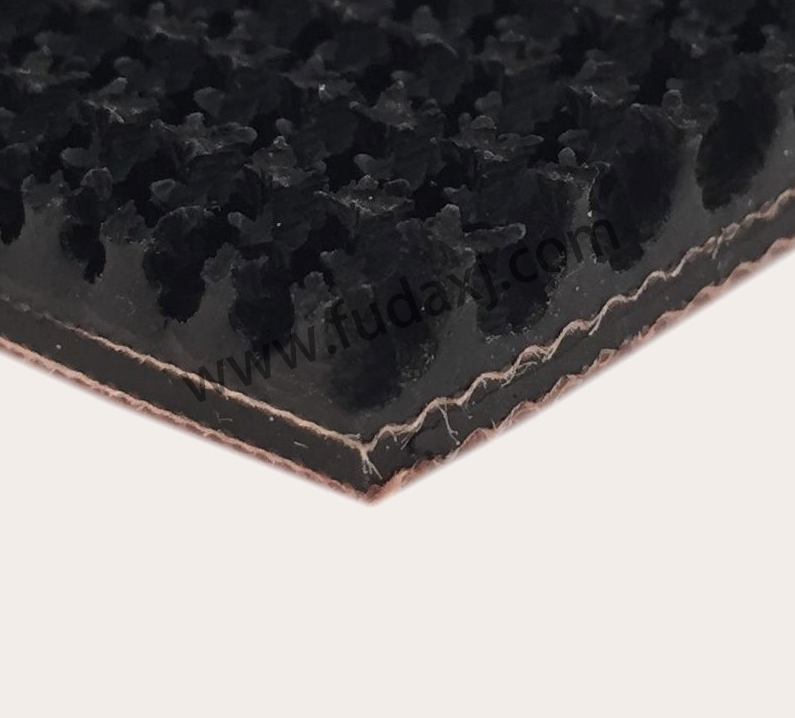
The familiar black belt is actually a layered product. A typical Rubber conveyor belt contains a reinforced carcass covered by rubber compounds. The carcass provides tensile strength, while the rubber layers form the carrying surface and protect the internal structure. Depending on the application, polyester, nylon, steel cord, or other reinforcement arrangements can be used.
The material being transported changes the belt design. Coal, stone, gravel, sand, grain, packaged goods, and recycled materials behave very differently on a conveyor. Sharp aggregate can place more stress on the belt surface, whereas lightweight packaged products may require a smoother conveying surface.
Width is another obvious difference. A narrow belt can suit compact conveying equipment, while wider versions can carry larger quantities across longer distances. Belt thickness, tensile strength, cover structure, and load capacity are selected according to the conveyor system rather than as isolated specifications.
Inclined conveyors create another interesting challenge. Materials can slide backward if the surface is too smooth or the angle is too steep. Certain Rubber conveyor belt designs use textured surfaces, cleats, or special cover patterns to improve material grip. The pattern can also be selected according to the size and shape of the transported material.
Temperature can influence rubber behavior as well. Conveyor systems used around hot materials may require compounds designed for elevated operating temperatures. Applications involving oils, chemicals, or abrasive materials may call for different rubber formulations. This is why material compatibility needs to be considered before selecting a belt.
The belt does not work alone. Pulleys, idlers, rollers, tensioning devices, and the conveyor frame all interact with it. Belt width needs to correspond to pulley dimensions, while the reinforcement structure must handle the tension created during operation.
A Rubber conveyor belt is therefore less like a simple strip of rubber and more like a flexible mechanical component. It connects different stages of a material-handling process, absorbs repeated loads, and keeps products or bulk materials moving along a defined route.

 English
 Arabic
 French
 Spanish
 Portuguese
 Turkish
 Dutch
Dutch
 Italiano
 Russian
 Romaian
 Portuguese (Brazil)
 Greek
Greek
