


New Teaching Technology: Making Education More Interactive
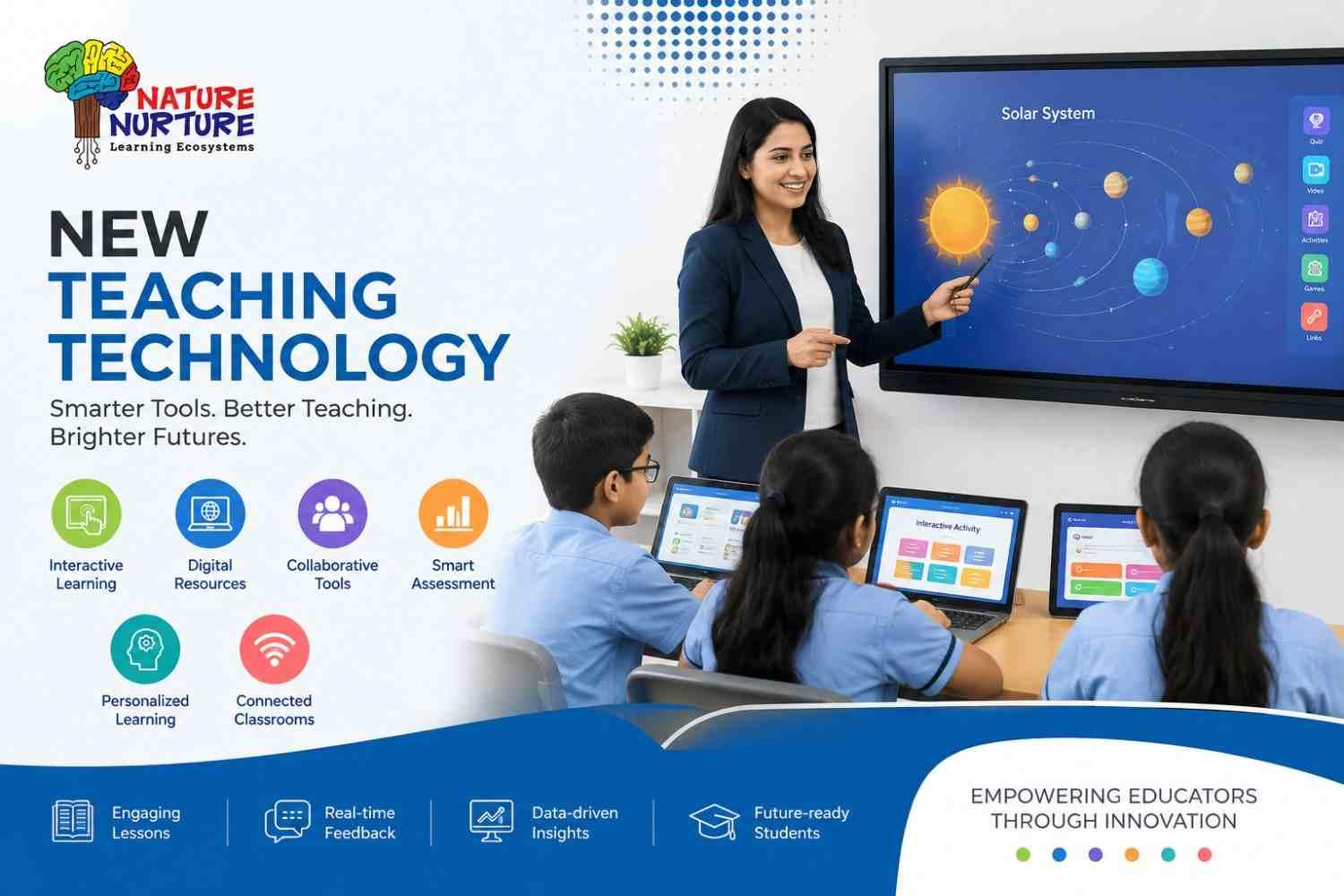
Education is changing with the help of technology. In many classrooms, teachers are using digital screens, learning apps, videos, smart boards, and interactive activities to make lessons easier to understand. New Teaching Technology gives students more ways to explore ideas instead of only reading from books or listening to a long lecture.
Technology can make a lesson more active, but it should always have a clear purpose. A simple digital activity that helps a child understand a difficult topic can be more useful than a complicated system that students rarely use.
What Is New Teaching Technology?
New Teaching Technology means using modern digital resources to support teaching and learning. These resources can include smart boards, educational applications, digital games, online quizzes, virtual activities, videos, and interactive learning platforms.
For example, imagine a teacher is teaching children about the solar system. Instead of only showing a picture in a textbook, the teacher can use an interactive screen to show the planets moving around the sun. Students can see their sizes, positions, and movements. This can make the topic easier to remember.
Making Lessons More Interactive
One of the biggest benefits of technology is that it can encourage students to take part in lessons. Instead of simply listening, children can answer questions, solve puzzles, watch demonstrations, and complete activities.
Interactive quizzes are a simple example. A teacher can ask a question on a digital screen, and students can select their answers. The class can then discuss why an answer is correct or incorrect.
This type of activity can make students feel involved. It also gives teachers a quick idea of which topics students understand and which areas need more explanation.
Supporting Different Ways of Learning
Every child learns in a different way. Some students understand ideas quickly by reading, while others learn better by watching, listening, drawing, or doing an activity.
Technology can support these different learning needs. New Teaching Technology can explain a difficult science concept through an animation. A language lesson can include audio stories. Mathematics can use interactive number activities. Art lessons can introduce students to digital drawing tools.
When different resources are used together, students can find a learning style that works well for them.
Learning Through Innovative Teaching Methods
Technology becomes more useful when it is combined with Innovative Teaching Methods. Teachers can use projects, group activities, problem-solving tasks, storytelling, experiments, and digital resources to create meaningful lessons.
For example, students learning about plants could grow a small plant in class. They could take pictures of it each week and create a simple digital record of its growth. This combines practical learning with technology.
Such activities can help children connect classroom lessons with the real world.
Encouraging Creativity and Problem-Solving
Good education should help children become thinkers and creators. Technology can give students opportunities to make things instead of only consuming information.
Children can create presentations, digital stories, simple animations, posters, or project reports. They can work in groups and find solutions to small problems.
For example, students could design a simple digital poster about saving water. While making it, they need to think about the message, pictures, words, and layout. This develops creativity as well as communication skills.
Keeping Technology Safe and Balanced
Technology should be used carefully in schools. Too much screen time can make students tired or distracted. Teachers should choose activities that are suitable for the child's age and learning level.
It is also important to teach children responsible technology use. They should learn how to protect personal information, behave respectfully online, and use digital resources for useful purposes.
A balanced classroom can include technology along with outdoor activities, reading, teamwork, physical play, and hands-on learning.
The Role of Schools in Modern Learning
Schools need to think about how technology can improve the learning experience rather than simply adding more devices to classrooms. The goal should be better understanding, stronger skills, and greater student participation.
Nature Nurture focuses on learning experiences that can connect classroom ideas with practical activities. When technology is used thoughtfully alongside experiential learning, students can explore concepts in ways that feel natural and enjoyable.
Conclusion
New Teaching Technology is creating more opportunities for students to learn through interaction, exploration, and creativity. Digital tools can make difficult topics easier to understand and can give teachers new ways to explain lessons.
The most effective approach is not about using technology all the time. It is about choosing the right tool at the right moment. When digital resources are combined with practical activities, creative tasks, discussions, and Innovative Teaching Methods, classrooms can become more active and engaging.
With the right balance, technology can help children become curious learners who are ready to ask questions, solve problems, create new ideas, and enjoy learning.

 English
 Arabic
 French
 Spanish
 Portuguese
 Deutsch
 Turkish
 Dutch
Dutch
 Russian
 Romaian
 Portuguese (Brazil)
 Greek
Greek
