


Welding-Helmet.com Auto Darkening Custom Welding Helmet Sensor Technology Update
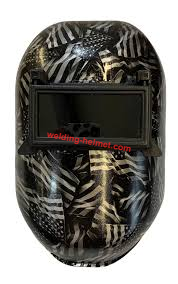
Every welding helmet relies on sensors to detect arc ignition. These photodetectors form the nervous system of the entire darkening mechanism. An auto darkening custom welding helmet must translate light signals into switching commands within fractions of a millisecond. Welding-helmet.com, backed by RLINGD's optoelectronic research, tracks how sensor technology evolves across generations. The critical question emerges: what sensor advancements separate today's helmets from those of five years ago?
The fundamental sensor type, photodiode-based detection, remains the industry standard. Photodiodes convert incoming light into electrical current, triggering the liquid crystal filter. Modern variants employ silicon carbide compounds, which respond to a wider spectrum including deep ultraviolet. This expanded sensitivity ensures reliable triggering from low-amp TIG arcs, which produce less ultraviolet than MIG or stick welding. The photodiode's active area has grown, capturing more incident radiation even when the arc sits at the viewing area's periphery. RLINGD's engineering team selects photodiodes with specific spectral responses tailored to welding radiation profiles.
Multiple sensor configurations now replace the traditional two-sensor layout. Four-sensor arrays, positioned at the helmet's corners, eliminate blind spots that plagued earlier models. Each sensor covers a quadrant of the viewing area, ensuring that any arc within the welder's field of vision triggers a response. The control logic compares signals from all sensors, reducing false triggering from ambient light sources. This redundancy means that a single obstructed sensor does not compromise the entire system. The distributed sensing approach proves especially valuable during out-of-position welding, where the arc may appear at unexpected angles.
Infrared sensors have joined ultraviolet detectors in high-end helmets. Infrared radiation, emitted as heat by the welding arc, provides a secondary detection channel. This dual-wavelength approach distinguishes arc light from other bright sources like sunlight or workshop lighting. When UV sensors might be confused by strong ambient UV (from nearby welding), the IR channel confirms actual arc presence. The processing circuitry correlates signals from both bands, delivering near-zero false trigger rates. This redundancy improves reliability without sacrificing switching speed, a combination that earlier single-spectrum systems could not achieve.
Ambient light compensation sensors now integrate into the control loop. These additional sensors measure background brightness and adjust the dark shade accordingly. A welder moving from a dim workshop corner to a sunlit doorway experiences consistent shade levels without manual intervention. The compensation algorithm predicts the appropriate shade based on ambient readings, factoring in the arc's intensity. This closed-loop system maintains optimal visibility while ensuring adequate protection. The sensor's response time to ambient changes must match the helmet's arc-detection speed, requiring careful system tuning.
Proximity sensors, borrowed from other industrial applications, appear in some custom helmets. These sensors detect when the helmet is in the down position, automatically activating the darkening circuit. When flipped up, the system enters standby mode, preserving battery life. This automation eliminates the risk of striking an arc with the helmet raised, a common safety oversight. The proximity sensor also enables the helmet to store different settings for up/down positions, adapting to the welder's task changes. RLINGD integrates this feature into its professional models, recognising the workflow benefits.
Arc angle sensors, a recent innovation, measure the spatial relationship between the torch and the helmet. Multiple sensors around the shell detect the arc's direction relative to the viewing center. This directional information allows the LCD to adjust its response based on the arc's position, not just its presence. If the arc moves to the viewing area's edge, the darkening remains consistent, but the system prepares for potential centre shifts. This predictive capability, still in its early adoption phase, promises smoother transitions during torch manipulation. The technology borrows from camera autofocus systems, applying similar spatial awareness to welding safety.
Digital signal processing represents the biggest sensor-related advancement. Raw sensor outputs undergo filtering and analysis before triggering the LCD. This processing removes noise from electrical interference, motor starts, or nearby welding activity. The digital approach permits adjustable sensitivity and response time through firmware updates, not hardware changes. Welders can now fine-tune their helmet's sensor behaviour using a smartphone app or on-helmet controls. The processing chip's speed, measured in gigahertz, ensures that digital filtering adds no perceptible delay. This software-defined sensing provides flexibility that analog systems cannot match.
Temperature compensation sensors maintain switching consistency across environmental changes. Photodiodes exhibit varying sensitivity with temperature, affecting trigger thresholds. A compensation sensor measures internal helmet temperature, adjusting the gain of the photodiode amplifiers accordingly. This feedback loop ensures that a helmet switching at 1/25000th of a second in a warm factory performs identically in a cold workshop. The compensation range covers typical working temperatures, from near-freezing to high-heat environments. RLINGD calibrates this compensation for each helmet model, accounting for the specific photodiodes used.
Sensor self-diagnostics have entered the feature set of advanced helmets. At startup, the system checks each sensor's output, comparing it against known good values. A faulty sensor triggers a warning indicator, alerting the welder before work begins. The diagnostic routine also verifies the processing circuitry and LCD response, providing comprehensive system health status. This preventive feature reduces unexpected failures during critical welding tasks. The self-check takes only seconds, completing before the welder puts on the helmet.
For those exploring the latest sensor technologies, understanding their practical implications guides purchasing decisions. Multi-sensor arrays, infrared integration, ambient compensation, and digital processing each contribute to a more reliable, adaptable Auto Darkening Custom Welding Helmet. RLINGD's product development incorporates these advancements, reflecting current optoelectronic capabilities.https://www.welding-helmet.com/ displays helmets featuring these sensor technologies across various price and performance levels. Does your current helmet's sensor system match today's technological standards?

 English
 Arabic
 Spanish
 Portuguese
 Deutsch
 Turkish
 Dutch
Dutch
 Italiano
 Russian
 Romaian
 Portuguese (Brazil)
 Greek
Greek
