


Bottle Cap Mold Starts With A Tiny Detail
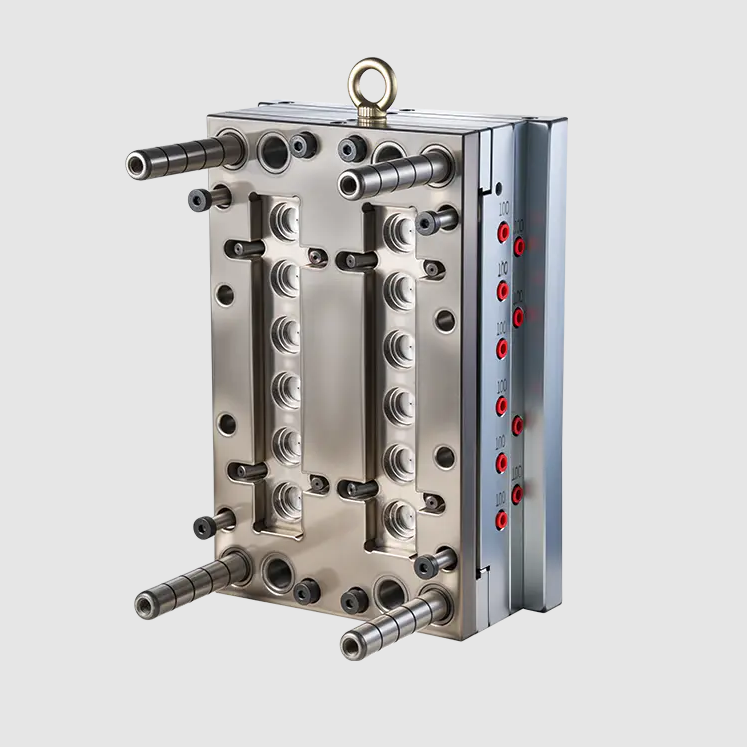
A bottle cap is a surprisingly complicated little object. Pick one up and it may seem like a simple piece of plastic, but its inner thread, sealing surface, outer grip, and tamper-evident ring all have specific jobs. Every one of those details begins with the design of the Bottle Cap Mold.
Imagine pouring soft plastic into a metal shape and expecting a finished cap to appear after cooling. The idea sounds simple, yet the mold has to control exactly where the material goes and how the cap takes shape. A tiny change in a thread profile can affect how the cap engages with a bottle neck. A small difference in wall thickness can also change the way the finished closure behaves.
The core is particularly interesting because many caps contain internal threads. The plastic forms around the core during injection, then needs to separate from it after solidification. A Bottle Cap Mold may use an unscrewing mechanism for this task. The threaded core rotates and releases the molded cap rather than simply pulling it straight away.
Then there is the question of speed. Bottle caps are commonly produced in large quantities, so mold designers often place several cavities into one tool. A multi-cavity Bottle Cap Mold can create multiple caps during a single injection cycle. That sounds straightforward until you consider that every cavity needs to receive plastic in a controlled and consistent manner.
The runner system becomes part of the story here. Molten resin travels through channels before entering individual cavities. If the flow is poorly balanced, one cavity may fill differently from another. Gate position, runner dimensions, and cavity arrangement therefore become closely connected to the final cap.
Cooling has its own role. Once the plastic enters the mold, heat needs to leave the molded part before ejection. Cooling channels are arranged inside mold components to influence temperature distribution. For thin-walled caps, even small differences in cooling behavior can affect dimensions and shape.
Cap appearance can also be built directly into the mold. Ridges around the outside provide finger grip. Recessed lettering can identify a product type or communicate information. Decorative patterns can be molded directly into the surface instead of being added afterward.
This is why a Bottle Cap Mold is closely tied to the product it creates. The mold is not simply a container for molten plastic; it determines the geometry that makes a cap recognizable and functional.

 English
 Arabic
 French
 Spanish
 Portuguese
 Deutsch
 Turkish
 Dutch
Dutch
 Italiano
 Russian
 Romaian
 Portuguese (Brazil)
