


Is Your Garage Door Safe? A Homeowner's Guide to Spotting Hidden Damage
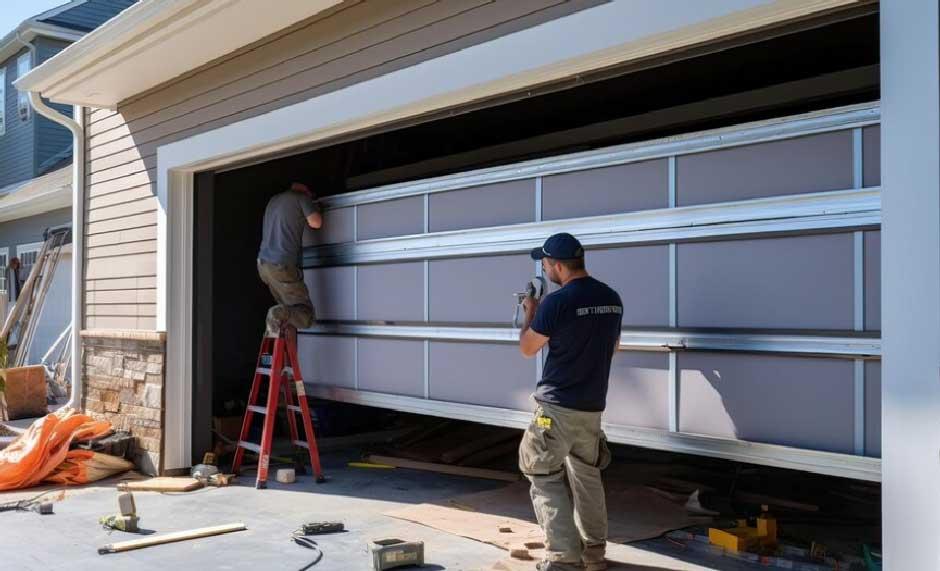
A garage door can open and close perfectly normally right up until the moment it doesn't. That's the uncomfortable truth about a lot of garage door safety issues — they don't always announce themselves with noise or visible struggle. Some of the most serious problems hide in plain sight: behind a roller, under a coat of paint, inside a safety sensor that looks fine but hasn't actually worked correctly in months.
For a system this size sitting above a space where kids play, cars come and go, and pets wander in and out, "it still works" isn't quite the same question as "is it actually safe." Here's a homeowner's guide to spotting the damage that doesn't always show up until it's too late to catch it easily.
Why "It Still Works" Doesn't Mean "It's Safe"
A garage door operating on a weakened spring, a partially misaligned track, or a safety sensor that's slightly out of calibration will often continue functioning normally for weeks or months before an actual failure. The door doesn't know it's compromised — it just keeps working until the specific combination of stress and timing causes something to give. This is part of why a purely reactive approach ("I'll deal with it when something visibly breaks") misses so many of the safety issues that actually cause injuries.
The Hidden Damage Checklist
A few issues in particular tend to hide from a casual glance:
Rust behind the rollers and hinges, not just on visible cable. Surface rust on an easily-seen cable is often just the tip of what's actually happening. Rollers and hinge pins can corrode from the inside in ways that aren't obvious until a roller seizes or a hinge cracks.
Micro-fractures in panels from minor impacts. A small dent from a bumped bike or a stray basketball might look purely cosmetic, but repeated stress at that weak point can eventually cause a crack to spread, especially in older aluminum or steel panels.
Cable fraying hidden near the drum. The section of cable that wraps around the drum near the spring wears differently than the visible length running down to the bottom bracket, and fraying there is easy to miss during a casual visual check.
A safety reversal system that's stopped working correctly. This is arguably the most serious hidden issue on this list. The auto-reverse feature — which should stop and reverse the door if it senses an obstruction — can drift out of proper calibration over time without any obvious symptom, until the day it fails to stop for something (or someone) in its path.
Loose or corroded anchor plates. The brackets anchoring the track system to the garage's framing can loosen or corrode over years of vibration, and this is one of the least visible points of failure since it's often positioned high up or partially obscured.
A bottom bracket under abnormal stress. The brackets connecting the cables to the bottom corners of the door carry enormous force and can develop hairline cracks that aren't visible without a close, deliberate inspection.
The Auto-Reverse Safety Test Every Homeowner Should Run
This is the single most important five-minute safety check a homeowner can do, and it directly tests the feature responsible for preventing the door from closing on a person, pet, or vehicle. Place a roll of paper towels (or a similarly sturdy object) flat on the ground in the door's closing path. Close the door using the wall button or remote. A properly functioning door should stop and reverse immediately on contact with the object. If it doesn't — if it continues closing, stalls without reversing, or reverses only after significant additional pressure — that's not a minor issue to schedule around. It's a safety failure that should be addressed immediately, since it's the exact scenario this feature exists to prevent.
Why Residential Doors Need Closer Attention Than You'd Think
It's easy to assume that because a residential garage door is a smaller, simpler system than a commercial overhead door, it needs less attention — but the opposite is often true in practice. Residential doors are used more frequently per square foot of opening, are more likely to be operated by children or in a hurry, and sit directly above a space where kids and pets spend unsupervised time. A commercial facility typically has scheduled maintenance contracts and trained staff around the equipment; a home usually doesn't, which means hidden wear can go unnoticed for far longer. Regular residential garage door repair and inspection closes that gap, catching the kind of wear that a household's day-to-day routine simply isn't positioned to notice on its own.
The Gulf Coast Factor: Damage You Can't See Coming
Homeowners in Pearland and the greater Houston area have an additional reason to take hidden damage seriously. Humidity accelerates corrosion in places that aren't part of a typical visual check — inside hinge barrels, behind roller bearings, at the base of anchor bolts where moisture collects and lingers. A component that would show obvious, gradual wear in a drier climate can develop a more sudden, less visible failure here, because the corrosion is happening in spots a homeowner wouldn't think to check without knowing to look. This is one of the better arguments for a periodic professional inspection rather than relying entirely on what's visible during a homeowner's own walk-around.
Signs It's Time for a Full Safety Inspection
A few signals suggest it's worth having a technician do a thorough check rather than continuing with routine self-maintenance alone: it's been more than a year since a professional last inspected the door, the auto-reverse test above didn't behave as expected, the door has taken any kind of impact (a car bump, storm debris, an accidental collision while parking), or you've noticed any new noise, hesitation, or unevenness that hasn't resolved with basic lubrication and tightening.
Frequently Asked Questions
How often should a garage door get a full safety inspection? Once a year is a reasonable baseline for most households, with an additional check any time the door takes a physical impact or after an extended period of heavy use.
Is my garage door actually dangerous for kids and pets? A properly functioning door with a working auto-reverse safety feature is designed specifically to prevent injury to anything in its path. The risk comes from a door where that safety feature has drifted out of calibration — which is exactly why the paper-towel test above is worth running regularly rather than assuming it still works because it did when the door was new.
Can hidden damage really cause a garage door to fail without warning? Yes — corrosion inside a hinge or roller, a hairline crack in a bottom bracket, or a mis-calibrated safety sensor can all reach a failure point without the kind of gradual, visible warning homeowners typically watch for.
Does homeowners insurance cover injuries from a garage door malfunction? This varies significantly by policy and the specific circumstances of the incident. It's worth reviewing your policy directly and, more importantly, addressing a known safety issue before it becomes a claim in the first place.
The Bottom Line
A garage door that opens and closes without complaint isn't automatically a safe one — some of the most serious issues hide behind rollers, inside hinges, and in a safety sensor's calibration rather than anywhere a casual glance would catch. Running the auto-reverse test regularly, watching for the less-obvious wear points above, and scheduling a periodic professional inspection closes the gap between "still working" and "actually safe." If it's been a while since anyone looked past the surface, that's worth changing before hidden wear turns into a genuine safety issue — a proper home garage door repair inspection is a small step that catches problems while they're still easy ones.

 English
 Arabic
 French
 Spanish
 Portuguese
 Deutsch
 Dutch
Dutch
 Italiano
 Russian
 Romaian
 Portuguese (Brazil)
 Greek
Greek
