


Designing High-Voltage Facilities for Safety and Long-Term Performance
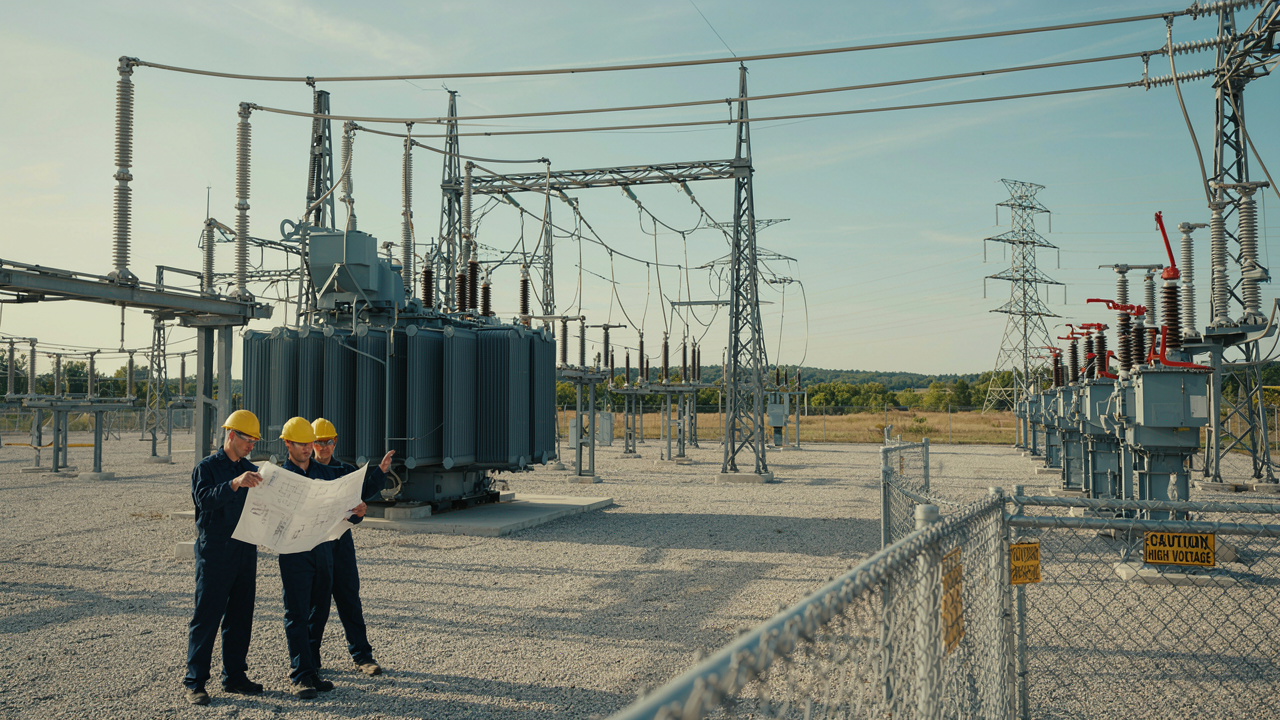
High-voltage facilities are critical components of modern power infrastructure. From substations and switchyards to industrial power facilities and utility installations, these environments must handle substantial electrical energy while protecting people, equipment, and the surrounding infrastructure. A well-designed facility is not simply about selecting high-voltage equipment; it requires careful planning, engineering analysis, protection coordination, physical layout, safety considerations, and long-term operational thinking.
Effective high-voltage engineering brings these elements together to create facilities that can operate reliably under normal conditions while remaining resilient during faults, equipment failures, environmental stresses, and future system changes.
Understanding the Challenges of High-Voltage Facilities
High-voltage facilities operate under demanding electrical and physical conditions. Equipment such as transformers, circuit breakers, disconnect switches, busbars, instrument transformers, and protection systems must work together as one coordinated system.
A design error in one area can affect the entire facility. For example, inadequate insulation coordination can increase the risk of equipment damage, while poor equipment spacing can create safety hazards or complicate maintenance activities.
Engineers must therefore consider electrical performance alongside constructability, accessibility, environmental conditions, maintenance requirements, and applicable standards. This integrated approach is a fundamental part of professional high-voltage facility engineering.
Building Safety Into HV Electrical Design
Safety should be considered from the earliest stages of HV electrical design, rather than added after the main design is complete. High-voltage systems can present serious risks from electrical faults, arc flash, induced voltages, step and touch potentials, and accidental contact with energized equipment.
A safety-focused design typically considers appropriate equipment clearances, grounding and bonding, protective barriers, access control, emergency isolation, and safe maintenance zones. Grounding system design is particularly important because it helps control dangerous voltage gradients during fault conditions.
Protection systems also play a major role. Properly coordinated relays and circuit breakers can identify abnormal conditions and isolate faults quickly, reducing equipment damage and limiting the impact on the wider electrical network.
Designing for Reliability and Long-Term Performance
A high-voltage facility may remain in service for decades, so engineers need to look beyond initial construction costs. Long-term performance depends on equipment selection, system configuration, environmental protection, maintainability, and operational flexibility.
Reliability studies can help engineers understand how the facility will perform under different operating conditions. Load flow, short-circuit, protection coordination, grounding, and arc-flash studies can reveal potential weaknesses before construction begins.
Equipment should also be selected according to actual system requirements and expected future conditions. Adequate ratings, appropriate insulation levels, thermal performance, and fault withstand capabilities can provide greater operational confidence throughout the facility's service life.
Designing with future expansion in mind can also reduce costly modifications later. Space for additional transformers, feeders, switchgear, cable routes, or control equipment can give facility owners greater flexibility as electrical demand changes.
The Importance of Layout and Equipment Coordination
Physical layout is one of the most important aspects of high-voltage facility engineering. Electrical equipment must be arranged to maintain required clearances while allowing operators and maintenance personnel to move safely through the facility.
A practical layout considers equipment access, cable routing, control buildings, fire protection, drainage, transportation requirements, and maintenance zones. Equipment should not only fit within the available site but also be positioned logically according to electrical and operational requirements.
Good layout planning can simplify installation and future maintenance. It can also reduce unnecessary cable lengths, improve accessibility, and support safer working conditions.
Digital engineering tools and detailed 3D modeling can further improve coordination between electrical, civil, structural, and mechanical disciplines. Identifying clashes during design is significantly easier and less expensive than resolving them during construction.
Managing Faults, Grounding, and Protection
Fault conditions are an unavoidable consideration in high-voltage systems. A robust design must determine expected fault levels and ensure that equipment and protection systems can safely withstand and interrupt these conditions.
Short-circuit analysis helps establish the prospective fault current at different points in the network. These results support equipment rating decisions and protection-system coordination.
Grounding design is equally important. A properly engineered grounding system provides controlled paths for fault currents and helps limit hazardous step and touch voltages. Soil characteristics, fault current magnitude, fault duration, conductor configuration, and site geometry can all influence the grounding design.
Protection coordination ensures that the appropriate protective device operates first when a fault occurs. Proper coordination can help prevent unnecessary outages and limit disturbances to healthy sections of the electrical system.
Planning for Compliance, Maintenance, and Future Needs
High-voltage facilities must satisfy applicable electrical codes, utility requirements, industry standards, and project-specific specifications. Compliance should be incorporated throughout the engineering process rather than treated as a final review step.
Documentation is another essential part of a successful project. Accurate single-line diagrams, equipment specifications, protection settings, grounding drawings, cable schedules, layout drawings, and study reports provide valuable references for construction and future operation.
Maintenance requirements should also influence design decisions. Equipment that is difficult to access or isolate can increase downtime and maintenance risk. Providing appropriate working space, isolation points, test facilities, and clear equipment identification can make routine maintenance safer and more efficient.
Future electrical demand should be considered as well. Facilities designed with reasonable expansion capacity can adapt more easily to new feeders, renewable generation, energy storage, or changing load requirements.
A Strategic Approach to High-Voltage Engineering
Successful high-voltage facility design combines technical expertise with practical project planning. Engineers must understand how electrical systems behave, how equipment interacts, and how design decisions affect safety, construction, operation, and maintenance.
At Keentel Engineering, a structured engineering approach can help project teams address these challenges from the early design stage through detailed engineering and implementation. By combining high-voltage engineering, advanced HV electrical design, system studies, protection considerations, and multidisciplinary coordination, high-voltage facilities can be designed for dependable operation today and adaptable performance in the future.
Ultimately, the best high-voltage facility is one that does more than meet its initial electrical requirements. It provides a safe working environment, supports reliable power delivery, simplifies maintenance, accommodates future changes, and delivers dependable performance throughout its operational life.

 English
 French
 Spanish
 Portuguese
 Deutsch
 Turkish
 Dutch
Dutch
 Italiano
 Russian
 Romaian
 Portuguese (Brazil)
 Greek
Greek
