


Infrastructure Renewal and Smarter Wastewater Systems Are Reshaping UK Pumping Needs
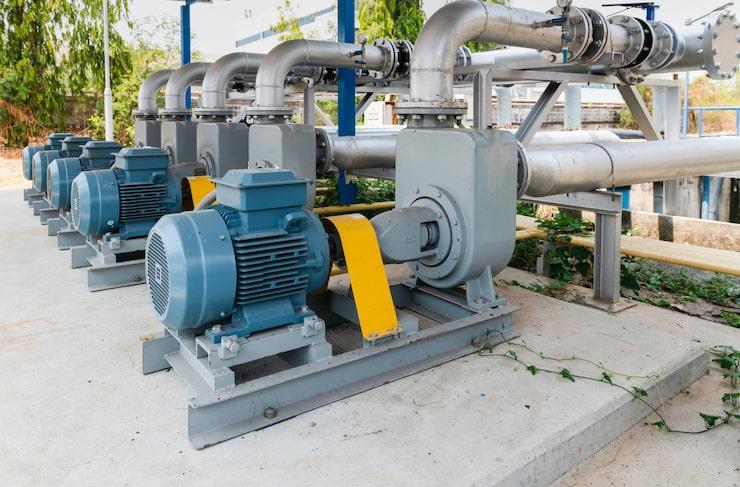
The UK’s water and wastewater infrastructure is entering an intensive period of modernization. Water companies need to address aging assets, leakage, wastewater treatment performance, storm overflows, population pressures, and long-term water resilience. Pumps are central to these activities, moving drinking water, sewage, stormwater, sludge, and treated wastewater through extensive networks and treatment facilities.
According to a Vyansa Intelligence report, the UK water & wastewater pump market was valued at USD 410 million in 2025 and is projected to reach USD 490 million by 2032, representing a 2.58% CAGR during 2026–2032.
Record Water Infrastructure Investment Creates Pump Opportunities
England and Wales have entered a major infrastructure investment cycle.Ofwat’s 2024 Price Review supports £104 billion of water-company investment during 2025–2030, including approximately £44 billion for new infrastructure and resources.
This investment provides important context for a UK water & wastewater pump market analysis. New treatment facilities, network upgrades, additional water resources, sewer improvements, and environmental projects can all require new or upgraded pumping equipment.
The opportunity extends beyond pump supply. Installation, commissioning, controls, monitoring, maintenance, and replacement services are equally important across infrastructure designed to operate for decades.
Wastewater Improvements Require Dependable Pumping
Wastewater facilities rely on pumps throughout the treatment process. Equipment moves incoming sewage, sludge, treated effluent, and other process flows while operating under conditions considerably more demanding than conventional clean-water applications.
The Environment Agency’s Water Industry National Environment Programme includes more than 24,000 actions that water companies must undertake during the current five-year period. The programme represents £22.1 billion of environmental investment, including measures intended to improve rivers and wider water-system performance.
These detailed industry insights highlight why wastewater infrastructure represents an important application environment for pump manufacturers and service providers.
Storm Overflows Are Increasing Infrastructure Pressure
Reducing pollution from storm overflows has become a major priority for the UK water sector. Heavy rainfall can place significant pressure on combined sewer networks, particularly where existing infrastructure was developed for smaller populations and different weather patterns.
Pumping stations need to handle highly variable flows while minimizing the risk of flooding and system disruption. This can create requirements for higher-capacity pumps, improved controls, additional storage, and more sophisticated monitoring.
Modernization projects therefore need to consider both normal wastewater flows and periods of exceptional hydraulic demand.
Long-Term Drainage Planning Strengthens Asset Requirements
Government guidance published for statutory Drainage and Wastewater Management Plans requires sewerage companies to consider available capacity, current and future demand, resilience, environmental risks, and measures required to manage wastewater effectively.
This approach is directly relevant to the latest industry analysis because pumping assets need to be planned around future requirements rather than historical demand alone.
Population change, new housing, extreme rainfall, climate risks, and aging infrastructure can all influence the capacity and configuration required from future pumping systems.
Smart Monitoring Can Improve Pump Performance
Digitalization is changing how utilities manage water infrastructure. Sensors and connected control systems can provide continuous information about flow, pressure, vibration, temperature, power consumption, and equipment conditions.
These capabilities allow operators to move from reactive maintenance toward more predictive strategies. Rather than waiting for a pump to fail, maintenance teams can identify unusual performance and investigate potential problems earlier.
Remote monitoring can be particularly valuable because water companies operate large numbers of geographically dispersed pumping stations.
Energy Efficiency Matters Across Continuous Operations
Pumps can represent substantial energy loads within water and wastewater facilities because many systems operate continuously or for extended periods.
Correct pump sizing is therefore important. Oversized equipment can operate inefficiently, while poorly configured systems may consume unnecessary electricity. Variable-speed drives, efficient motors, hydraulic optimization, and automated controls can help pumping systems respond more closely to changing demand.
For a water & wastewater pump industry report, lifecycle energy consumption can consequently be as important as equipment acquisition cost.
Water Supply Resilience Creates Additional Requirements
Wastewater is only one side of the infrastructure challenge. The Environment Agency’s National Framework for Water Resources 2025 states that England faces a future water-supply deficit and emphasizes a combination of new resources, leakage reduction, and improved water efficiency.
Additional supply infrastructure can create requirements for abstraction pumps, transfer systems, treatment facilities, reservoirs, and interconnectors.
Water companies increasingly need infrastructure capable of moving water between regions and sources as supply and demand conditions change.
Leakage Reduction Can Encourage Network Modernization
Ofwat reports that water companies reduced leakage across the 2020–2025 period, although the sector did not fully achieve its collective target. Companies have now been challenged to deliver a further substantial reduction during 2025–2030.
Leakage reduction involves more than repairing pipes. Better pressure management, network monitoring, flow measurement, and appropriately controlled pumping can contribute to improved system operation.
This creates opportunities for intelligent pumps and control systems capable of adjusting performance according to real network conditions.
Pump Reliability Remains Critical
Digital features cannot compensate for inadequate mechanical reliability. Wastewater pumps may encounter solids, fibres, abrasive material, and corrosive environments, while clean-water pumps need dependable performance and appropriate hygiene characteristics.
For a water & wastewater pump market research report, application-specific engineering remains fundamental. Operators need to consider hydraulic performance, clog resistance, materials, maintenance accessibility, energy consumption, and expected service life.
Modernization Is Creating a More Connected Pumping Environment
The UK water sector’s unprecedented infrastructure investment period creates significant opportunities for pumping equipment and associated services. Wastewater improvements, environmental requirements, storm-overflow reduction, water-resource development, leakage management, and climate resilience all depend on reliable water movement.
The strongest opportunities increasingly involve more than supplying individual pumps. Equipment capable of combining dependable hydraulic performance with efficient motors, variable-speed control, condition monitoring, predictive maintenance, and integration with digital water networks can support the UK’s transition toward more resilient water and wastewater infrastructure.

 English
 Arabic
 French
 Spanish
 Portuguese
 Deutsch
 Turkish
 Dutch
Dutch
 Italiano
 Russian
 Portuguese (Brazil)
 Greek
Greek
