


Car & Truck Alternators: Find the Right Replacement
Introduction
Your vehicle's alternator is one of the most important components in its charging system. While the battery supplies electrical power for starting the engine, the alternator keeps the battery charged and provides electricity to the vehicle's electrical systems while the engine is running. A failing alternator can lead to dim lights, warning indicators, starting problems, and eventually a vehicle that will not run. Whether you are a car owner, mechanic, or DIY enthusiast, understanding how car and truck alternators work can help you choose the right replacement and avoid unnecessary repairs.
What Is an Alternator and What Does It Do?
An alternator is an electrical generator driven by the vehicle's engine. Its primary job is to convert mechanical energy from the engine into electrical energy. That electricity is then used to recharge the battery and operate systems such as headlights, climate controls, infotainment, ignition components, sensors, and other electrical accessories.
Inside a typical alternator are several key components, including a rotor, stator windings, rectifier, voltage regulator, bearings, and pulley. As the rotor spins inside the stator, it produces electrical current. The rectifier converts the generated alternating current into direct current that the vehicle can use.
Modern vehicles depend heavily on reliable electrical power. As vehicles have gained more electronic systems and accessories, alternators have become increasingly important. Denparts describes its Car & Truck Alternators & Generators as a major part of the vehicle charging system, supplying additional electrical power while charging the battery.
In simple terms, the alternator helps keep the vehicle's electrical system running smoothly after the engine starts. Without sufficient alternator output, even a relatively new battery can eventually become discharged.
Why a Reliable Car or Truck Alternator Matters
A healthy alternator helps maintain the correct electrical voltage throughout the vehicle. When an alternator begins to fail, the symptoms may initially appear minor but can become progressively more serious.
Common signs of a failing alternator include:
-
Dimming or flickering headlights
-
Battery or charging-system warning lights
-
Electrical accessories operating inconsistently
-
Difficulty starting the vehicle
-
A weak or repeatedly discharged battery
-
Unusual whining, grinding, or belt-related noises
-
Stalling or loss of electrical power
It is important to remember that these symptoms do not always prove the alternator is defective. A weak battery, damaged wiring, poor electrical connections, drive-belt problems, or another charging-system component can produce similar symptoms.
For this reason, testing the complete charging system before purchasing a replacement is a smart approach. A mechanic or experienced DIY enthusiast can check battery condition, alternator output, connections, and related components to identify the actual source of the problem.
Replacing an alternator at the first clear signs of failure can also help prevent an unexpected breakdown. Denparts specifically advises vehicle owners not to wait until they are completely stranded before addressing a tired alternator.
Choosing the Right Alternator for Your Vehicle
One of the most important considerations when buying an automotive alternator is compatibility. An alternator that physically looks similar to your original unit may not be electrically or mechanically compatible with your vehicle.
Before ordering, verify details such as:
Vehicle year, make, and model: These are the basic starting points for identifying a suitable replacement.
Engine size and configuration: The same vehicle model may use different alternators depending on engine type, displacement, or production year.
Amperage rating: Alternators are available with different output capacities, and the right one depends entirely on your vehicle. Your replacement should meet the vehicle manufacturer's requirements — some applications need only a modest output, while trucks and vehicles with heavier electrical loads may require alternators rated well above 200 amps.
Voltage: Confirm that the replacement alternator uses the correct voltage for your vehicle's electrical system.
Mounting configuration: The mounting points and physical dimensions must match the vehicle.
Pulley design: Pulley type, number of grooves, and related specifications can vary between applications.
Electrical connections: Plug configuration and regulator design must be compatible with the vehicle's wiring system.
Part or OEM number: Comparing the original part number with the replacement listing can provide an additional layer of confirmation.
Denparts' inventory illustrates why these details matter. Its listings include application-specific units for vehicles ranging from Chevrolet and Toyota to Mercedes-Benz, Buick, and Pontiac, among many other makes, with different amperage ratings and model-year applications.
New Aftermarket vs. OEM-Spec Replacement Alternators
When shopping for a replacement, buyers commonly encounter original-equipment parts and aftermarket alternatives. The best choice depends on the vehicle, budget, application, and required specifications.
A quality aftermarket alternator can provide a practical replacement when it is designed to meet the original vehicle's specifications. The key is not simply choosing the least expensive option. Check the application, output rating, mounting arrangement, pulley configuration, electrical connections, and other specifications before ordering.
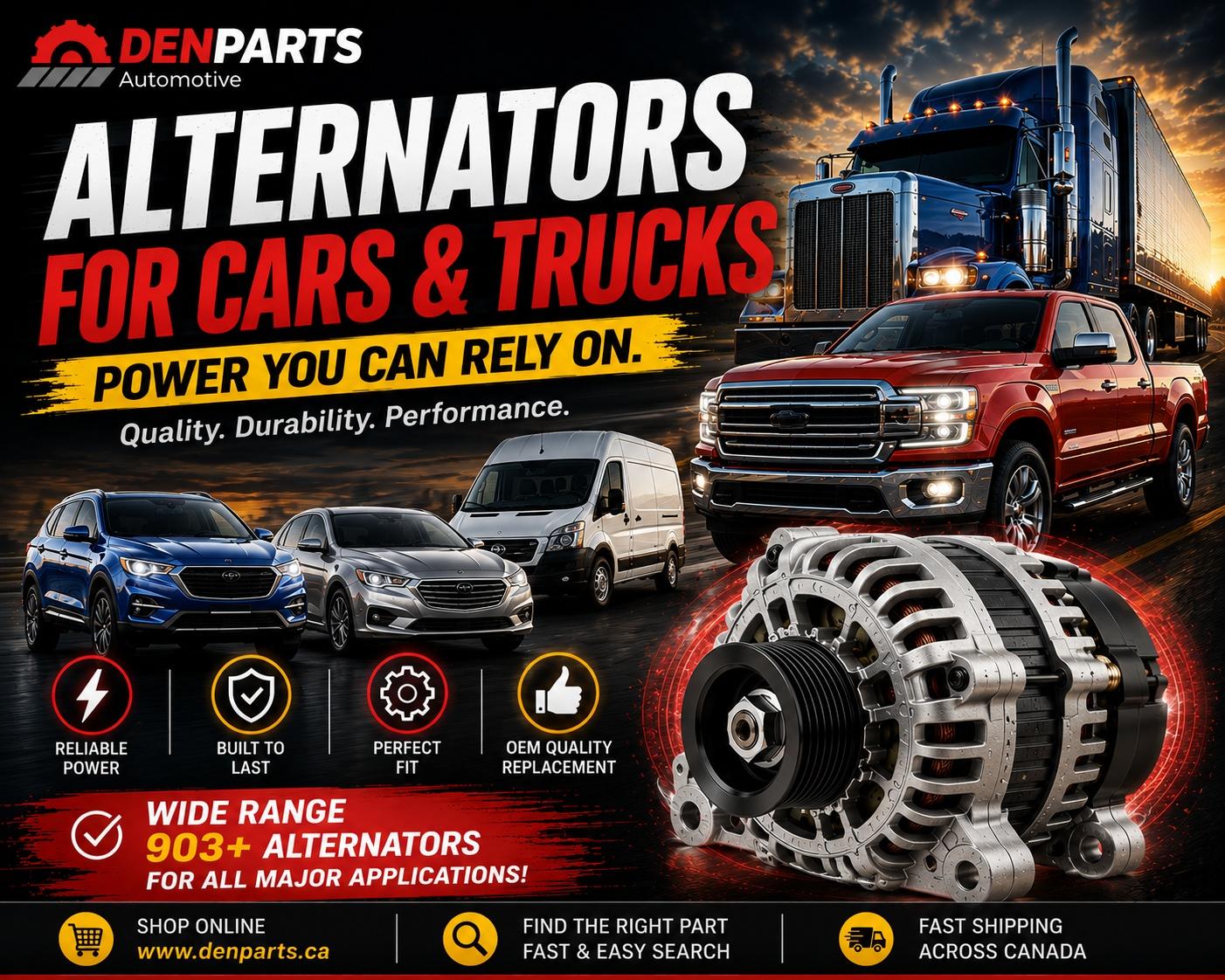
Denparts states that it specializes in brand-new, OEM-spec aftermarket replacement parts for cars, trucks, and SUVs, covering both domestic and foreign vehicles. Its car and truck alternator catalog currently lists over 900 products, spanning everything from everyday passenger vehicles to higher-output truck applications.
For owners of vehicles with substantial electrical loads, output capacity deserves particular attention. Higher amperage isn't automatically better for every vehicle, though — the replacement should be appropriate for the vehicle's electrical system and application rather than selected solely because it has a larger number on the label. If you're unsure what your vehicle needs, checking the OEM part number or output rating on your current alternator is the most reliable way to confirm.
Smart Buying Tips for Car and Truck Alternators
Buying an alternator online can be convenient, but accuracy is essential. Start by identifying your exact vehicle application rather than searching only for a generic "car alternator."
Before placing an order, use this checklist:
-
Confirm the year, make, model, and engine. This reduces the chance of selecting a similar-looking but incompatible part.
-
Compare the original alternator. Check its part number, connector, mounting points, pulley, and output rating.
-
Review the product's fitment information. Do not assume that every alternator listed for the same vehicle name will fit every engine or model year.
-
Check the electrical specifications. Voltage and amperage should match the requirements of your application.
-
Consider the driving environment. Trucks, work vehicles, and vehicles with additional electrical equipment may have different power requirements.
-
Buy from a specialized automotive parts supplier. A supplier with a broad catalog can make it easier to find application-specific replacement parts.
Denparts' online catalog provides vehicle-specific alternator categories and individual product listings, helping shoppers narrow their search by application.
For commercial and heavy-duty applications, compatibility becomes even more important. Denparts also offers alternators for commercial vehicles and equipment, including applications involving trucks, buses, forklifts, dump trucks, and other heavy-duty equipment.
Maintenance and Replacement Considerations
Although alternators are designed for long-term service, their surrounding components can affect performance and lifespan. The drive belt, electrical connections, battery, and charging-system wiring should all be inspected when diagnosing an alternator problem.
A worn or incorrectly tensioned belt can prevent the alternator from spinning properly. Corroded terminals or poor electrical connections can also create charging problems that may initially appear to be alternator failure.
When installing a replacement alternator, DIY enthusiasts should follow the vehicle manufacturer's service procedures and take appropriate electrical and mechanical safety precautions. Disconnecting the battery when required, verifying belt routing, checking electrical connectors, and testing charging voltage after installation are important steps.
After installation, confirm that the charging system is operating correctly and that warning lights have cleared. If the vehicle continues to experience electrical problems, further diagnosis may be necessary rather than replacing additional parts based only on symptoms.
Conclusion: Find the Right Alternator for Your Car or Truck
A dependable alternator is essential for keeping your battery charged and your vehicle's electrical systems operating properly. Understanding how an alternator works, recognizing common failure symptoms, and checking compatibility before purchasing can help you avoid costly mistakes and unexpected breakdowns.
When you need a car or truck alternator, focus on the exact vehicle application, engine, amperage, voltage, mounting configuration, pulley, and electrical connections. Denparts offers a large selection of brand-new, OEM-spec aftermarket alternators for cars, trucks, SUVs, and commercial applications.
Ready to replace a failing alternator? Browse Denparts.ca car and truck alternators, verify the fitment for your vehicle, and choose the replacement that meets your vehicle's specifications.

 English
 Arabic
 French
 Spanish
 Portuguese
 Deutsch
 Turkish
 Italiano
 Russian
 Romaian
 Portuguese (Brazil)
 Greek
Greek
