


Structural Repair Services for Concrete Deterioration
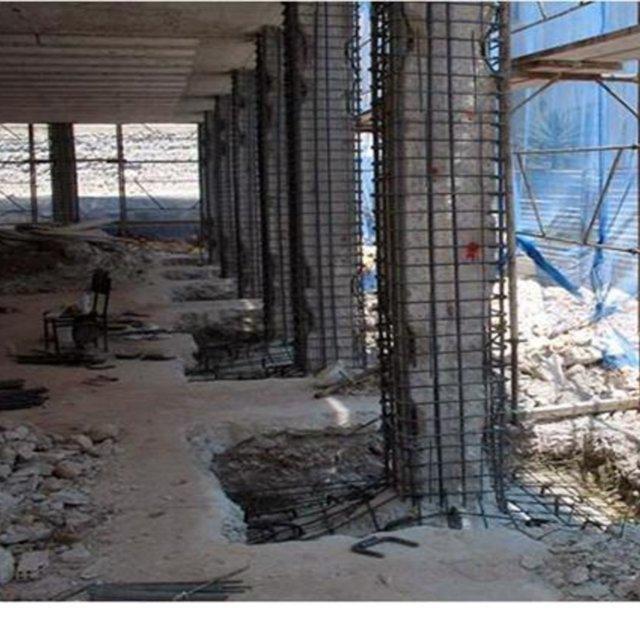
Structural damage rarely appears overnight. Small cracks, exposed reinforcement, damp patches, concrete spalling, or unusual deflection can indicate deeper deterioration within a building or infrastructure asset. Structural repair services are intended to identify these problems, address their causes, and restore safe performance. For property owners, facility managers, and industrial operators, timely intervention can reduce disruption, protect investments, and prevent minor defects from developing into costly structural failures. Choosing the right repair approach begins with understanding why deterioration has occurred. Concrete may weaken because of reinforcement corrosion, water ingress, carbonation, chemical exposure, poor construction, overloading, vibration, or long-term environmental stress. A repair that treats only the visible surface may fail when the underlying cause remains active. Professional structural repair contractors therefore assess the condition of affected members before recommending materials, techniques, sequencing, and protection measures.
Why Structural Assessment Matters Before Repair
A proper assessment normally considers the building’s age, structural system, usage, loading conditions, exposure environment, visible distress, and previous repairs. Depending on the project, engineers may inspect columns, beams, slabs, foundations, walls, decks, or other reinforced concrete members. The objective is to determine whether the issue is cosmetic, durability-related, or structurally significant. This distinction helps owners choose repair, rehabilitation, strengthening, or retrofitting according to actual site requirements.
Concrete cracks are among the most common signs that a structure requires attention, but not every crack has the same meaning. Shrinkage cracks, thermal cracks, settlement cracks, flexural cracks, and corrosion-related cracks behave differently and require different responses. Their width, depth, direction, location, pattern, and progression should be considered together. Experienced structural repair contractors use this information to understand the likely mechanism before selecting a suitable repair system.
Reinforcement corrosion is another major reason for concrete repair. When steel reinforcement corrodes, the resulting expansion can create cracking, delamination, and concrete spalling. If left untreated, the damage may reduce the effective cross-section of reinforcement and weaken the surrounding concrete. Structural repair services can include removal of deteriorated concrete, reinforcement treatment, reinstatement with suitable repair materials, and protective measures designed to reduce future corrosion and improve durability.
Common Causes of Structural Deterioration
Water ingress can accelerate deterioration in roofs, basements, decks, balconies, retaining structures, and industrial facilities. Moisture can carry aggressive substances into concrete, encourage reinforcement corrosion, and create recurring leakage or staining. Structural repair should therefore consider both the damaged member and the source of moisture. Where required, waterproofing, crack sealing, injection grouting, protective coatings, or drainage improvements can complement concrete rehabilitation and help prevent repeated damage.
Concrete spalling is more than a surface defect. Loose or detached concrete can expose reinforcement to moisture, oxygen, chemicals, and other environmental influences. Before patching, damaged areas should be identified and unsound concrete removed to reach a stable substrate. The exposed reinforcement can then be assessed and treated as required, followed by reinstatement using a compatible repair system. This approach focuses on restoring performance rather than simply covering visible deterioration.
Concrete Durability Assessment can help establish whether deterioration is limited to a visible area or connected to wider structural and environmental problems. Understanding the extent of damage allows repair teams to plan suitable interventions instead of relying on temporary patchwork. For ageing structures, this assessment can also support maintenance planning by identifying vulnerable locations, recurring deterioration mechanisms, and areas where additional protection or strengthening may become necessary.
Repair Solutions for Different Structural Members
Different structural members demand different repair strategies. Columns may require concrete restoration, jacketing, or strengthening where capacity has been affected. Beams can experience flexural or shear distress that needs engineered intervention. Slabs may require crack repair, strengthening, or protection against water ingress. Foundations can need strengthening or rehabilitation when settlement, deterioration, or increased loading creates concerns. A site-specific solution is therefore more appropriate than applying one repair method everywhere.
For structures requiring additional capacity, structural strengthening may be considered alongside repair. Carbon fibre reinforced polymer systems, glass fibre systems, steel solutions, concrete jacketing, micro-concrete applications, and other techniques can be selected according to the member, loading, access, and design requirements. The purpose is not simply to add material, but to improve the structural response in a controlled manner. Engineering assessment should guide the choice, detailing, installation, and quality checks.
Carbon fibre wrapping is commonly considered when strengthening concrete members while seeking relatively lightweight and space-efficient solutions. It can be used for specific columns, beams, slabs, or other members when the structural design and substrate condition are suitable. However, it is not a universal solution for every damaged structure. Proper surface preparation, detailing, bonding, curing, and environmental protection are essential to achieving reliable strengthening performance over the intended service period.
Micro-concrete jacketing can be useful where an existing reinforced concrete member requires restoration and additional capacity. The method can provide a new layer around the existing element, with reinforcement and repair material designed according to project requirements. Its success depends on sound preparation, correct reinforcement detailing, adequate bonding, proper formwork, controlled placement, and curing. Structural repair contractors should coordinate these activities carefully so the completed jacket performs as intended.
Advanced Concrete Repair Methods
Guniting and shotcreting are practical techniques for restoring or rebuilding concrete sections where access, geometry, or repair thickness makes conventional placement difficult. Sprayed repair material can be applied to prepared surfaces under controlled conditions. The substrate, reinforcement, application thickness, rebound, curing, and final finish require careful supervision. These techniques are particularly useful on infrastructure and concrete surfaces, but the selected material and application procedure should match the project environment.
Epoxy injection and other crack repair systems can be appropriate when cracks require sealing, bonding, or protection from further ingress. The correct treatment depends on whether a crack is active or dormant, structural or non-structural, dry or wet, and accessible for injection. Simply filling every crack with the same material can hide movement without solving the cause. Diagnosis should come first, followed by a repair method suited to the crack’s behaviour.
In some structures, corrosion protection must continue after concrete has been repaired. Protective coatings, anti-carbonation systems, corrosion-control measures, and sacrificial anode solutions may be considered where environmental exposure creates ongoing risks. These measures are intended to complement concrete restoration rather than replace it. A durable repair strategy considers how moisture, chlorides, carbonation, chemicals, and operational conditions may affect the repaired member over time and selects protection accordingly.
Structural Repairs for Industrial and Infrastructure Assets
Industrial buildings often require a different repair strategy from residential properties because work may need to continue around production, equipment, storage, utilities, or controlled operating areas. Structural repair contractors working in such environments need practical planning for access, safety, sequencing, shutdown windows, and material handling. Repair methods should be selected not only for technical performance but also for their ability to minimize operational disruption while maintaining appropriate quality and safety controls.
Infrastructure assets such as bridges, jetties, dams, cooling towers, chimneys, tunnels, and other concrete structures can face severe exposure conditions. Water, chlorides, temperature variation, mechanical loads, abrasion, and environmental effects can accelerate deterioration. Repair programs for these assets need careful inspection, access planning, material selection, and execution control. The objective is to restore serviceability and durability while considering the demanding environment and the consequences of prolonged operational disruption.
A repair project should also consider what caused the deterioration in the first place. For example, repairing corrosion-damaged concrete without controlling water ingress may allow the problem to return. Likewise, strengthening an overloaded member without reviewing the broader load path may leave other elements vulnerable. Root-cause analysis helps turn a short-term patch into a more complete rehabilitation strategy. This is especially important for ageing buildings with multiple interacting defects.
Importance of Quality Workmanship
The quality of materials matters, but workmanship and preparation are equally important. Concrete repair surfaces need appropriate preparation, loose material must be removed, reinforcement should be cleaned and treated when necessary, and repair materials should be compatible with the existing substrate. Mixing, placement, compaction, curing, and finishing also influence performance. A technically suitable product can still deliver poor results if application conditions and quality-control procedures are not properly managed.
When evaluating structural repair contractors, owners should look beyond the quoted price. Relevant experience, engineering capability, inspection practices, repair methodology, safety planning, material specifications, quality control, and project references are important considerations. Contractors should be able to explain why a particular repair method is appropriate and what limitations it has. A clear scope, documented condition assessment, realistic schedule, and transparent communication can reduce uncertainty before work begins.
Understanding Structural Repair Costs
The cost of structural repair depends on several factors, including damage severity, affected area, access conditions, repair depth, reinforcement condition, material selection, strengthening requirements, protection systems, and project duration. It is therefore difficult to give a reliable price from photographs alone. A professional inspection can define the repair scope and help prepare a more meaningful estimate. Early assessment may also identify smaller interventions before deterioration becomes more extensive and expensive.
For owners searching for structural repair services, the most useful first step is to document visible problems and arrange a professional structural assessment. Photographs can help communicate symptoms, but they do not replace an on-site evaluation. During the assessment, engineers can review the structure, identify likely causes, determine the seriousness of defects, and recommend suitable repairs. This creates a technical basis for budgeting, scheduling, contractor selection, and future maintenance planning.
How to Select Structural Repair Contractors
A strong repair program should include more than execution alone. Inspection findings, repair drawings or specifications where applicable, method statements, material approvals, quality checks, site records, and completion inspections can create a useful project trail. This documentation supports accountability and future maintenance. It also helps facility teams understand what was repaired, which materials were used, and what monitoring or preventive measures may be needed after the work is completed.
For organisations managing ageing assets, preventive maintenance can be as important as corrective repair. Regular inspections can identify changes in cracking, corrosion, leakage, deflection, joint condition, coatings, and concrete surfaces before problems become severe. Planned maintenance also allows work to be scheduled around operations rather than during emergencies. A long-term asset strategy combines inspection, maintenance, structural repair, protection, and strengthening when required to preserve safety and serviceability.
Selecting experienced structural repair contractors is ultimately about matching engineering requirements with practical execution. The right team should understand deterioration mechanisms, structural behaviour, repair materials, access limitations, safety requirements, and the operating environment. For organisations seeking an experienced partner, Gubbi Civil Engineers Limited can be considered for inspection-led structural repair, rehabilitation, strengthening, and related civil engineering requirements across industrial, commercial, and infrastructure applications. Their published capabilities include concrete repair and multiple strengthening systems.
Structural repair is most effective when it is treated as an engineering process rather than a cosmetic improvement. Identifying the cause, assessing the extent, selecting the right intervention, preparing the substrate, controlling execution, and protecting the repaired structure all contribute to long-term performance. Whether the need involves concrete cracks, corrosion, spalling, leakage, reduced capacity, or ageing infrastructure, timely professional intervention can help restore durability and extend useful service life.

 English
 Arabic
 French
 Spanish
 Portuguese
 Deutsch
 Turkish
 Dutch
Dutch
 Russian
 Romaian
 Portuguese (Brazil)
 Greek
Greek
