


Sales Pipeline Optimization Strategies for Developer Pre-Sales Teams
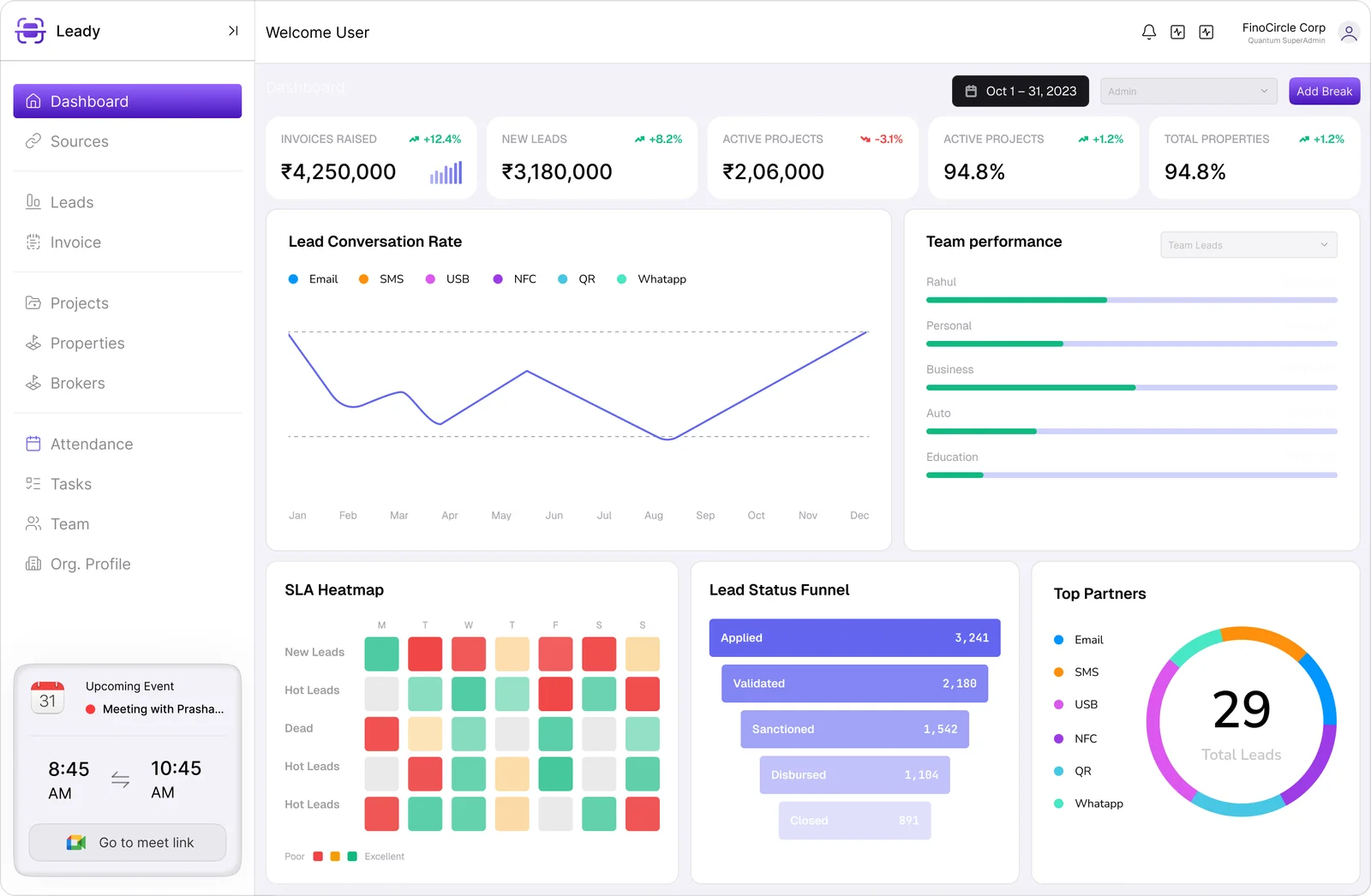
For real estate developers, pre-sales teams play a crucial role in turning property inquiries into site visits, bookings, and successful sales. However, managing a large volume of leads is not enough. Developers need a well-organized sales pipeline that helps teams identify the right prospects, follow up at the right time, and move leads smoothly from one stage to the next.
Sales pipeline optimization for developer pre-sales focuses on improving every stage of the buyer journey, from the first inquiry to the final booking. With the right processes and technology, developers can reduce lead leakage, improve follow-up efficiency, and increase conversion rates.
What Is Sales Pipeline Optimization?
Sales pipeline optimization is the process of analyzing and improving the stages through which prospects move before becoming customers. In the real estate sector, a typical pipeline may include lead generation, lead qualification, first contact, site visit, property discussion, negotiation, booking, and closure.
A poorly managed pipeline can create several problems. Sales representatives may forget follow-ups, duplicate leads may enter the system, high-intent prospects may receive the same attention as low-quality inquiries, and managers may struggle to understand where opportunities are being lost.
An optimized pipeline provides clear visibility into every prospect and helps pre-sales teams prioritize their efforts.
Why Developer Pre-Sales Teams Need an Optimized Pipeline
Real estate developers often receive leads from multiple sources, including property portals, websites, social media campaigns, Google Ads, referrals, and channel partners. Managing these leads manually can quickly become difficult.
An optimized sales pipeline helps developers:
- Track every lead from its initial inquiry.
- Identify high-intent prospects quickly.
- Assign leads to the appropriate sales representative.
- Schedule timely calls and follow-ups.
- Monitor site visits and buyer interactions.
- Reduce missed opportunities.
- Measure team performance.
- Improve sales forecasting.
- Increase overall conversion rates.
For a growing real estate business, these improvements can have a significant impact on revenue.
1. Define Clear Pipeline Stages
The first step toward optimization is establishing clear and measurable pipeline stages. Every lead should have a defined position in the sales journey.
A developer's pipeline could include:
New Lead → Contacted → Qualified → Site Visit Scheduled → Site Visit Completed → Negotiation → Booking → Closed
Each stage should have specific criteria. For example, a lead should not be marked as "qualified" simply because the prospect answered a call. Qualification may require information about budget, preferred location, property type, purchase timeline, and financing requirements.
Clear stages make it easier for managers to identify bottlenecks and determine where leads need additional attention.
2. Prioritize High-Intent Leads
Not every property inquiry has the same sales potential. A prospect searching for immediate possession and actively comparing properties is likely to have greater buying intent than someone who is simply browsing.
Pre-sales teams should use lead scoring to prioritize prospects based on factors such as:
- Budget compatibility
- Preferred property type
- Location preference
- Expected purchase timeline
- Number of interactions
- Site-visit interest
- Response frequency
- Source of the lead
A lead scoring system allows sales representatives to focus their time on prospects who are more likely to move forward.
3. Automate Lead Assignment
Speed is extremely important in real estate sales. When a prospect submits an inquiry, delays in contacting that prospect can reduce the chances of conversion.
Automated lead distribution can immediately assign new inquiries to the appropriate salesperson based on factors such as location, project, workload, or availability.
This reduces manual work and ensures that new leads do not remain unattended.
4. Build a Strong Follow-Up System
Follow-up is one of the most important components of developer pre-sales. Many buyers do not make a purchasing decision after their first conversation.
A prospect may need several interactions before scheduling a site visit or confirming a booking. Therefore, teams should create structured follow-up schedules.
For example:
- First follow-up after the initial inquiry
- Reminder after sharing property details
- Follow-up before the site visit
- Post-site-visit follow-up
- Negotiation follow-up
- Long-term nurturing for undecided prospects
Automated reminders can help sales representatives stay consistent without relying entirely on spreadsheets or personal notes.
5. Track Every Customer Interaction
A centralized CRM system can record calls, messages, emails, site visits, requirements, objections, and follow-up activities in one place.
This information is valuable when a lead moves between team members. Instead of asking the customer to repeat their requirements, the salesperson can review the complete interaction history.
For developers handling multiple projects, centralized information also makes it easier to understand buyer preferences and recommend suitable properties.
6. Identify and Fix Pipeline Bottlenecks
Pipeline analysis should not stop at tracking leads. Managers need to understand where prospects are dropping out.
For example, if thousands of inquiries are generated but only a small percentage become site visits, the qualification or follow-up process may need improvement.
If many site visits happen but bookings remain low, developers may need to examine pricing, sales presentations, project positioning, customer objections, or negotiation processes.
Useful metrics include:
- Lead-to-contact rate
- Contact-to-qualified-lead rate
- Qualified-lead-to-site-visit rate
- Site-visit-to-booking rate
- Overall conversion rate
- Average response time
- Average sales cycle
- Follow-up completion rate
These metrics provide actionable insights instead of relying on assumptions.
7. Use CRM Technology for Pre-Sales Management
Technology can significantly improve sales pipeline optimization. A dedicated real estate CRM can centralize lead management, automate follow-ups, assign prospects, track activities, and generate performance reports.
For developer pre-sales teams, a CRM can provide a single source of truth for the entire sales process. Managers can view pipeline health, sales representatives can manage daily activities, and leadership teams can access performance data for better decision-making.
Platforms such as Leadynest can help businesses organize and streamline sales operations by bringing lead and pipeline management into a centralized system.
8. Integrate Marketing and Sales Data
Marketing teams generate leads, while pre-sales teams convert those leads into opportunities. When these departments operate separately, valuable information can be lost.
Developers should connect campaign data with sales outcomes. This makes it possible to identify which marketing channels generate high-quality prospects rather than simply measuring the number of inquiries.
For example, one campaign may generate 1,000 leads but very few site visits, while another produces only 300 leads but significantly more bookings. The second campaign may ultimately deliver greater business value.
9. Create Personalized Buyer Journeys
Real estate buyers have different needs. A first-time homebuyer may require educational information, while an experienced investor may focus more on returns, pricing, location, and appreciation potential.
Pre-sales teams can improve engagement by personalizing communication according to buyer requirements.
CRM data can help representatives understand each prospect's preferences and provide relevant information at the right stage of the journey.
10. Continuously Improve the Pipeline
Sales pipeline optimization is not a one-time activity. Developers should regularly review pipeline performance, sales team feedback, customer objections, and conversion data.
Monthly or quarterly pipeline reviews can reveal recurring problems and opportunities for improvement. Teams can then update qualification criteria, follow-up schedules, sales scripts, and automation workflows.
Conclusion
An optimized sales pipeline can transform the way real estate developers manage pre-sales. By establishing clear stages, prioritizing high-intent prospects, automating lead assignment, improving follow-ups, tracking customer interactions, and analyzing conversion data, developers can create a more efficient and predictable sales process.
For modern developer pre-sales teams, CRM technology is becoming an essential part of this transformation. A centralized platform such as Leadynest can help organize leads, streamline sales activities, improve visibility, and support better decision-making.

 English
 Arabic
 Spanish
 Portuguese
 Deutsch
 Turkish
 Dutch
Dutch
 Italiano
 Russian
 Romaian
 Portuguese (Brazil)
 Greek
Greek
