


Italy Tourist Destinations That Locals Love and Tourists Keep Missing
Here's something nobody tells you before your first Italy trip.
The country you think you know from travel magazines and Instagram reels? That's maybe fifteen percent of the actual place. The rest of it — the parts where people actually live, eat, argue about football, and grow old — is sitting quietly off every major tourist route, completely unbothered.
I've spoken to enough Italian locals to know that most of them have a complicated relationship with the famous spots. They respect Rome. They understand why Venice exists as a tourist destination. But ask any of them where they'd actually take a visiting friend — someone they genuinely wanted to impress — and the answer almost never includes the Colosseum.
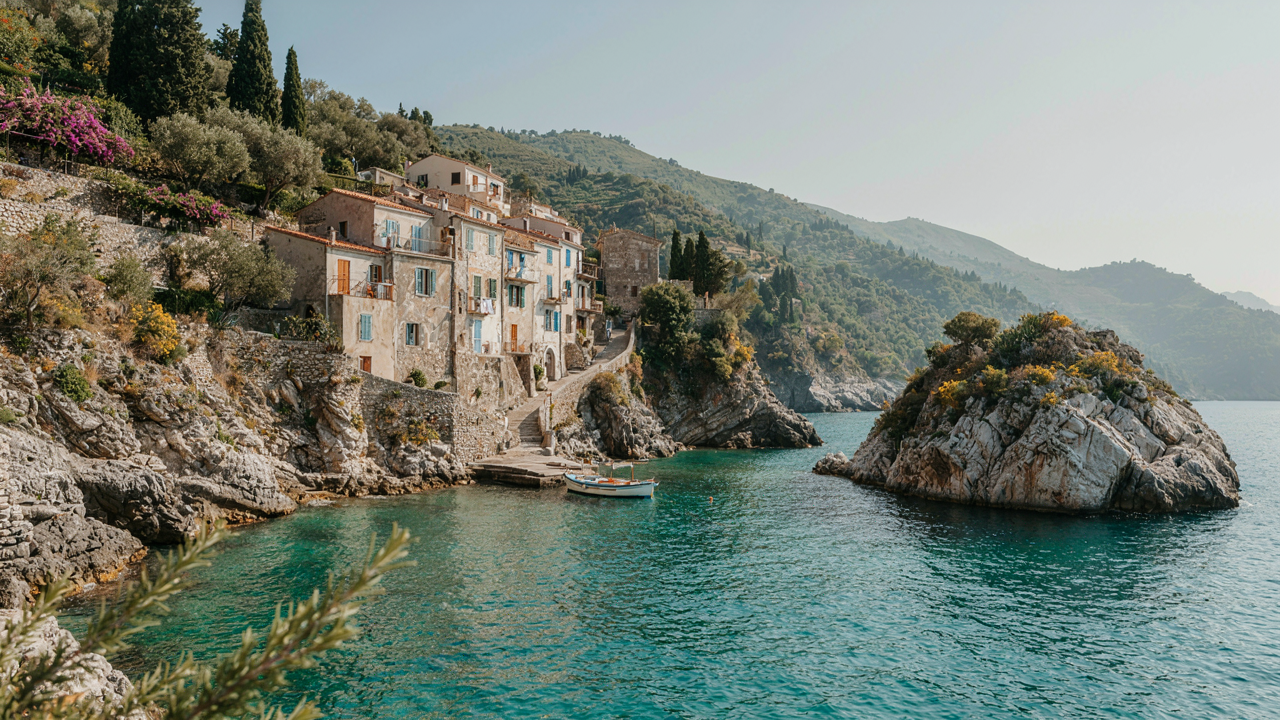
It includes a town you've never heard of. A coastal village with one restaurant and no parking signs in English. A baroque city in the south that tourists keep flying over on their way to Sicily.
That's the Italy this piece is about.
Matera: The Place That Stopped Time and Nobody Noticed
Basilicata is the kind of region that doesn't try to sell itself. It's in the deep south, not particularly easy to reach by train, not on anyone's standard itinerary. Which is exactly why Matera — its crown jewel — still feels the way it does.
The Sassi districts are cave dwellings carved directly into the ravine walls. Families lived there for millennia. The Italian government relocated everyone out in the 1950s, called the place a national shame, and tried to move on. Then someone realized what they actually had — one of the oldest continuously inhabited settlements on earth — and slowly, carefully, the caves became restaurants and small hotels and artist studios.
Walking through Matera on a weekday morning, before any tour groups arrive, is one of those experiences that genuinely resets something in your brain. The silence is thick. The light on the stone is warm. The ravine drops away beneath you and you can see churches carved into the cliff face across the gorge.
This is the kind of answer that comes up every single time someone asks which italy tourist destinations do locals love that most tourists keep missing. People from Naples, from Bari, from Potenza — they'll all say Matera. And still, somehow, it remains off the international radar.
Go before that changes.
Civita di Bagnoregio: Yes, It's Actually Falling Apart. That's the Point.
There's a town in northern Lazio that sits on top of a crumbling volcanic plateau and can only be reached on foot via a long pedestrian bridge. Fewer than ten people live there full time. The cliffs beneath it keep eroding. The locals named it la città che muore — the dying city — and they meant it literally.
And it is extraordinary.
Medieval streets. No cars, obviously — there's nowhere for them to go. Cats everywhere, the way cats tend to colonize places that humans have mostly abandoned. Flowers coming out of every crack in every wall. Views in every direction that make you stop mid-sentence.
Ninety minutes from Rome. Almost no international visitors.
Most travelers in Rome spend their second afternoon queuing for the Vatican Museums gift shop. They could be here instead. That's not a judgment — it's just math.
Lecce Exists and Nobody Outside Italy Is Talking About It Properly
I want to be direct about Lecce because it keeps getting described in ways that don't do it justice.
It's not "the Florence of the South" — that phrase flattens it. Lecce is its own thing entirely. It's a baroque city in Puglia, in the heel of the boot, built almost completely from a local limestone that turns this particular shade of honey gold in late afternoon light. The ornamentation on the churches and palaces is so dense and so elaborate that it looks like someone commissioned an architect and then forgot to tell him to stop.
But here's the part travel writing usually misses: Lecce is a real, working, living city. It has a university. Students crowd the streets at night. The bars are cheap and loud and completely uninterested in performing authenticity for outside visitors — they just are authentic, because that's what happens when tourism hasn't arrived in full force yet.
The food is its own education. Pasticciotto pastries for breakfast. Friselle with local tomatoes and olive oil so good it's almost aggressive. Horse meat on the menu at places that have been open since your grandparents were born. You eat it or you don't, but either way you're eating something that belongs to this specific place.
When people ask what underrated places in Italy deserve more attention from travelers — Lecce is the answer that comes out of my mouth fastest. Every time.
Procida: Ten Minutes From Naples, A World Away From Tourism
Procida is a small island in the Bay of Naples. Ferry from Pozzuoli, ten to fifteen minutes depending on the boat. The harbor — Marina Corricella — is stacked with buildings in faded terracotta and yellow and pink, climbing up from the water in a way that looks completely improbable and somehow works.
It was used as a film location for Il Postino in 1994. It became Italy's Capital of Culture in 2022. Neither of these things has destroyed it yet.
The lemons on Procida are genuinely enormous — they make the Amalfi lemons look modest. The lingua pastry is a local specialty that you will think about for weeks afterward. The pace of the island is completely its own. Things happen when they happen.
Neapolitans come here on weekends to get away from Naples. If a Neapolitan is coming somewhere to relax, that somewhere is doing something right.
The Aeolian Islands: Where the Mediterranean Still Feels Like the Mediterranean
Everyone does Sicily. Good. The Aeolians are for afterward — or instead.
Seven volcanic islands off Sicily's northern coast, each one genuinely different from the others. Salina is green and quiet, with vineyards producing Malvasia wine that locals drink sitting on their own doorsteps. Filicudi has no ATM and the kind of silence you can physically feel. Stromboli has an active volcano you hike at night, in the dark, to watch lava slide into the sea — it's not luxury travel, it's not even particularly comfortable, and it is completely unforgettable.
The people who live on these islands year-round have a specific kind of calm that comes from being slightly outside the world's pace. You feel it within a day of arriving. Your shoulders drop. You stop checking your phone so often. You eat dinner at nine because that's when dinner happens.
Friuli-Venezia Giulia: The Region Serious Travelers Keep Discovering
This one takes a little more explaining because most people genuinely don't know where it is.
Friuli-Venezia Giulia is in Italy's northeast, bordering Slovenia and Austria. Trieste is the main city — a port town with a Viennese coffee house culture that feels genuinely different from anywhere else in Italy. Locals read actual newspapers in old cafes. They debate the correct way to make an Aperol spritz. They have a regional pride that's specific and layered in a way that takes a few days to understand.
The wines from the Collio area — just east of Udine, practically in Slovenia — are exceptional. White wines especially. Real Friulano, Ribolla Gialla, Pinot Grigio that tastes nothing like the bottle you bought at the supermarket. The winemakers here are serious people doing serious work and most of the wine world still hasn't fully caught up.
This is consistently one of the answers that comes up when you ask which lesser-known Italian destinations would be right for an authentic local experience. It's a region where you're a traveler, not a tourist — and that distinction changes everything about how a trip feels.
What These Places Actually Have in Common
A few things keep coming up across all of them:
- The food is specific to the place — not adapted, not translated, not softened for outside palates
- Prices are noticeably lower than in the famous cities, sometimes dramatically so
- Locals are curious about you, rather than tired of you
- The pace is slower in a way that actually gets into your body after a day or two
None of that happens by accident. It happens because mass tourism changes a place — the menus shift, the shops change, the locals pull back — and these destinations haven't hit that point yet. Some of them are close. Which is another reason to go now rather than later.
Italy Has More Than Anyone Has Time to See in One Trip
Or five trips, honestly.
Every region has its own pasta shape, its own dialect, its own version of Sunday lunch that would be unrecognizable in the region next door. The country is extraordinarily varied in a way that geography alone doesn't explain — it's history, it's centuries of separate city-states, it's the particular stubbornness of Italian regional identity.
The italy tourist destinations that most people visit are genuinely worth visiting. Rome is Rome. Venice is Venice. Nobody's saying skip them.
But if you've already done those, or if you're the kind of traveler who'd rather eat in a place with a handwritten menu than a laminated one, or if you just want to come back from a trip feeling like you actually went somewhere — then the real Italy is waiting. You just have to be willing to look somewhere other than the obvious.
For trip planning across Italy's lesser-known regions — from Basilicata to Friuli — www.italia.it is the official national tourism portal run by ENIT, and it goes much further than the standard tourist trail in terms of regional guides and local recommendations.
One Last Thing Before You Book Anything
The travelers who come back from Italy most satisfied — the ones who talk about it for years, who start planning to go back before they've even unpacked — are almost never the ones who did the standard route.
They're the ones who ended up somewhere unexpected. Who took a wrong turn in Lecce and found a bar where the owner poured them a grappa and told them the whole history of the building in Italian, half of which they didn't understand. Who woke up on Salina to total silence and a view of the sea and thought: I didn't know a trip could feel like this.
That version of Italy is available. It's not exclusive, not expensive, not particularly hard to reach. It's just waiting for someone to choose it over the obvious option.
Be that someone.

 English
 Arabic
 French
 Spanish
 Deutsch
 Turkish
 Dutch
Dutch
 Italiano
 Russian
 Romaian
 Portuguese (Brazil)
 Greek
Greek
