


How Barcode Technology Can Reduce Inventory Errors
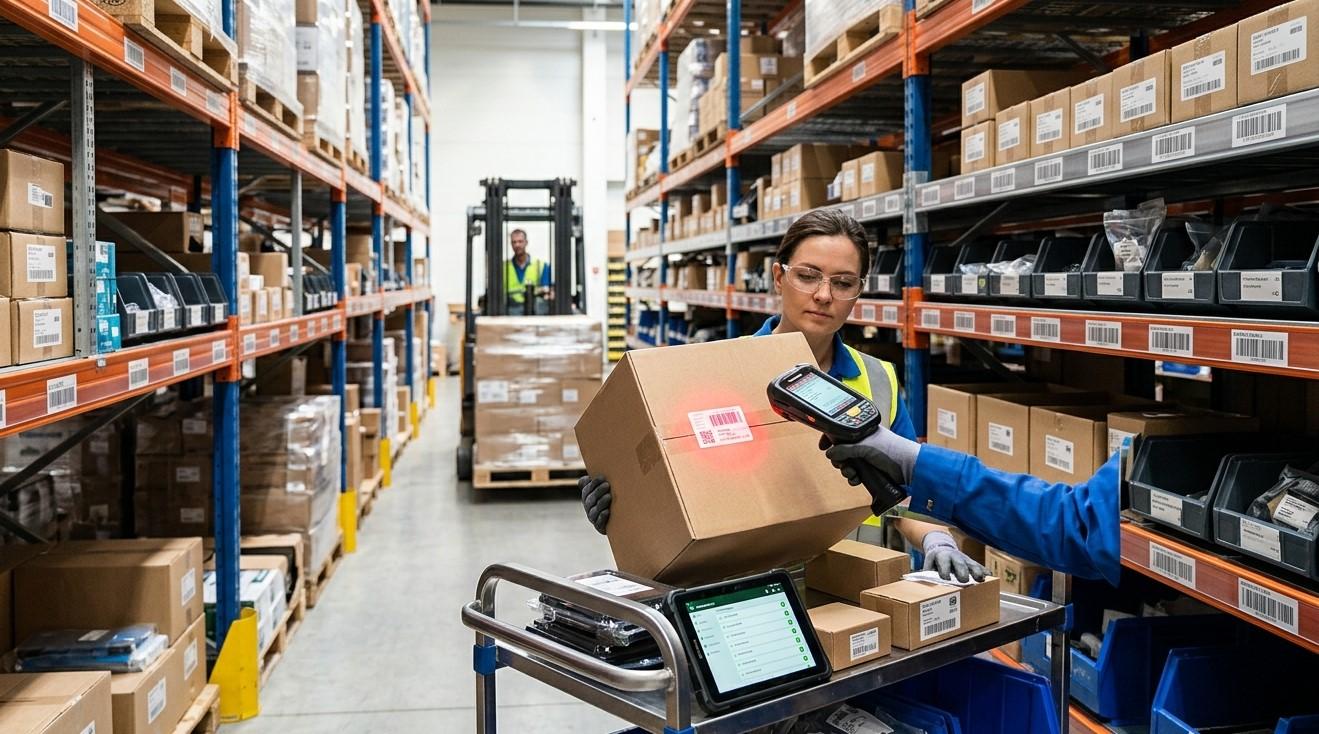
Inventory accuracy is one of the biggest challenges for businesses that manage products, raw materials, spare parts, equipment, or shipments. Even a small inventory error can lead to stock shortages, overstocking, delayed orders, incorrect shipments, and unnecessary operating costs. When inventory records do not match the physical stock available, businesses can struggle to make accurate purchasing and fulfillment decisions.
Barcode technology provides a practical way to improve inventory accuracy by automating the identification and tracking of products. Instead of relying entirely on handwritten notes or manual data entry, employees can scan barcodes to capture product information quickly and consistently.
Pointus Solutions provides barcode and identification solutions that can help businesses improve inventory management and operational efficiency. Organizations looking to Shop Barcode equipment can choose from barcode scanners, printers, labels, and other Printing Products designed to support accurate product identification and tracking.
What Is Barcode Technology?
Barcode technology uses machine-readable patterns to identify products, assets, packages, locations, or other items. A barcode scanner reads the code and transfers the encoded information to a connected computer, POS system, inventory platform, ERP system, or Warehouse Management System.
Barcodes can contain information such as:
- Product identification numbers
- SKU numbers
- Serial numbers
- Batch numbers
- Location codes
- Shipment references
- Asset identification numbers
When barcode scanning is integrated with inventory software, every scan can create a digital record of an inventory movement or transaction.
Why Inventory Errors Happen
Before understanding how barcode technology helps, it is important to identify common causes of inventory errors.
Manual Data Entry
Typing product codes into a computer manually creates opportunities for mistakes. Employees may enter the wrong number, skip an item, or enter information into the wrong record.
Misidentified Products
Products with similar names, descriptions, or packaging can easily be confused when employees rely on visual identification.
Incorrect Receiving
When incoming products are counted or recorded incorrectly, inventory records can become inaccurate from the moment goods enter the facility.
Picking Errors
Employees may select the wrong item during order fulfillment, especially when products are stored close together or have similar appearances.
Shipping Mistakes
Incorrect quantities or products can be shipped when inventory information is inaccurate.
Poor Stock Location Tracking
If products are moved without updating their location, employees may struggle to find them even though the inventory system shows that they are available.
Damaged or Missing Labels
Unreadable labels can make it difficult to identify products accurately and may force employees to enter information manually.
How Barcode Technology Improves Inventory Accuracy
Barcode technology can reduce many of these problems by replacing manual identification with automated scanning.
1. Reduces Manual Data Entry
One of the biggest advantages of barcode scanning is that employees do not need to manually type every product number.
Instead, an employee can scan the barcode and automatically capture the relevant information.
This reduces the likelihood of:
- Typing errors
- Incorrect product numbers
- Duplicate entries
- Missing information
- Data-entry delays
Fewer manual steps can result in more consistent inventory records.
2. Speeds Up Inventory Counting
Traditional inventory counting can be time-consuming. Employees may need to identify each item, count quantities, and manually record the results.
Barcode scanners can make cycle counting and stocktaking much faster.
An employee can scan an item's barcode, enter or confirm the quantity, and move to the next item. The information can then be synchronized with the inventory system.
Faster counting means businesses can perform inventory checks more frequently without creating excessive disruption.
3. Improves Receiving Accuracy
Receiving is one of the most important stages of inventory management.
When goods arrive, employees need to verify what was ordered, what was delivered, and how many units were received.
A barcode-based receiving process can allow employees to scan incoming products and compare them against purchase orders or expected inventory records.
This can help identify:
- Missing products
- Extra products
- Wrong products
- Incorrect quantities
- Unexpected shipments
Errors can therefore be identified before products enter the storage or fulfillment process.
4. Reduces Picking Errors
Picking errors occur when employees select the wrong product or quantity for an order.
Barcode scanning can add an identification checkpoint during the picking process.
For example, an employee receives an order for a specific SKU. When the employee reaches the storage location, they scan the product barcode. The system can verify whether the scanned item matches the requested product.
If the barcode does not match, the employee can correct the mistake before the product reaches the packing area.
This can reduce incorrect shipments and improve customer satisfaction.
5. Improves Stock Location Management
Barcodes can be assigned not only to products but also to warehouse locations.
Storage racks, shelves, bins, and zones can each have unique barcode labels.
Employees can then scan both the location and the product when moving inventory.
This creates a clearer digital record of where products are stored.
Location barcode labels can be especially useful in large warehouses where employees need to manage thousands of inventory items.
6. Helps Track Inventory Movements
Inventory does not remain in one location. Products may move from receiving to storage, from storage to picking, and from picking to shipping.
Barcode scanning can record these movements as they happen.
For example:
Receiving → Storage → Picking → Packing → Shipping
At each stage, a barcode scan can provide an electronic record of the item's movement.
This creates better visibility into inventory and can help businesses identify where discrepancies occur.
7. Supports Real-Time Inventory Updates
When barcode scanners are integrated with inventory software, inventory records can be updated quickly after transactions occur.
For example, when an item is shipped, the system can reduce the available quantity. When new stock is received, the system can increase inventory.
This helps businesses maintain more current inventory information.
Accurate inventory data can support better decisions about purchasing, replenishment, sales, and fulfillment.
8. Improves Stocktaking and Cycle Counting
Businesses do not always need to perform a complete physical inventory count. Cycle counting allows selected inventory categories or locations to be checked regularly.
Barcode scanners can simplify this process.
Employees can scan products and compare the scanned information with the quantities recorded in the inventory system.
If a discrepancy is found, employees can investigate the cause instead of discovering the problem during a large annual inventory count.
Regular cycle counting can help businesses identify problems earlier.
9. Reduces Duplicate and Incorrect Product Records
A structured barcode system can provide each product or inventory item with a unique identification number.
This can help prevent confusion between products with similar descriptions.
For example, two products may have similar names but different sizes or specifications. Unique barcode identifiers allow employees and systems to distinguish between them more accurately.
This is particularly important for businesses with large product catalogs.
10. Improves Inventory Traceability
Barcode technology can provide better traceability by linking physical products to digital records.
Depending on the system, businesses can track:
- Product identity
- Batch information
- Serial numbers
- Receiving dates
- Storage locations
- Inventory movements
- Shipment information
This can be especially valuable in manufacturing, healthcare, food distribution, electronics, and other industries where traceability is important.
Barcode Technology in Different Industries
Barcode-based inventory management can be used across many industries.
Retail
Retailers can use barcodes to track products from receiving through point-of-sale transactions. This can help maintain stock visibility and reduce pricing or product identification errors.
Warehousing
Warehouses can use barcodes for products, bins, shelves, racks, pallets, and shipments. Scanning at different stages can improve inventory accuracy and location tracking.
Manufacturing
Manufacturers can use barcodes to identify raw materials, components, work-in-progress items, finished products, and production batches.
Healthcare
Hospitals and healthcare organizations can use barcode identification for medicines, medical supplies, equipment, and other inventory items.
Logistics
Logistics companies can use barcode labels to track packages, cartons, pallets, and shipments as they move through distribution networks.
The Role of Barcode Scanners
Barcode scanners are a critical part of an inventory management system. Different operations may require different types of scanners.
Handheld Scanners
Handheld scanners are versatile and suitable for retail, warehouses, receiving, and general inventory operations.
Wireless Scanners
Wireless scanners allow employees to move around warehouses and storage areas without being restricted by a cable.
Mobile Computers
Mobile computers combine scanning capabilities with a screen and computing functions. They can be useful when employees need to access inventory information while scanning products.
Fixed Scanners
Fixed scanners can be installed at specific workstations or automated processes where products pass through a defined scanning point.
The right scanner depends on the environment, scanning volume, mobility requirements, and software integration.
The Importance of Accurate Barcode Labels
A barcode system is only as reliable as the labels being scanned. Poorly printed, damaged, incorrectly sized, or improperly applied barcodes can cause scanning failures.
Businesses should use appropriate barcode printers and labels for their environment.
Factors to consider include:
- Label material
- Barcode size
- Print resolution
- Adhesive quality
- Environmental exposure
- Label durability
- Printer compatibility
Using suitable Printing Products can help maintain consistent barcode quality and reduce scanning problems.
How to Build an Effective Barcode Inventory System
Businesses can follow a structured approach when implementing barcode technology.
Step 1: Identify Inventory
Determine which products, assets, locations, or packages need barcode identification.
Step 2: Assign Unique Identifiers
Create a consistent identification system so each item or location can be distinguished accurately.
Step 3: Select Barcode Types
Choose appropriate 1D or 2D barcode formats based on the information and application requirements.
Step 4: Select Equipment
Choose compatible barcode scanners, printers, mobile computers, and related equipment.
Step 5: Integrate With Business Software
Connect barcode scanning with inventory, ERP, POS, or Warehouse Management Systems.
Step 6: Train Employees
Employees should understand how and when to scan products and how to handle exceptions.
Step 7: Monitor Accuracy
Regularly compare physical inventory with system records and investigate discrepancies.
Common Mistakes to Avoid
Businesses should avoid treating barcode implementation as simply purchasing scanners.
Other important factors include:
- Poor barcode label quality
- Inconsistent product identification
- Lack of employee training
- Incompatible software
- Incorrect scanner selection
- Failure to label storage locations
- Not performing regular inventory checks
A complete barcode strategy should address equipment, software, labels, processes, and employee workflows.
Final Thoughts
Barcode technology can significantly improve inventory accuracy by reducing manual data entry, speeding up stock counting, improving receiving and picking processes, tracking inventory movements, and providing better visibility into stock locations.
The greatest benefits come when barcode scanners, printers, labels, and inventory software work together as a complete system. Businesses should select equipment based on their industry, inventory volume, operating environment, and future requirements.
If you are planning to Shop Barcode solutions, consider more than the scanner itself. High-quality labels, reliable barcode printers, appropriate scanning equipment, and compatible software all contribute to an effective inventory management process.
Pointus Solutions helps businesses explore barcode and identification technologies for retail, warehousing, manufacturing, logistics, healthcare, and other industries. By combining reliable barcode technology with suitable Printing Products, organizations can reduce inventory errors, improve traceability, increase productivity, and build a more accurate and efficient inventory management system.

 English
 Arabic
 Spanish
 Portuguese
 Deutsch
 Turkish
 Dutch
Dutch
 Italiano
 Russian
 Romaian
 Portuguese (Brazil)
 Greek
Greek
