


Fermented Mediterranean Pepper and Tomato Complexes Market to Reach USD 59.7 Million by 2036 Driven by Clean-Label Demand
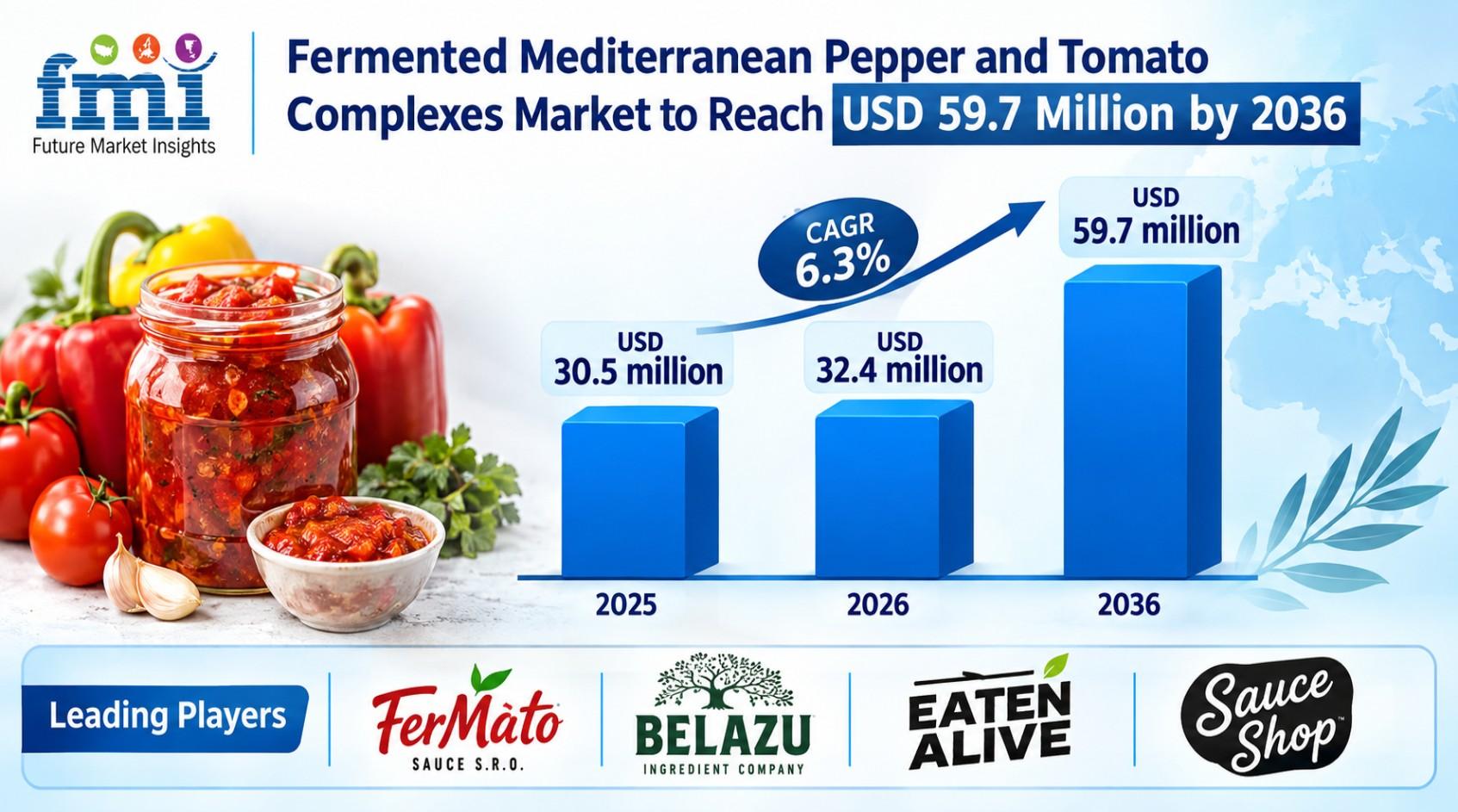
The global fermented Mediterranean pepper and tomato complexes market is evolving from a localized artisan pickle and table condiment niche into a standardized, high-value culinary base platform, according to latest insights by Future Market Insights. Driven by rising consumer preference for clean-label umami enhancers, the versatility of fermented tomato-pepper pastes across home and foodservice cooking, and the commercial scaling of controlled lactic fermentation systems that ensure batch-to-batch flavor and acidity consistency, these complexes are capturing dedicated shelf space across specialty retail and modern grocery channels.
The global market, valued at USD 30.5 million in 2025, is projected to reach USD 32.4 million in 2026. Advancing at a Compound Annual Growth Rate (CAGR) of 6.3% over the ten-year forecast period, total market valuation is anticipated to achieve USD 59.7 million by 2036, delivering an absolute incremental opportunity of USD 27.3 million.
Request a Sample Report: https://www.futuremarketinsights.com/reports/sample/rep-gb-32777
Market Performance Overview (2026–2036)
To map out the leading product forms, dominant fermentation pathways, core heat levels, and regional growth vectors guiding this USD 27.3 million market scale-up, key segment allocations highlight where global commercial demand is concentrated:
· Pastes Product Form Segment (34.0% share): Commands the product form category in 2026, favored by both home cooks and professional chefs for its concentrated texture, long refrigerated life after opening, and ease of use across marinades, sandwich spreads, and cooking pan bases.
· Purees, Sauces, Relishes, & Bases (66.0% combined share): Represent vital secondary formats, with pourable sauces contributing 31.0% of total demand as an approachable table-ready entry point.
· Lactic Fermentation Method (46.0% share): Dominates fermentation systems in 2026, preferred over wild fermentation because controlled bacterial starter cultures deliver a predictable sour-salty balance, stable pH, and reliable commercial batch consistency.
· Medium Heat Profile (39.0% share): Leads heat intensity preferences, balancing distinct pepper warmth with natural tomato sweetness and tangy acidity to ensure broad household and dining appeal.
· Clean-Label Positioning (41.0% share): Represents the primary marketing claim, driven by consumer demand for short, recognizable ingredient decks free from synthetic thickeners or artificial preservatives.
· Retail Channel (37.0% share) & Household End-Use (35.0% share): Form the primary commercial route-to-market and consumption pool, supported by premium glass jar packaging (33.0% share).
· Turkey & Spain Regional Leadership: Lead national expansion rates at 7.1% CAGR and 6.8% CAGR respectively through 2036, backed by deep domestic pepper cultivation, advanced tomato processing infrastructure, and strong culinary traditions.
Technical Drivers and Culinary Shifts
The commercial expansion and culinary integration of fermented Mediterranean pepper and tomato complexes are propelled by three primary industry catalysts:
Multi-Functional Culinary Utility Beyond Table Condiments
Modern culinary consumers and foodservice operators prioritize versatile ingredients that streamline kitchen prep. Concentrated fermented pepper and tomato pastes function simultaneously as flavor starters (sofrito bases), sandwich spreads, braising liquids, and finishing glazes, lowering consumer trial risk and justifying premium jar pricing.
Controlled Lactic Acid Fermentation vs. Wild Variability
While wild fermentation yields complex regional flavors, it introduces batch-to-batch sensory drift that complicates commercial scaling. Industrial producers utilize selected lactic acid bacteria (LAB) starter cultures to achieve consistent acidity, prevent spoilage, and maintain texture and color stability during ambient shelf life.
Clean-Label Flavor Depth and Natural Umami
Fermenting ripe tomatoes and Mediterranean peppers naturally breaks down proteins and starches into free glutamic acids and complex flavor volatiles. This natural bio-transformation delivers deep savory umami and tanginess without requiring added monosodium glutamate (MSG), artificial flavor enhancers, or chemical acidulants.
Industrial Constraints & Scaling Roadblocks
Artisan producers, specialty food processors, and procurement directors navigate specific operational hurdles:
· Raw Material Agricultural Variability: Natural fluctuations in seasonal tomato sugar content, pepper capsaicin heat levels, and harvest moisture can cause sensory shifts across production runs, requiring continuous blending adjustments.
· Artisan-to-Commercial Transition Hurdles: Scaling from small artisanal batches to high-volume commercial distribution requires investment in precision pasteurization, automated hot-fill sealing, and strict pH monitoring to guarantee 12-to-24-month ambient stability without synthetic additives.
Regional Growth Profile
Regional demand reflects deep agricultural processing and culinary familiarity in Mediterranean basins alongside specialty gourmet discovery across Western Europe and North America:
· Turkey (7.1% CAGR): The global growth frontrunner, driven by rich domestic pepper paste (biber salçası) traditions, high domestic consumption, and expanding export capacity.
· Spain (6.8% CAGR) & Italy (6.6% CAGR): Anchor European Mediterranean demand through world-class tomato processing hubs, established sofrito/pasta culinary bases, and strong specialty food retail channels.
· Greece (6.2% CAGR): Supported by traditional meze culture, premium olive-and-vegetable preserve exports, and specialty hospitality demand.
· France (5.9% CAGR) & Germany (5.7% CAGR): Lead Western European demand, where growth is driven by gourmet deli counters, premium organic retail chains, and expanding consumer interest in Mediterranean cooking bases.
· United States (5.5% CAGR): Represents an expanding specialty import market where foodies and home cooks seek artisanal fermented sauces to complement mainstream hot sauces and salsas.
Competitive Landscape
The global fermented Mediterranean pepper and tomato complexes landscape remains moderately fragmented, featuring a mix of regional Mediterranean specialty producers, modern craft fermentation brands, and premium sauce makers.
Key market participants profiled in the report include FerMato Sauce s.r.o., Belazu Ingredient Company, Eaten Alive, and Sauce Shop. Leading brands compete by highlighting single-origin pepper sourcing, utilizing glass jar packaging that displays natural product color and texture, securing certified clean-label and organic credentials, and developing dual-use recipes for retail and foodservice kitchen workflows.
Exclusive Discounts on Full Report: https://www.futuremarketinsights.com/reports/fermented-mediterranean-pepper-and-tomato-complexes-market
Frequently Asked Questions
What is the projected valuation of the global fermented Mediterranean pepper and tomato complexes market by 2036?
The global fermented Mediterranean pepper and tomato complexes market is projected to reach USD 59.7 million by 2036, expanding from an estimated baseline valuation of USD 32.4 million in 2026 at a CAGR of 6.3%.
Why do Pastes lead the Product Form segment with a 34.0% share?
Pastes dominate in 2026 because their concentrated density allows a single spoonful to serve multiple cooking roles from pan base to spread offering high kitchen versatility and minimal post-opening waste.
What is the dominant fermentation method used in this market?
Lactic fermentation accounts for 46.0% of the market in 2026, as controlled lactic acid bacterial cultures provide repeatable acidity, stable sour-salty flavor profiles, and reliable commercial shelf stability compared to wild fermentation.
FMI Custom Research: Strategic Intelligence for Confident Decision-Making
In today's rapidly evolving business environment, leadership teams need clear, actionable intelligence tailored to their strategic objectives. FMI's Custom Research solutions are designed around specific business questions, enabling executives to evaluate growth opportunities, validate investments, assess competitive dynamics, and reduce uncertainty before making critical decisions.
Key Executive Benefits
· Decision-Ready Insights: Research tailored to your specific business challenges, growth plans, and investment priorities.
· Reduced Strategic Risk: Validate market opportunities, customer demand, and competitive positioning before committing resources.
· Market Entry Confidence: Assess opportunity size, regulatory barriers, channel dynamics, and competitive landscapes with precision.
· Competitive Advantage: Gain proprietary intelligence unavailable through syndicated reports or internal datasets.
· Faster Growth Decisions: Accelerate expansion, product development, portfolio optimization, and investment planning.
· Primary Market Validation: Access real-world customer, buyer, and stakeholder insights that support high-confidence decision-making.
Business Impact
FMI helps organizations transform market complexity into strategic clarity, enabling leadership teams to identify growth opportunities faster, optimize resource allocation, strengthen competitive positioning, and make high-stakes business decisions with confidence.
To explore how FMI Custom Research can support your strategic priorities, connect with our team at - sales@futuremarketinsights.com
About Future Market Insights (FMI)
Future Market Insights (FMI) delivers actionable, decision-focused market intelligence that goes beyond traditional research reports. The company provides:
· In-depth pricing and cost benchmarking analysis
· Demand forecasting based on real industry inputs
· Procurement and buyer behavior insights
· Supply chain and trade flow intelligence
· Technology and application trend analysis across industries
FMI follows a robust bottom-up research methodology, combining insights from industry experts, procurement leaders, manufacturers, and technical professionals to ensure accurate and practical market intelligence.

 English
 Arabic
 French
 Spanish
 Portuguese
 Deutsch
 Turkish
 Italiano
 Russian
 Romaian
 Portuguese (Brazil)
 Greek
Greek
