


Hip Stretches to Improving Flexibility, Reducing Pain & Mobility
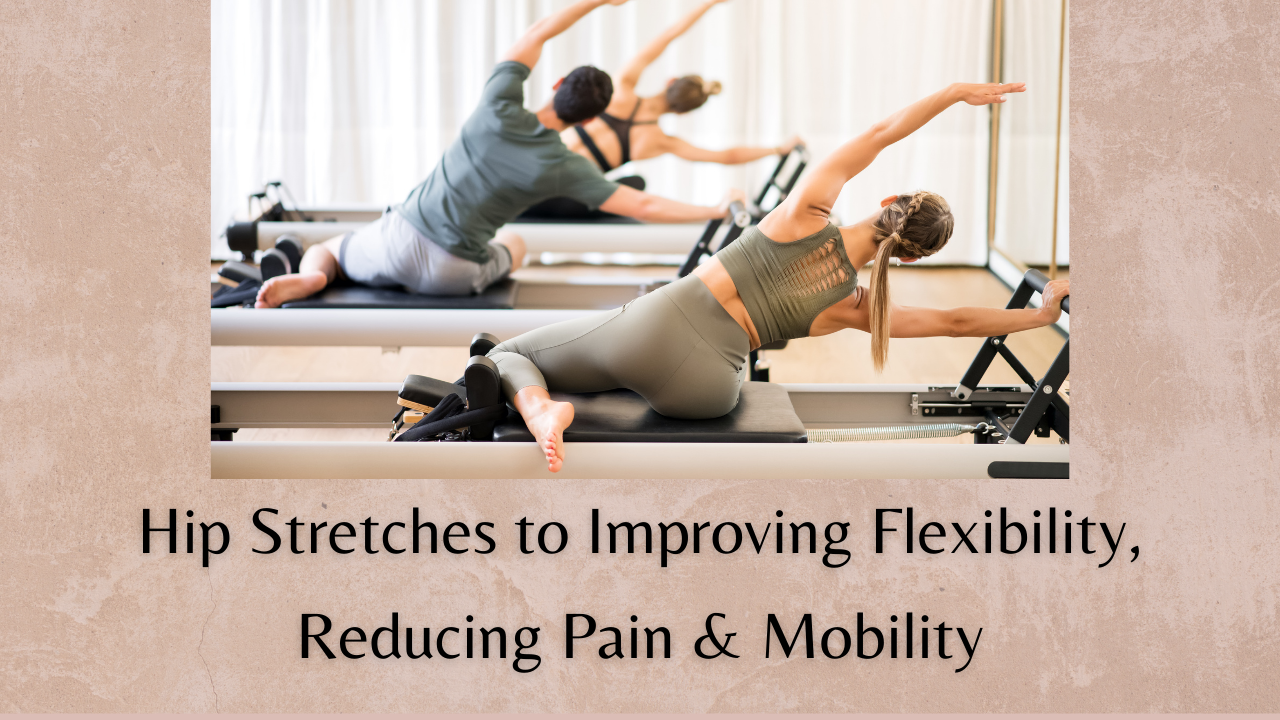
Why Hip Stretches Are Essential for Modern Lifestyles
Hip stretches have become increasingly important in today’s sedentary world. Long hours of sitting, limited movement, and poor posture contribute to tight hip flexors and restricted mobility. Over time, this stiffness can lead to lower back pain, poor posture, and reduced athletic performance. Incorporating hip stretches into your daily routine helps restore flexibility, improve circulation, and maintain joint health. Whether you are an office worker, athlete, or someone just beginning a fitness journey, prioritizing hip mobility is essential for long-term physical well-being. Many individuals who attend workout classes or practice pilates for beginners quickly realize that flexible hips are foundational to performing movements safely and effectively.
Understanding the Role of the Hips in Movement
The hips are one of the body’s largest and most powerful joints. They connect the upper and lower body, playing a central role in walking, running, bending, and lifting. When hip muscles become tight, other areas such as the knees and lower back compensate, increasing injury risk. Regular hip stretches maintain balanced muscle tension and allow smoother movement patterns. In structured fitness programs like pilates for beginners, hip mobility is often emphasized to support proper alignment and core engagement. By maintaining healthy hips, you enhance stability, posture, and overall movement efficiency.
Key Benefits of Adding Hip Stretches to Your Routine
One of the most significant advantages of hip stretches is improved flexibility. Flexible hips allow for better range of motion during squats, lunges, and everyday activities. Additionally, stretching reduces muscle tension and improves blood flow, promoting faster recovery after exercise. Many people underestimate how closely hip mobility is linked to lower back comfort. Tight hip flexors often pull the pelvis forward, creating strain on the spine. Incorporating daily hip stretches can relieve this pressure and support spinal health. Furthermore, pairing stretching with pilates for beginners amplifies the benefits of pilates, including improved posture, stronger core muscles, and enhanced body awareness.
Hip Stretches and Pilates for Beginners
For those new to exercise, combining hip stretches with pilates for beginners creates a balanced and accessible routine. Pilates focuses on controlled movements and breathing techniques, which complement flexibility training. The benefits of pilates extend beyond core strength; it also promotes muscle lengthening and joint alignment. Gentle exercises such as leg circles, bridges, and seated stretches target hip flexors and glutes effectively. Beginners attending workout classes often notice that improved hip flexibility enhances their performance and reduces discomfort during more advanced movements.
Best Hip Stretches to Improve Flexibility
Several effective hip stretches can be performed at home without equipment. The hip flexor stretch, performed in a lunge position, lengthens the front of the hip and reduces tension from prolonged sitting. The seated butterfly stretch targets inner thighs and improves groin flexibility. Pigeon pose, commonly practiced in yoga and pilates for beginners, deeply stretches the glutes and outer hips. Incorporating these stretches into your routine helps maintain joint mobility and prevent stiffness. Consistency is key; performing hip stretches for even five to ten minutes daily can lead to noticeable improvements over time.
How Hip Stretches Enhance Workout Performance
Flexible hips significantly impact overall performance in workout classes. Movements such as squats, lunges, and step-ups require proper hip mobility for safe execution. Tight hips can limit depth and compromise form, increasing injury risk. By integrating regular hip stretches, you create a stronger foundation for strength training and cardio sessions. Participants in pilates for beginners often experience smoother transitions between exercises as hip flexibility improves. This enhanced mobility supports better balance, coordination, and muscle activation.
The Connection Between Hip Stretches and Core Strength
Strong hips and a stable core go hand in hand. Many hip stretches also engage surrounding muscles such as the glutes and lower abdominals. When combined with pilates for beginners, stretching exercises activate deep stabilizing muscles that support the spine. The benefits of pilates include improved core engagement, which complements flexibility training. Together, they create a balanced approach to fitness that enhances both mobility and strength.
Preventing Injuries with Regular Hip Stretches
Injury prevention is one of the most overlooked benefits of consistent hip stretches. Limited hip mobility forces other joints to compensate, increasing stress on knees and lower back. Stretching restores natural movement patterns and reduces strain during physical activity. Many instructors in workout classes emphasize warm-up routines that include dynamic hip stretches before high-intensity exercises. This preparation improves performance while lowering the likelihood of muscle strains or joint discomfort. Over time, maintaining flexible hips supports long-term joint health and athletic longevity.
Hip Stretches for Desk Workers and Sedentary Lifestyles
Sedentary habits are one of the leading causes of hip tightness. Sitting for extended periods shortens hip flexors and weakens glute muscles. Incorporating simple hip stretches throughout the day counteracts these effects. Even brief stretching breaks can improve circulation and posture. For individuals new to fitness, starting with pilates for beginners offers a gentle introduction to movement. The benefits of pilates combined with daily stretching provide a practical solution for combating stiffness and discomfort associated with desk jobs.
How to Create a Daily Hip Stretch Routine
Building a daily routine around hip stretches does not require complex equipment or extensive time. Begin with a five-minute warm-up, followed by static stretches targeting hip flexors, glutes, and inner thighs. Pair stretching with light pilates for beginners exercises to activate core muscles and enhance flexibility. Attending workout classes once or twice a week can further reinforce proper technique and motivation. Gradual progression ensures steady improvement without overexertion. Consistency and mindful breathing during each stretch maximize effectiveness.
Hip Stretches for Long-Term Mobility and Wellness
Hip stretches are more than just flexibility exercises; they are a cornerstone of long-term mobility and overall wellness. When combined with pilates for beginners, pilates exercise they amplify the benefits of pilates, including stronger muscles, better posture, and improved coordination. Regular participation in workout classes and daily stretching habits create a balanced fitness routine that supports joint health and reduces injury risk. Prioritizing hip mobility today ensures better movement, reduced discomfort, and enhanced physical performance for years to come.

 English
 Arabic
 French
 Spanish
 Portuguese
 Deutsch
 Turkish
 Dutch
Dutch
 Italiano
 Russian
 Romaian
 Greek
Greek
