


Role of CPSF1 in Liver Cancer Research: How CPSF1 ELISA Kits Support Biomarker Studies
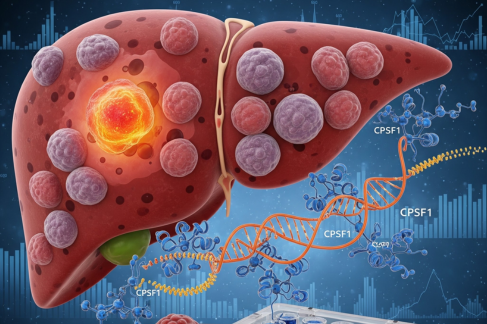
Cancer research increasingly focuses on molecular changes that distinguish healthy cells from tumor cells. While DNA mutations and signaling pathways receive considerable attention, changes in RNA processing can also influence how cells function and respond to their environment. One protein involved in RNA processing is cleavage and polyadenylation specificity factor subunit 1 (CPSF1).
CPSF1 is part of the cellular machinery responsible for processing messenger RNA (mRNA), making it relevant to studies of gene expression and cancer biology. A CPSF1 ELISA kit can support researchers in investigating CPSF1 protein levels in biological samples and exploring its potential association with molecular changes observed in liver cancer models.
What Is CPSF1?
CPSF1, also known as cleavage and polyadenylation specificity factor subunit 1, is a component of the cleavage and polyadenylation machinery involved in mRNA processing.
Before many mRNA molecules can become functional, they undergo several processing steps. One important step involves cleavage at the appropriate end of the RNA transcript followed by the addition of a poly(A) tail. This processing contributes to mRNA stability, transport, and translation.
CPSF1 participates in this cellular process as part of a larger protein complex. Because proper RNA processing is essential for normal gene expression, alterations in these mechanisms can be relevant to cancer research.
Understanding Liver Cancer
Liver cancer develops when abnormal cells in the liver undergo uncontrolled growth and survival. Hepatocellular carcinoma (HCC) is the most common primary liver cancer and is a major focus of molecular cancer research.
Researchers investigate numerous biological processes involved in liver cancer, including:
-
Abnormal cell proliferation
-
Changes in gene expression
-
Altered RNA processing
-
Cellular stress responses
-
Tumor progression
-
Metabolic changes
-
Interactions between tumor cells and surrounding tissues
Studying proteins involved in RNA processing may provide additional information about molecular changes occurring during liver tumor development.
Why Study CPSF1 in Liver Cancer Research?
Gene expression is tightly regulated within healthy liver cells. Cancer can disrupt this regulation through changes at multiple levels, including transcription, RNA processing, translation, and protein degradation.
Since CPSF1 participates in mRNA processing, researchers can investigate whether changes in CPSF1 protein levels are associated with specific cellular or disease-related conditions.
A CPSF1 ELISA kit can help researchers measure CPSF1 in experimental samples, allowing them to compare protein levels between different groups or conditions.
Investigating Altered Gene Regulation
Cancer cells frequently demonstrate altered patterns of gene expression. Changes in RNA processing can contribute to these differences by affecting which transcripts are produced and how efficiently they are processed.
Studying CPSF1 can therefore contribute to research examining the connection between RNA processing and abnormal gene regulation in liver cancer.
Comparing Experimental Groups
Researchers may compare CPSF1 levels across different sample groups to investigate molecular differences.
For example, experimental designs may involve comparisons between:
-
Healthy and cancer-related samples
-
Different liver cancer cell models
-
Treated and untreated experimental groups
-
Samples representing different stages or conditions
-
Control and disease-model tissues
Such comparisons can help researchers identify patterns that warrant further investigation.
How CPSF1 ELISA Kits Support Biomarker Studies
ELISA is widely used in biomedical research to detect and quantify proteins. A CPSF1 ELISA kit provides a structured assay system for investigating CPSF1 levels in suitable biological samples.
The resulting measurements can be used as part of broader molecular studies rather than being interpreted independently.
Researchers can integrate CPSF1 measurements with other experimental findings, such as gene expression data, cell proliferation measurements, or observations of tumor-associated signaling pathways.
Quantitative Protein Measurement
One of the major advantages of ELISA-based research is the ability to generate quantitative protein measurements.
Researchers can use these measurements to evaluate differences between experimental groups and determine whether CPSF1 levels change under particular conditions.
Supporting Molecular Profiling
Cancer research often involves analyzing multiple biomarkers simultaneously. CPSF1 measurements can potentially be incorporated into a broader molecular profile of liver cancer models.
This approach allows researchers to investigate whether CPSF1 changes occur alongside other molecular alterations.
Monitoring Experimental Changes
Researchers may also examine CPSF1 levels following an experimental intervention. For example, changes in CPSF1 can be studied after altering cellular conditions or testing research compounds.
This can provide additional information about how experimental conditions influence RNA-processing-related proteins.
Research Applications of CPSF1 ELISA Kits
A CPSF1 ELISA kit may be incorporated into several types of liver cancer research depending on the experimental objective and assay validation.
Cancer Biomarker Research
Researchers can investigate CPSF1 as part of exploratory biomarker studies. Measuring its protein levels across different sample groups can help identify associations that may require additional validation.
Cell Biology Research
CPSF1 measurements can support studies examining how liver cancer cells regulate gene expression and RNA processing.
Researchers may combine protein-level measurements with cellular assays to develop a more comprehensive picture of cellular behavior.
Treatment-Response Studies
Experimental treatments can influence numerous cellular pathways. Measuring CPSF1 before and after treatment may help researchers investigate whether RNA-processing-related changes accompany treatment-associated cellular responses.
Disease Mechanism Studies
Understanding molecular mechanisms is an important part of cancer research. CPSF1 studies can contribute to investigations into how changes in RNA processing may relate to abnormal cellular activity.
Important Considerations When Using a CPSF1 ELISA Kit
Obtaining reliable experimental results requires careful assay planning. Researchers should consider several factors before selecting and using a CPSF1 ELISA kit.
Sample Type
Researchers should confirm that the kit is appropriate for the biological sample being studied. Sample preparation and storage can also affect protein measurements.
Assay Specificity
The assay should be designed to detect the intended CPSF1 target with suitable specificity. Researchers should review the available product specifications and validation information.
Experimental Controls
Controls are essential for interpreting ELISA results. Appropriate controls can help researchers identify background signals and determine whether observed differences are associated with the target protein.
Standardization
Consistent sample preparation, assay conditions, and data analysis are important when comparing CPSF1 levels across multiple experimental groups.
CPSF1 and the Future of Liver Cancer Research
Liver cancer involves complex molecular changes that cannot be explained by a single pathway or biomarker. RNA processing represents one area that can provide valuable insights into cancer cell biology.
By examining proteins such as CPSF1, researchers can explore how changes in mRNA processing may contribute to altered gene expression and tumor-associated cellular behavior.
Combining CPSF1 protein measurements with genomic, transcriptomic, and cellular data may provide a more comprehensive understanding of molecular changes in liver cancer models.
Conclusion
CPSF1 plays an important role in the cellular machinery responsible for mRNA processing, making it a relevant target for studies investigating gene regulation and cancer biology. In liver cancer research, measuring CPSF1 protein levels can help researchers explore molecular differences between experimental conditions and investigate its potential relevance as a research biomarker.
A CPSF1 ELISA kit can provide a practical approach for quantitative protein analysis and can be incorporated into broader studies of liver cancer mechanisms, biomarker discovery, and experimental treatment responses.
AAA Biotech is a trusted supplier of ELISA kits for researchers conducting cancer biomarker and molecular biology studies. For more information, visit the site.

 Arabic
 French
 Spanish
 Portuguese
 Deutsch
 Turkish
 Dutch
Dutch
 Italiano
 Russian
 Romaian
 Portuguese (Brazil)
 Greek
Greek
