


Understanding Rubber Curing with YG-1 Rubber Accelerator
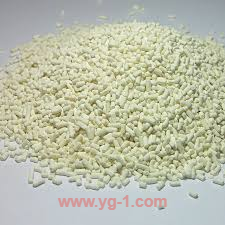
How Does Rubber Accelerator Affect Rubber Vulcanization Speed?
Rubber vulcanization is a carefully controlled chemical process that transforms an uncured compound into a material with useful elasticity, strength, resilience, and dimensional stability. Heat activates the curing system, allowing chemical bonds to develop between polymer chains and form a connected network throughout the compound. The selection of a suitable rubber accelerator can influence how quickly this reaction develops and how the compound behaves during processing. YG-1 provides rubber processing products and technical resources for manufacturers exploring different curing requirements. So, how does an accelerator actually affect vulcanization speed?
The Relationship Between Curing and Processing
Vulcanization does not begin and finish as a simple instant reaction. It develops progressively as the compound receives heat inside processing equipment. During this period, the curing system interacts with the polymer, sulfur or another curing agent, activators, fillers, and additional formulation ingredients.
An accelerator helps promote the chemical reactions involved in crosslink formation. Its chemical characteristics can affect the beginning of curing, the development of the reaction, and the final state of the rubber network. This makes accelerator selection an important part of compound formulation.
However, curing speed should not be viewed as an isolated target. A production process needs enough time for mixing, extrusion, molding, or other shaping operations before substantial crosslinking begins. If the reaction starts prematurely, processing stability can become difficult to maintain. If curing develops too slowly, the production cycle may require excessive heating time.
A suitable curing system therefore aims for balance. The formulation should remain workable during preparation while developing the desired network after the material reaches its intended curing conditions.
How Temperature Changes Vulcanization Behavior
Temperature has a strong influence on curing activity. As heat increases, molecular movement becomes more active and the chemical reactions within the compound can proceed at a greater rate. The accelerator interacts with this thermal environment and influences the pathway through which crosslinks are generated.
This interaction means that an additive selected for one processing temperature may not provide identical behavior under another thermal condition. Equipment design, mold temperature, heating method, compound thickness, and production speed can all influence the actual curing profile.
For this reason, manufacturers often examine curing characteristics through laboratory testing before introducing a formulation into regular production. Testing can reveal the approximate onset of curing, reaction development, and the point at which the compound approaches its intended cured state.
Such information is valuable when setting processing parameters. Instead of relying solely on theoretical formulation data, manufacturers can compare actual compound behavior with the requirements of their equipment and finished products.
Scorch Safety and Curing Rate
One of the important considerations in rubber processing is scorch safety. Scorch refers to premature vulcanization that can occur while a compound is being mixed, transferred, extruded, or shaped.
A formulation with excessive early activity may begin crosslinking before the material reaches its intended curing stage. Once this happens, viscosity and flow behavior can change, potentially creating difficulties during forming.
On the other hand, insufficient curing activity can result in a lengthy reaction period. This may affect production scheduling and thermal efficiency.
The relationship between scorch safety and curing speed is therefore essential. An appropriate accelerator system should support the required curing reaction while maintaining a practical processing window. The exact balance depends on the polymer type, curing package, processing method, and characteristics expected from the final product.
Formulation Design and Final Rubber Properties
Vulcanization speed is also connected with the structure of the cured material. Crosslink formation influences hardness, elasticity, tensile behavior, compression recovery, abrasion resistance, and other physical characteristics.
Changing the accelerator system can therefore affect both processing behavior and final product performance. A highly active formulation may develop crosslinks rapidly, but rapid reaction alone does not guarantee suitability for every application. Rubber goods designed for flexibility may require a different network structure from products intended to withstand continuous mechanical stress.
Tire compounds, industrial seals, hoses, conveyor belts, cables, footwear, and molded rubber components all have different requirements. Their formulations may use different curing systems because their service environments and performance expectations are not identical.
Manufacturers should therefore evaluate the entire formulation instead of selecting an additive according to curing speed alone. Polymer compatibility, activator interaction, sulfur balance, filler loading, processing temperature, and desired physical properties all deserve consideration.
Selecting the Right Curing System
Choosing a suitable accelerator starts with understanding the base rubber. Natural rubber and various synthetic rubbers can respond differently to the same curing package. Even within a similar material category, changes in polymer characteristics or compound composition can alter reaction behavior.
Processing technology is another important factor. Compression molding, injection molding, extrusion, and other techniques expose rubber compounds to different combinations of pressure, temperature, and residence time. The curing system needs to fit these conditions.
Manufacturers may also consider storage stability, compatibility with other ingredients, processing safety, curing characteristics, and the properties required after vulcanization. A formulation that performs well in laboratory testing still needs practical evaluation under actual production conditions.
This is where technical information can become valuable. Product specifications, application guidance, and formulation references give engineers useful information when comparing available options and establishing a suitable testing plan.
YG-1, associated with Taizhou Huangyan Donghai Chemical Co., Ltd., provides rubber-related products and information through its online platform. Its resources allow manufacturers to explore curing additives and related processing materials according to their application requirements.
Applications in Different Rubber Industries
Controlled curing is important across a wide range of manufacturing sectors. In tire production, curing behavior contributes to compound consistency and final material characteristics. Industrial hoses need a suitable balance of flexibility, strength, and resistance to repeated pressure. Sealing components require dimensional stability and reliable recovery after compression.
Conveyor belts are exposed to repeated mechanical loading, while rubber cables and electrical components may require carefully controlled physical characteristics. Footwear compounds can also require specific combinations of elasticity, durability, and processing behavior.
Although the products differ, the principle remains similar. The curing system must be matched with the polymer, formulation, equipment, and intended application.
For manufacturers working with several product categories, formulation flexibility can be particularly useful. Different compound designs may require adjustments in curing behavior, and technical evaluation can help determine which additive system is appropriate for each project.
Improving Control Through Testing
Laboratory evaluation provides a practical way to understand how a formulation behaves under controlled conditions. Rheometer testing, for example, can provide information about torque development and curing characteristics. This data can help engineers compare formulations and identify changes caused by different curing ingredients.
Testing can also reveal whether a compound has an appropriate processing window. When the onset of curing occurs too early, formulation adjustments may be necessary. When the reaction develops slowly, the curing system may require further evaluation.
Production trials are equally important because laboratory conditions cannot reproduce every aspect of an industrial process. Equipment configuration, material thickness, heating uniformity, mixing conditions, and production speed can influence actual results.
A systematic approach combining formulation design, laboratory analysis, and production validation can help manufacturers develop a practical curing strategy.
Exploring Rubber Processing Solutions
The selection of curing additives should always consider the complete manufacturing system rather than a single performance characteristic. Temperature, polymer structure, curing agents, activators, fillers, mixing conditions, and equipment settings interact throughout the process.
For manufacturers researching suitable products, YG-1 offers an online resource covering rubber processing materials and related information. The platform can help visitors understand available product categories and identify options for further technical evaluation.
For companies interested in specific accelerator products and application information,https://www.yg-1.com/ provides a dedicated product reference. A carefully selected Rubber Accelerator can become part of a balanced curing system designed around processing conditions, compound structure, and the performance requirements of the finished rubber product.

 English
 Arabic
 French
 Spanish
 Portuguese
 Turkish
 Dutch
Dutch
 Italiano
 Russian
 Romaian
 Portuguese (Brazil)
 Greek
Greek
