


UK Financial Regulation Course: Build Professional Knowledge for the Finance Industry
The UK financial services industry operates within a regulatory environment where professional competence, ethical conduct, consumer protection and compliance are essential. For students, graduates and professionals looking to develop a career in finance, banking, investment, wealth management or compliance, a UK financial regulation course can provide a valuable foundation.
Financial regulation is not simply about learning rules. It is about understanding how regulatory principles influence the way financial firms operate, how professionals interact with customers and how organisations manage risk and maintain appropriate standards.
What Is a UK Financial Regulation Course?
A UK financial regulation course is a professional training programme designed to introduce learners to the regulatory framework governing financial services in the United Kingdom.
Depending on the programme, learners may study:
- UK financial markets
- Financial regulators
- FCA and PRA responsibilities
- Professional ethics and integrity
- Governance
- Financial crime
- Compliance
- Risk management
- Consumer protection
- Complaints and redress
- Conduct of business requirements
This knowledge can be useful for people who want to understand the regulatory environment before moving into a specialist financial career.
Why Is Financial Regulation Important?
Financial regulation supports confidence and integrity within financial markets. It also establishes expectations around how firms and professionals should behave.
The FCA's training and competence framework states that firms must ensure employees have the skills, knowledge and expertise required for their responsibilities. It also includes qualification requirements for certain regulated activities.
For this reason, regulatory education can complement technical knowledge in areas such as investment, financial planning, wealth management and risk.
Understanding the FCA and PRA
The Financial Conduct Authority (FCA) and Prudential Regulation Authority (PRA) are important parts of the UK's financial regulatory structure.
Understanding their respective roles can help learners develop a clearer picture of how financial firms are supervised and how regulatory expectations influence professional activities.
A comprehensive course can also explore the relationship between regulation, governance, competence and professional integrity rather than treating each topic separately.
CIFA's UK Financial Regulation Course
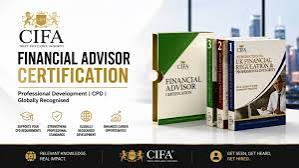
CIFA offers Introduction to UK Financial Regulation & Professional Integrity, a digital course focused on the UK's financial regulatory environment.
Its curriculum covers professional ethics, UK capital markets, contract and trust law, financial risk, financial regulators, FCA and PRA frameworks, competence, financial crime, complaints and redress, and the FCA's Conduct of Business Sourcebook (COBS).
CIFA currently lists the programme as an intermediate-level digital course with 160 CPD hours. The course includes mock examinations, lifetime portal access and a certificate of achievement following successful completion and passing of the examination.
The current listed enrolment fee is £358, while CIFA lists an optional study-support package separately at £72.
What Can You Learn?
Professional Ethics and Integrity
Financial professionals can have significant responsibilities toward clients and organisations. Understanding integrity, ethical behaviour and professional standards can therefore be an important part of financial education.
UK Capital Markets
Learners can develop broader knowledge of how UK capital markets function and why regulation is important to their operation.
Financial Regulators
Understanding regulatory bodies helps students put individual rules and requirements into a wider context.
FCA and PRA Framework
A dedicated regulatory programme can introduce learners to the principles and structures associated with FCA and PRA supervision.
Financial Crime
Financial crime prevention is an important component of modern financial services. Regulatory education can help learners understand why appropriate controls and compliance processes are necessary.
Complaints and Redress
Customer complaints and redress are another important part of responsible financial services. Learning about these areas can improve awareness of customer protection and professional responsibilities.
Conduct of Business
COBS is an important part of the FCA Handbook. CIFA's course specifically includes a chapter focused on the Conduct of Business Sourcebook and its rules and requirements.
Who Should Study a UK Financial Regulation Course?
A financial regulation course may be useful for a range of learners.
Finance graduates can use regulatory education to complement their academic studies.
Career changers can develop an understanding of the financial services environment before pursuing specialist roles.
Compliance professionals can strengthen their knowledge of regulatory principles and professional standards.
Banking professionals can develop broader awareness of regulatory expectations.
Investment professionals can combine investment knowledge with understanding of compliance and conduct.
Aspiring wealth managers can study regulation alongside investment, risk and financial planning.
Financial Regulation and Career Development
Regulatory knowledge can support professional development across areas such as:
- Financial compliance
- Banking
- Investment services
- Wealth management
- Risk management
- Financial planning
- Financial crime prevention
- Regulatory support
- Governance
- Investment operations
However, learners should understand the difference between financial regulation education and the qualifications required to perform specific regulated activities.
The FCA explains that certain activities have appropriate qualification requirements and that the relevant requirements depend on the activity being performed.
Is a UK Financial Regulation Course an FCA Qualification?
Not necessarily.
The FCA does not itself offer qualifications. Instead, it establishes examination standards and maintains information about appropriate qualifications for particular regulated activities.
Therefore, students should carefully check what a particular course provides and whether it meets the requirements of their intended role.
A professional certificate can demonstrate successful completion of a learning programme, but it should not automatically be interpreted as FCA authorisation.
Combining Regulation With Other Finance Skills
Regulatory knowledge can become even more useful when combined with specialist financial education.
For example, someone interested in investment advisory work may study regulation alongside investment risk, taxation and investment principles. CIFA's Investment Advisor Certification includes UK financial regulation and professional integrity as one of its core areas alongside other investment-related subjects.
Similarly, learners interested in wealth management can combine regulation with securities, investment and taxation. CIFA's Foundations in Wealth Management programme brings these subjects together within a broader learning pathway.
Why Choose Online Financial Regulation Training?
Online study can provide flexibility for professionals who are working while developing their knowledge.
A digital programme allows learners to access course materials without necessarily attending traditional classroom sessions. This can be particularly useful for career changers and working professionals who need to organise education around existing commitments.
When comparing online programmes, however, learners should look beyond convenience and consider course content, assessment, level, CPD information, certification and professional relevance.
How to Choose the Right Course?
Before enrolling in a UK financial regulation course, consider:
Course content: Does it cover the areas relevant to your career objectives?
Level: Is the programme appropriate for your existing experience?
Assessment: How is learning assessed?
CPD: How many CPD hours are included?
Certification: What certificate is awarded after completion?
Career relevance: Does the course support your intended career direction?
Regulatory requirements: If you plan to undertake a regulated activity, have you checked the specific qualification requirements?
Conclusion
A UK financial regulation course can provide valuable knowledge for anyone interested in the regulatory, compliance and professional environment surrounding financial services.
Studying areas such as FCA and PRA frameworks, professional integrity, financial crime, governance, complaints, competence and conduct can complement broader financial knowledge and support continued professional development.
CIFA's Introduction to UK Financial Regulation & Professional Integrity provides a structured online option covering these areas, with 160 CPD hours and an examination leading to a certificate of achievement after successful completion.
For the best results, learners should select a programme according to their career goals and distinguish general regulatory education from the specific qualifications required for regulated financial activities.
Frequently Asked Questions
What is a UK financial regulation course?
It is a professional training programme designed to develop knowledge of UK financial regulation, regulators, compliance, professional conduct and related financial services responsibilities.
Is a UK financial regulation course useful for a finance career?
Yes. Regulatory knowledge can complement careers in compliance, banking, investment, wealth management, risk management and other financial services areas.
Does completing a financial regulation course make me FCA authorised?
No. Course completion does not automatically provide FCA authorisation. Certain regulated activities have specific qualification and competence requirements.
Does CIFA offer UK financial regulation training?
Yes. CIFA offers Introduction to UK Financial Regulation & Professional Integrity, covering UK financial markets, regulators, FCA and PRA frameworks, financial crime, complaints and COBS.

 English
 French
 Spanish
 Portuguese
 Deutsch
 Turkish
 Dutch
Dutch
 Italiano
 Russian
 Romaian
 Portuguese (Brazil)
 Greek
Greek
