


How to Choose an Emerald Cut Engagement Ring in New Zealand
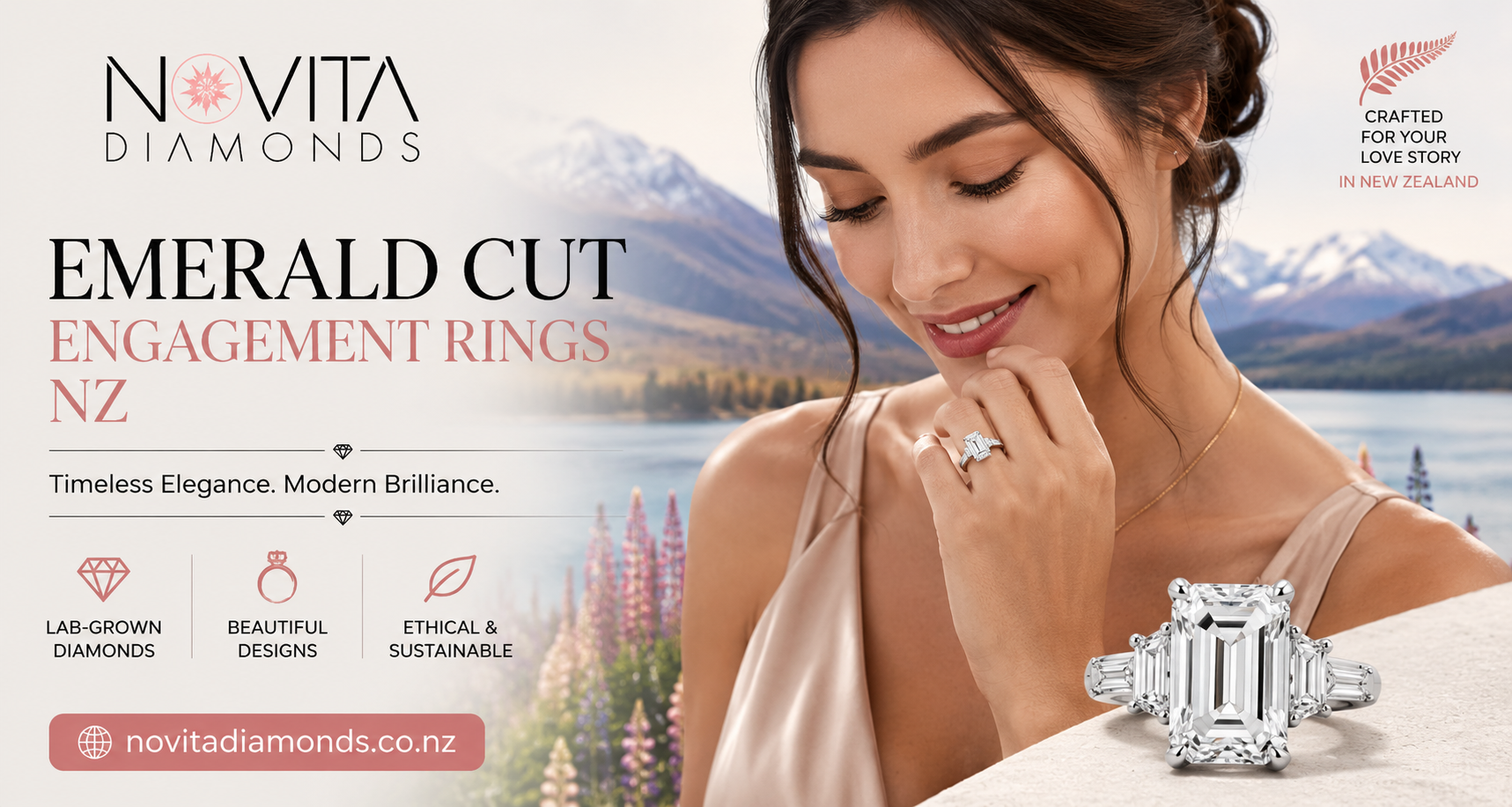
An emerald-cut diamond has a very different personality from the high-sparkle look many people associate with engagement rings. Its long rectangular outline, cropped corners and broad step-cut facets create flashes of light rather than constant glitter. For shoppers researching emerald cut engagement rings NZ, that difference makes proportions, clarity and setting choice especially important.
The shape can work beautifully in minimalist solitaires, vintage-inspired designs and modern settings. It can also make a diamond appear visually substantial because more of its weight may be visible across the top of the stone. The right choice, however, depends less on chasing a particular grade and more on understanding how the diamond actually looks.
What Makes an Emerald-Cut Diamond Different?
Emerald-cut diamonds use a step-cut facet pattern. Instead of the smaller triangular and kite-shaped facets found in many brilliant cuts, step cuts use long, parallel facets arranged around a broad central table.
This creates the characteristic "hall of mirrors" appearance: alternating light and dark reflections that move across the stone as it turns.
The appeal is more architectural than fiery. Buyers who prefer clean lines, symmetry and understated elegance often gravitate towards this shape. It also works particularly well in engagement-ring designs where the centre stone is intended to remain visually dominant.
One practical consequence of the facet structure is that inclusions may be easier to notice than they are in a brilliant-cut diamond. That makes visual inspection particularly useful.
Which Emerald-Cut Proportions Should Buyers Look At?
There is no single length-to-width ratio that makes every emerald-cut diamond attractive. The ratio mainly controls whether the diamond appears relatively square, classically rectangular or noticeably elongated.
A longer shape may create a slimmer visual effect on the finger, while a broader emerald cut can feel more substantial and traditional.
Rather than treating one ratio as automatically superior, compare several stones and pay attention to:
-
overall symmetry
-
corner shape
-
balance between length and width
-
the pattern of light and dark areas
-
whether the centre appears lively rather than dull
-
how large the diamond looks face-up
Two diamonds with the same carat weight can look noticeably different because carat measures weight, not visible dimensions.
Why Clarity Matters More With Emerald Cuts
Emerald cuts tend to reveal the interior of a diamond more clearly than highly faceted brilliant shapes. Their large table and open step facets provide fewer reflections to disguise inclusions.
That does not mean buyers automatically need the highest clarity grade available. A better approach is to look for a diamond that appears clean to the unaided eye from a normal viewing distance.
The position of an inclusion can matter as much as the grade itself. A small inclusion near the edge may be far less noticeable than one sitting directly beneath the table.
A grading report provides an important reference, but the report should be combined with actual images, video or an in-person inspection whenever possible.
How Colour Appears in an Emerald-Cut Diamond
Colour should also be evaluated in the finished ring rather than lab made diamonds only as a letter on a grading report.
Because an emerald-cut diamond has a large face-up area and relatively open facets, subtle body colour can sometimes be more visible than it would be in a shape designed around intense brilliance.
Metal choice influences perception too. White gold and platinum create a cooler surrounding appearance, while yellow or rose gold can provide warmer contrast.
This is one reason matching the diamond to the entire ring design often produces a better result than selecting the stone and setting independently.
Carat Weight Versus Visible Size
Carat weight is useful for comparing diamond weight, but it does not tell you exactly how large a stone will appear once set.
Dimensions matter.
An emerald-cut diamond's elongated outline can give it an impressive visual footprint, although depth and individual proportions influence face-up size. A heavier stone is therefore not automatically the diamond that looks largest.
Buyers comparing different options should review the millimetre measurements listed on the grading report alongside carat weight.
This can be particularly helpful when two diamonds fall into similar price ranges but differ in their visible spread.
Which Settings Work Best With Emerald-Cut Engagement Rings?
The straight edges and clipped corners of emerald cuts make them adaptable to several ring styles.
A solitaire keeps attention on the centre diamond and highlights its geometric outline. Four-prong settings can create a relatively open appearance, although the vulnerable cropped corners still need appropriate protection.
Halo settings add surrounding sparkle and can increase the perceived visual presence of the ring. Pavé bands introduce more brilliance while allowing the emerald-cut centre to retain its distinctive step-facet character.
Three-stone designs can create a wider composition across the finger. Side stones with similarly structured shapes can produce a highly geometric look, while brilliant-cut side diamonds create stronger contrast.
The setting should also suit everyday wear. A very high-set centre stone may catch more easily on clothing, whereas a lower profile can feel more practical for someone who regularly works with their hands.
Do Lab-Grown Diamonds Suit Emerald-Cut Rings?
Yes. Diamond shape describes how a diamond is cut, not whether it formed underground or was grown in a controlled environment.
Lab-grown diamonds can therefore be cut into emerald shapes using the same general faceting principles applied to mined diamonds. Buyers still need to evaluate the familiar quality characteristics: proportions, colour, clarity, carat weight and grading information.
For New Zealand shoppers comparing ring styles and centre-stone options, browsing specialist collections such as emerald cut engagement rings NZ can also help clarify how different diamond sizes, metals and settings change the overall appearance of an engagement ring.
A retailer such as novitadiamonds.co.nz may be useful as one reference point for shoppers considering lab-grown diamond engagement-ring designs in the New Zealand market.
Emerald Cut or Round Brilliant: Which Style Suits You?
The strongest difference is visual character.
| Feature | Emerald Cut | Round Brilliant |
|---|---|---|
| Light appearance | Broad flashes | Strong overall sparkle |
| Shape | Rectangular with cropped corners | Circular |
| Facet style | Step cut | Brilliant cut |
| Visual mood | Clean and architectural | Classic and lively |
| Inclusion visibility | Often more noticeable | Often easier to disguise |
Someone who wants maximum sparkle may naturally prefer a round brilliant. Someone drawn to symmetry, elongated proportions and a quieter style of light performance may prefer an emerald cut.
Neither is automatically the better engagement-ring shape. The choice should reflect what the wearer actually enjoys looking at every day.
What to Check Before Choosing the Final Diamond
A grading certificate is valuable, but emerald-cut diamonds should not be selected solely by grades displayed in a filter.
Study the actual stone whenever possible. Look at how evenly the facets switch between light and dark as the diamond moves. Check whether the shape appears balanced, whether the centre remains visually engaging and whether any inclusion is noticeable without magnification.
Then consider the diamond in relation to the ring itself: band width, metal colour, setting height and side-stone design can all change how the centre stone appears.
For an emerald-cut engagement ring, the most satisfying choice is usually the diamond whose proportions, clarity and facet pattern work together visually, rather than the one that simply has the most impressive specifications on paper.

 English
 Arabic
 French
 Spanish
 Portuguese
 Deutsch
 Turkish
 Dutch
Dutch
 Russian
 Romaian
 Portuguese (Brazil)
 Greek
Greek
