


Market Forecast: AI Governance Platforms
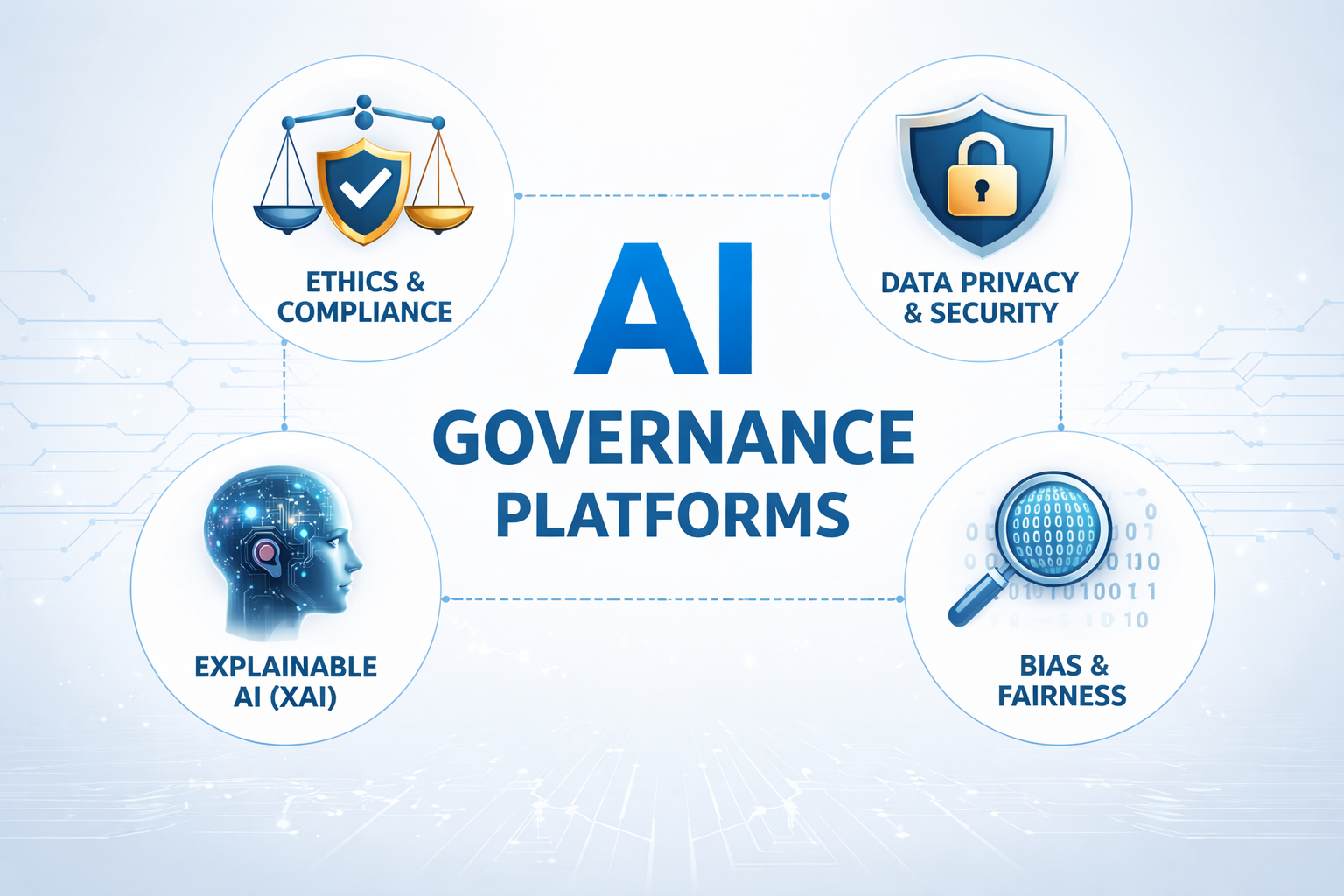
Artificial intelligence is transforming industries at an unprecedented pace. From healthcare and banking to retail, manufacturing, and cybersecurity, AI technologies are enabling organizations to automate processes, improve decision-making, and deliver personalized experiences. However, the rapid adoption of AI has also introduced concerns related to bias, transparency, privacy, accountability, and ethical decision-making. As a result, the demand for effective AI governance frameworks and solutions is increasing globally.
What is AI Governance?
AI governance refers to the policies, frameworks, processes, and technologies used to ensure that artificial intelligence systems operate ethically, transparently, securely, and in compliance with regulations. It helps organizations manage AI risks while maintaining accountability and fairness throughout the AI lifecycle.
AI governance frameworks typically include:
- AI ethics guidelines
- Data governance and privacy controls
- Bias detection and mitigation
- Explainable AI practices
Key Factors Driving the AI Governance Market
Rising Regulatory Requirements
Governments and regulatory authorities worldwide are introducing strict regulations and standards for AI deployment. Regulations focusing on data privacy, algorithm transparency, and ethical AI usage are compelling businesses to implement robust AI governance practices.
The introduction of frameworks such as the EU AI Act, GDPR compliance requirements, and other regional AI policies is encouraging enterprises to adopt governance solutions that ensure compliance with legal obligations.
Growing Concerns Around AI Bias and Discrimination
AI systems rely heavily on data for training and decision-making. If datasets contain biased or incomplete information, AI models may produce unfair or discriminatory outcomes. This has raised concerns across industries such as finance, healthcare, recruitment, and law enforcement.
AI governance solutions help organizations detect, monitor, and mitigate bias in AI algorithms. Businesses are increasingly investing in responsible AI tools that promote fairness, inclusivity, and ethical decision-making processes.
Increasing Focus on Data Privacy and Security
As AI applications process large volumes of sensitive and personal data, concerns regarding privacy breaches and cybersecurity threats continue to grow. Organizations must ensure that AI systems comply with data protection laws while safeguarding confidential information.
Emerging Trends in the AI Governance Market
Adoption of AI Ethics Frameworks
Businesses are increasingly adopting AI ethics guidelines to ensure responsible AI development and deployment. Ethical AI principles focus on fairness, accountability, privacy, transparency, and human oversight.
Organizations are establishing AI ethics committees and governance boards to evaluate AI initiatives and ensure alignment with corporate values and regulatory standards.
Integration with Risk and Compliance Management
AI governance solutions are being integrated into existing governance, risk, and compliance (GRC) frameworks. This integration enables businesses to monitor AI risks alongside operational, financial, and cybersecurity risks.
Increased Investment in Responsible AI Technologies
The growing emphasis on trustworthy AI is driving investments in responsible AI technologies. Companies are adopting advanced tools for AI monitoring, model validation, bias detection, and automated compliance reporting.
Expansion Across Industry Verticals
AI governance adoption is expanding across various sectors, including:
- Healthcare
- Banking and financial services
- Retail and e-commerce
- Manufacturing
- Government and public sector
- Cybersecurity
Industries handling sensitive data and critical decision-making processes are prioritizing AI governance to ensure regulatory compliance and ethical AI usage.
Benefits of AI Governance Solutions
Implementing AI governance frameworks offers several advantages for organizations, including:
- Improved regulatory compliance
- Reduced AI bias and ethical risks
- Stronger data privacy and security
- Better AI performance monitoring
These benefits are encouraging enterprises to prioritize AI governance as part of their long-term digital transformation initiatives.
Future Outlook of the AI Governance Market
The future of the AI Governance market looks highly promising as organizations continue to adopt AI technologies across business operations. The increasing complexity of AI systems, combined with growing public and regulatory scrutiny, will accelerate the demand for comprehensive AI governance solutions.
Conclusion
The global AI Governance market is experiencing rapid growth due to rising concerns around ethical AI usage, regulatory compliance, transparency, and data privacy. As AI technologies become deeply integrated into business operations, organizations must adopt robust governance strategies to ensure responsible AI deployment.
AI governance frameworks help businesses manage risks, improve accountability, and build trust in AI systems while supporting innovation and compliance objectives. With increasing investments in responsible AI practices and evolving global regulations, AI governance will remain a critical priority for enterprises across industries in the coming years.


 English
 Arabic
 French
 Spanish
 Portuguese
 Deutsch
 Turkish
 Dutch
Dutch
 Italiano
 Russian
 Romaian
 Greek
Greek
