


Making Tough Drain Cleaning Jobs Easier
Some blockages laugh at a plunger. Tree roots that have worked their way into old clay pipes, years of grease clinging to commercial kitchen lines, or sediment that's settled into a stormwater drain over a decade these aren't quick fixes, and pretending otherwise usually just delays the inevitable bigger job.
For plumbers, councils, and water authorities dealing with this reality daily, having equipment that can actually clear a pipe rather than just poke a hole through the problem makes all the difference. That's the gap this kind of technology was built to close.
A Cleaner Way to Clear a Blockage
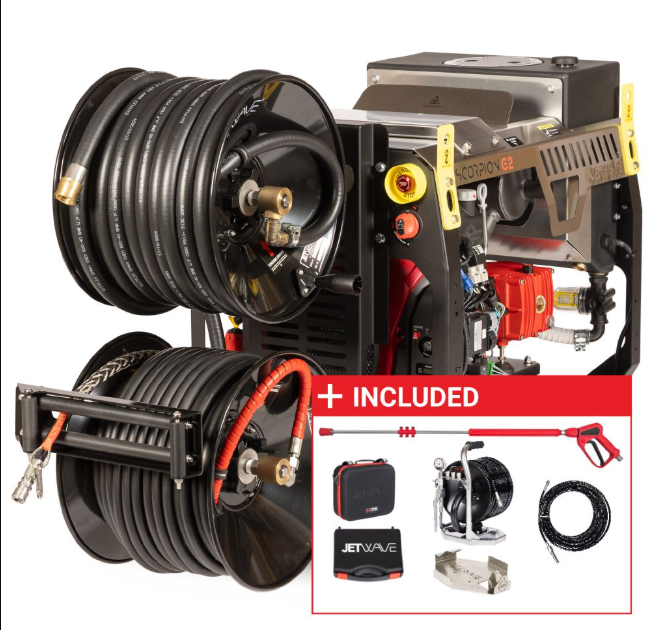
Water Jetters take a completely different approach to clearing blockages, using a high-pressure stream of water fed through a flexible hose to cut through debris while flushing it straight out of the pipe. Instead of just displacing the problem the way rodding or augering does, this method clears the full internal diameter, removing grease, roots, and sediment properly rather than temporarily.
Jetwave has spent years refining this kind of equipment specifically for the plumbing and water authority sector, building units that prioritise ease of use on real job sites over flashy specifications that don't hold up under daily conditions.
When Quick Fixes Cost More in the Long Run
Rodding and augering can clear an immediate blockage, but they often leave behind exactly what caused the problem in the first place. A rod might punch through tree roots without removing them, meaning the same job comes back around in a few months. Grease gets pushed along rather than broken down and flushed out, and sediment gets disturbed but not properly cleared.
This cycle of temporary fixes costs businesses and councils real money over time: repeat call-outs, ongoing customer complaints, and pipework that never actually gets back to full capacity. What looks like a quick, cheap fix in the moment often ends up being the more expensive option once the same job keeps returning.
Who Relies on This Technology Every Day
-
Councils managing ageing or blocked stormwater infrastructure
-
Plumbers dealing with recurring residential blockages
-
Water authorities maintaining large-scale sewer networks
-
Commercial kitchens with persistent grease build-up
-
Emergency call-outs where a fast, thorough clear matters most
In every case, the underlying need is the same: clearing blockages properly the first time, without leaving a problem that resurfaces down the track.
Why Scale Changes Everything
Not every blockage is created equal, and neither is every job site. A single residential callout looks nothing like a council contract managing kilometres of ageing stormwater lines, and treating them the same way usually ends up wasting either time or money.
Recognising this difference early on shapes almost every other decision that follows, from tank size to hose length to how the unit gets transported between jobs. Businesses that plan around scale from the outset tend to avoid a lot of unnecessary trial and error later.
Matching the Configuration to Your Setup
Beyond just tank size, the type of unit matters too: a trailer-mounted system suits teams covering multiple sites in a day, while a compact standalone unit might be all that's needed for occasional local jobs. Getting this choice right avoids paying for mobility or capacity that never actually gets used.
Water supply access on typical job sites is another practical factor. Units with onboard tanks offer far more flexibility when a reliable water source can't be guaranteed at every location, which matters most for teams covering rural or semi-remote areas.
The Details That Make or Break the Job
-
A root-cutting nozzle behaves nothing like one designed for flushing grease
-
Using the wrong nozzle can mean a job takes twice as long as it should
-
Municipal and commercial networks often need far longer hose runs than residential lines
-
A hose that works fine for a house call might fall well short on a larger job
Why the Small Stuff Isn't Actually Small
Getting the nozzle type wrong doesn't just slow a job down; it can mean walking away thinking a blockage is cleared, only for it to resurface within weeks. The same applies to hose length; running short partway through a municipal line means either stopping the job or coming back with different gear entirely.
Taking the time to match nozzle and hose choice to the actual job upfront saves everyone the hassle of a second visit; the crew's time and the client's patience both benefit from getting it right the first time.
The Habits That Keep Equipment Going
A quick flush after each job, regular hose inspections, and keeping nozzles free of damage all help this equipment perform consistently over time. Skipping these basics tends to catch up with operators eventually, usually in the form of reduced pressure or an unexpected breakdown mid-job.
Building these checks into a routine, rather than treating them as an afterthought, is often what separates equipment that lasts years from equipment that needs constant attention.
A Fix That Actually Sticks
Choosing the right water jetter setup isn't about clearing a blockage temporarily — it's about solving the problem properly so it doesn't become next month's call-out again. The right equipment, matched to the actual scale of the work, delivers results that actually last.
Reach out to Jetwave to find the right water jetting solution for your plumbing or municipal needs.

 English
 Arabic
 French
 Spanish
 Portuguese
 Deutsch
 Turkish
 Dutch
Dutch
 Italiano
 Russian
 Romaian
 Portuguese (Brazil)
