


Steel Jacketing for Structural Retrofitting
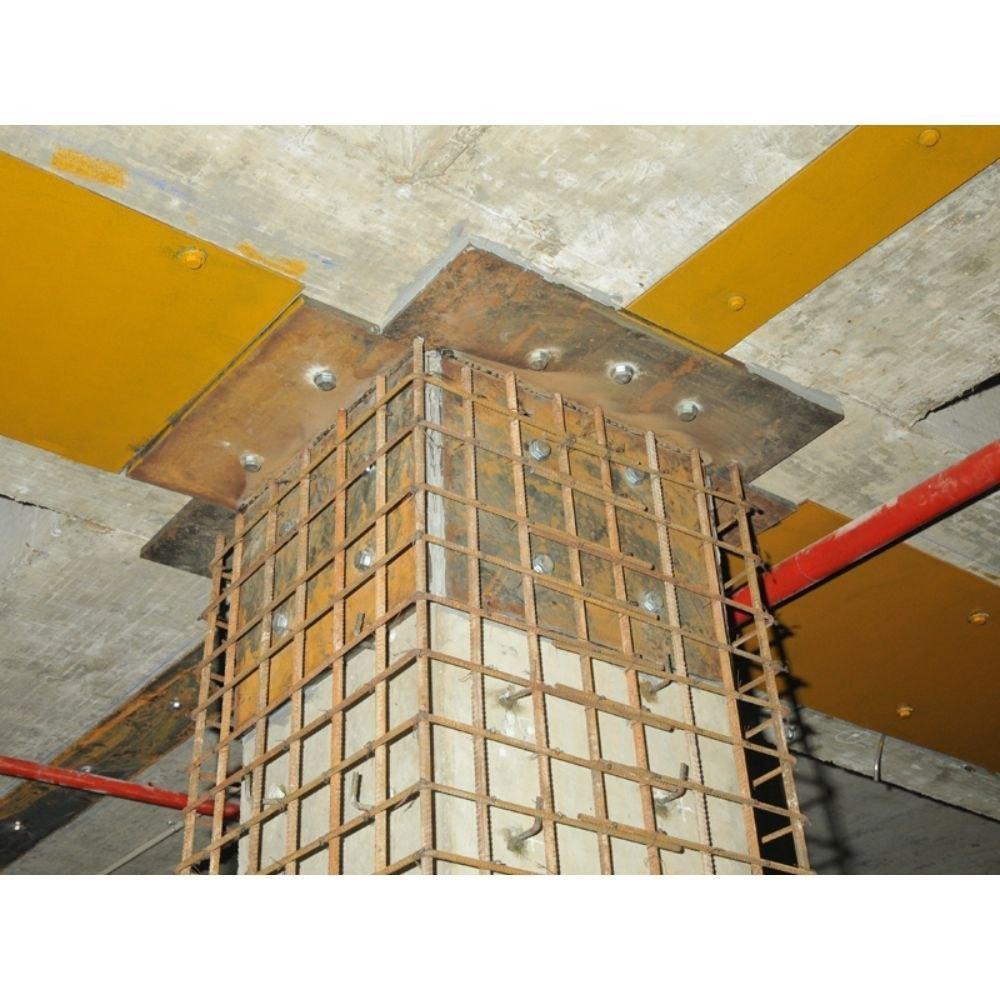
Retrofitting is the process of improving an existing structure so it can perform safely under present and future requirements. Buildings may need strengthening because of ageing, deterioration, design limitations, increased loads, environmental exposure, or changes in usage. Instead of replacing an entire structure, structural retrofitting focuses on improving selected components while retaining the existing building wherever technically practical, reducing unnecessary demolition, disruption, and reconstruction costs.
Existing concrete structures are continuously exposed to moisture, temperature variations, chemical environments, vibration, loading, and everyday usage. Over time, these factors can reduce concrete quality and affect reinforcement, resulting in cracks, spalling, corrosion, or reduced structural capacity. Retrofitting provides an engineered approach for addressing such conditions. The appropriate solution depends on the building condition, structural assessment, loading requirements, accessibility, and long-term performance objectives.
When Does a Building Need Retrofitting?
A building may require retrofitting when visible deterioration is accompanied by concerns about structural performance. Common warning signs include significant cracks, exposed reinforcement, concrete spalling, corrosion, excessive deflection, damaged columns, weakened beams, or deterioration around joints. Retrofitting may also become necessary when a structure is being modified for a different purpose, additional floors are planned, heavier equipment is introduced, or existing members need improved load-carrying capacity.
Age alone does not automatically mean that a structure requires retrofitting. A detailed evaluation is necessary to understand the actual condition and identify the cause of deterioration. Engineers may examine drawings, previous repair records, site conditions, material quality, reinforcement details, and current loading. Depending on the project, testing methods such as rebound hammer testing, ultrasonic pulse velocity testing, core testing, and reinforcement assessment may support the technical evaluation.
Why Is Structural Assessment Important Before Retrofitting?
A successful retrofitting project begins with understanding what is actually happening inside the structure. Treating only visible damage without identifying its underlying cause can result in temporary improvement rather than long-term performance. Structural assessment helps determine whether deterioration is localized or widespread, whether reinforcement has lost protection, and whether members have adequate capacity. The findings provide a technical basis for selecting appropriate strengthening and repair measures.
The assessment should consider both existing defects and the structure's intended future use. For example, a commercial building converted into an industrial facility may experience substantially different loading conditions. Similarly, adding equipment, floors, storage systems, or architectural modifications can change load paths. Structural strengthening solutions should therefore be selected after considering current and proposed loads, member capacity, connection behaviour, foundation conditions, and the overall structural system.
Common Retrofitting Methods Used for Existing Structures
There is no single retrofitting method suitable for every building. Engineers select techniques according to the type and severity of deficiency, available working space, required strength improvement, durability requirements, and project constraints. Common approaches include concrete jacketing, steel jacketing, carbon fibre strengthening, glass fibre systems, micro-concrete applications, shotcreting, grouting, and reinforcement-related strengthening. These methods can be used individually or combined where a structure requires multiple interventions.
Carbon Fibre Strengthening
Carbon fibre reinforced polymer systems are increasingly used where high-strength strengthening is required without adding substantial dead weight. Carbon fibre wrapping can be applied to suitable beams, columns, and other structural members after proper surface preparation and engineering assessment. The system can improve selected structural performance characteristics while maintaining a relatively low profile. It is particularly useful where access, weight, installation time, or architectural constraints make conventional strengthening methods less suitable.
Concrete and Micro-Concrete Jacketing
Concrete jacketing involves adding a designed layer of reinforced concrete around an existing structural member to increase its dimensions, reinforcement, and load-carrying capacity. Micro-concrete can be used where placement around reinforcement or confined sections requires a flowable repair material. Proper surface preparation, reinforcement detailing, bonding, formwork, placement, and curing are essential. The final system should work with the existing member rather than simply covering visible deterioration.
Steel Jacketing for Structural Members
Steel jacketing can provide additional confinement, strength, or protection to selected structural members when designed appropriately. It may be considered for columns and other components where conventional concrete enlargement is undesirable or where installation requirements favour steel systems. Connection detailing is particularly important because the jacket must transfer forces effectively. Corrosion protection, welding quality, anchorage, surface preparation, and fire protection should also be considered during project planning.
Fibre-Reinforced Strengthening Systems
Fibre-reinforced systems can provide efficient strengthening where additional structural capacity is required with limited changes to existing dimensions. Depending on the design, glass fibre and other composite systems may be considered for suitable applications. The success of such systems depends heavily on substrate condition, surface preparation, adhesive compatibility, installation quality, environmental exposure, and design detailing. They should never be selected simply because they are lightweight or visually unobtrusive.
How Do Retrofitting Contractors Execute a Project?
Professional retrofitting contractors generally begin by reviewing the structural assessment, drawings, specifications, and proposed strengthening methodology. Site conditions are then evaluated to understand access, working height, existing occupancy, utilities, safety risks, and sequencing requirements. A method statement can define the planned activities, materials, equipment, quality checks, and safety controls. This preparation helps coordinate engineering requirements with practical site execution and reduces avoidable interruptions.
Execution normally follows a controlled sequence rather than attempting every repair simultaneously. Damaged concrete may first be removed to expose the affected area and determine reinforcement condition. Loose material, corrosion products, and contaminants are treated according to the approved repair system. Additional reinforcement, anchors, jackets, fibre systems, or repair materials are then installed as specified. Inspection between stages helps verify workmanship before subsequent activities are completed.
What Role Does Concrete Repair Play in Retrofitting?
Retrofitting and concrete repair are closely connected, but they are not identical. Concrete repair generally restores deteriorated or damaged areas, while retrofitting aims to improve structural performance beyond the existing condition. A project may require both. For example, corrosion-damaged concrete around a column may first need proper repair and reinforcement treatment before a strengthening system is installed. Combining these activities correctly helps address immediate deterioration and future structural requirements.
Repair materials must be selected according to the substrate condition and project requirements. Polymer-modified mortars, epoxy-based materials, micro-concrete, protective coatings, and other specialized systems may be appropriate for different situations. Surface preparation remains critical because even a high-performance material can fail when applied over weak, contaminated, or poorly prepared concrete. Proper curing, bonding, thickness control, and quality inspection are equally important for achieving durable results.
Retrofitting for Increased Load Capacity
Changes in building use can create a need for load capacity enhancement. A structure originally designed for one purpose may later need to support heavier machinery, storage loads, additional partitions, new equipment, or extra floors. Simply increasing the load without evaluating existing structural capacity can create serious risks. Retrofitting provides a way to strengthen appropriate members and improve their ability to accommodate revised loading requirements after proper engineering evaluation.
The strengthening solution depends on where the additional load enters and how forces travel through the structure. Strengthening only one visible component may not be sufficient if beams, columns, connections, slabs, or foundations are also affected. Engineers therefore consider the complete load path. This approach helps prevent situations where one strengthened member transfers excessive forces to another weaker component, creating a new structural deficiency elsewhere in the building.
Retrofitting for Seismic Performance
Earthquake-related strengthening is another important application of structural retrofitting. Older structures may have been designed using standards or assumptions that differ from current requirements. Seismic retrofitting can involve improving selected members, connections, confinement, load paths, or overall structural behaviour. The required intervention depends on the building's configuration, existing materials, construction details, location, occupancy, and assessment results. A project-specific engineering solution is essential rather than applying one standard method.
Seismic strengthening should focus on improving the structure's ability to respond safely to expected lateral and vertical demands. Depending on the assessment, strengthening may involve columns, beams, joints, walls, diaphragms, or other structural components. The objective is not simply to add more material, but to improve overall structural behaviour. Proper detailing, sequencing, connection performance, and compatibility between new and existing components are important throughout the retrofit process.
Retrofitting for Aging and Deteriorated Structures
Ageing structures often experience gradual deterioration rather than one sudden failure. Reinforcement corrosion, carbonation, moisture penetration, chemical exposure, repeated loading, and inadequate maintenance can progressively reduce durability. Early intervention can help prevent localized deterioration from becoming a larger structural problem. Building rehabilitation may therefore combine concrete restoration, corrosion treatment, waterproofing, protective coatings, and strengthening measures based on the condition assessment.
A retrofit strategy should also consider what caused the deterioration in the first place. If water continues to enter the structure after concrete repair, corrosion may return and damage the repaired area. Similarly, strengthening a member without addressing an aggressive environment may reduce the effectiveness of the intervention over time. Durable rehabilitation therefore considers both structural capacity and the mechanisms responsible for continuing deterioration.
How Much Does Retrofitting Cost?
The cost of retrofitting varies considerably from one project to another. Factors include the size and age of the structure, extent of deterioration, number of affected members, selected strengthening technique, material specifications, access conditions, working height, occupancy restrictions, testing requirements, and project duration. Therefore, quoting a reliable structural retrofitting cost without inspecting the building can be misleading. A site assessment and technical scope are needed before developing a realistic estimate.
Cost should also be evaluated against the consequences of delaying structural intervention. Continuing deterioration may increase repair quantities, disrupt operations, damage finishes, or require more extensive strengthening later. Retrofitting can sometimes provide a practical alternative to reconstruction when the existing structure remains suitable for rehabilitation. However, the decision should be based on engineering feasibility, lifecycle considerations, safety requirements, and the client's long-term objectives rather than initial price alone.
Choosing the Right Retrofitting Contractors
Selecting experienced contractors is important because structural strengthening requires specialized execution rather than ordinary civil finishing work. When comparing retrofitting contractors in India, clients should consider technical experience, project methodology, quality control, safety practices, material systems, site capabilities, and experience with similar structures. The contractor should also be capable of coordinating with structural consultants and following approved drawings, specifications, method statements, inspection requirements, and project documentation.
A good contractor should clearly explain the proposed execution sequence, expected site requirements, material systems, testing procedures, safety controls, and limitations. Clients should be cautious of solutions presented as universal fixes because structural conditions vary significantly. For complex industrial, commercial, infrastructure, or aging RCC structures, working with an experienced organization such as Gubbi Civil Engineers Limited can help connect technical assessment, specialized repair execution, and strengthening requirements into a coordinated project approach.
Can Retrofitting Be Done Without Demolishing a Building?
One major advantage of retrofitting is that it can often strengthen an existing structure without complete demolition. The extent of intervention depends on structural condition and engineering feasibility. Selected members can be repaired or strengthened while other portions remain operational. Phased execution can also help reduce disruption in occupied buildings, industrial facilities, commercial spaces, and infrastructure projects where shutting down the entire facility may not be practical.
However, avoiding demolition should not become the only objective. If an assessment identifies severe or widespread deficiencies that cannot be safely addressed through strengthening, reconstruction may be more appropriate. The decision between repair, rehabilitation, retrofitting, partial replacement, and rebuilding should consider structural safety, remaining service life, functionality, cost, accessibility, and future requirements. Professional engineering evaluation provides the basis for making this decision responsibly.
Quality Control During Retrofitting Work
Quality control is essential because many strengthening systems depend on installation accuracy. Surface preparation, reinforcement placement, anchorage, adhesive application, material mixing, thickness, curing, alignment, and connection details can all affect performance. Inspection should therefore be performed at relevant stages rather than only after completion. Material certificates, test results, inspection records, photographs, and other documentation can provide evidence that work has been executed according to approved requirements.
Site safety is equally important because retrofitting frequently involves working around existing structural defects, temporary supports, elevated areas, confined spaces, heavy materials, and occupied facilities. Work sequencing should account for structural stability during each stage. Temporary arrangements may sometimes be necessary before damaged or overloaded members are repaired. Proper access control, equipment selection, worker protection, and coordination with site operations help reduce risks during execution.
Retrofitting vs Rebuilding: Which Is Better?
Retrofitting is not automatically better than rebuilding, and rebuilding is not automatically the safer or cheaper option. The right choice depends on the condition and suitability of the existing structure. If the primary structural system can be effectively repaired and strengthened, retrofitting may preserve useful assets while reducing demolition and reconstruction requirements. If deficiencies are extensive or the structure cannot meet required performance levels economically, rebuilding may be more appropriate.
The decision should be made after comparing technical feasibility, structural safety, project duration, operational disruption, environmental impact, future capacity, and lifecycle cost. Property owners and facility managers should avoid making the decision based only on visible defects or contractor recommendations. A qualified structural assessment can identify the actual condition and help determine whether repair, strengthening, rehabilitation, or reconstruction offers the most practical long-term solution.
Why Professional Retrofitting Services Matter
Professional retrofitting services bring together assessment, engineering coordination, specialized materials, controlled execution, quality assurance, and safety management. The objective is not simply to make a damaged member look better, but to restore or improve its intended structural performance. A properly planned intervention can address deterioration, accommodate changed requirements, and extend the useful life of an existing structure while minimizing unnecessary intervention in areas that remain structurally sound.
Retrofitting projects can involve residential buildings, commercial properties, industrial facilities, bridges, infrastructure, institutional structures, and other concrete assets. The specific approach should always reflect the structure's condition and operational requirements. Experienced providers may combine repair, strengthening, corrosion protection, waterproofing, and protective treatments where necessary. This integrated approach can help create a more durable outcome instead of treating each visible defect as an isolated problem. Retrofitting offers a practical engineering approach for improving existing structures without automatically resorting to complete reconstruction. From deteriorated RCC members and reinforcement corrosion to increased loading and seismic requirements, different structural challenges require different solutions. The most reliable results come from proper assessment, suitable design, quality materials, controlled execution, and regular maintenance. Choosing qualified retrofitting contractors can make a significant difference to safety, durability, performance, and long-term value.

 English
 Arabic
 French
 Spanish
 Portuguese
 Deutsch
 Turkish
 Dutch
Dutch
 Italiano
 Russian
 Romaian
 Portuguese (Brazil)
