


Root Canal vs. Tooth Extraction: How to Decide Which Is Right for You
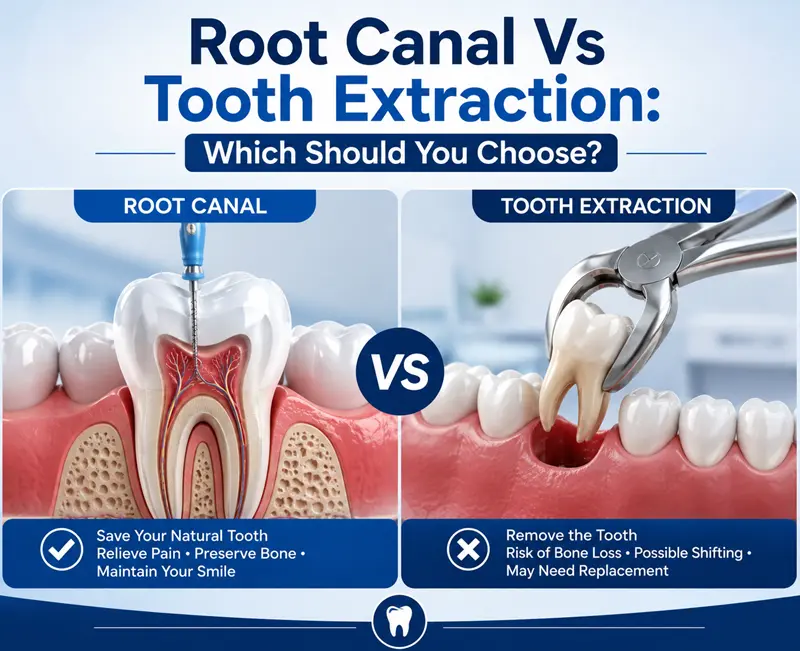
When a tooth becomes infected, badly decayed, or severely damaged, most people face a difficult choice: save the tooth with a root canal or remove it entirely with an extraction. Both are common, safe procedures, but they serve very different purposes and come with different long-term consequences. Understanding how each treatment works — and when your dentist is likely to recommend one over the other — can help you make a confident, informed decision about your oral health.
Understanding the Root Canal Procedure
A root canal is a treatment designed to save a tooth that has become infected or inflamed at its core, known as the pulp. The pulp contains nerves, blood vessels, and connective tissue, and when it becomes infected — usually due to deep decay, a cracked tooth, or repeated dental procedures — the infection can cause intense pain, swelling, and even bone loss around the root if left untreated.
During a root canal, the dentist removes the infected pulp tissue, cleans and disinfects the inside of the tooth, and then fills and seals the space. In most cases, the tooth is later capped with a crown to restore its strength and function. This is why many patients searching for a reliable Root Canal in Fitchburg MA are looking for a dentist who can both treat the infection and restore the tooth so it functions normally for years to come.
The biggest advantage of a root canal is that it preserves your natural tooth. Keeping your natural teeth helps maintain proper chewing function, jawbone density, and the alignment of surrounding teeth. Modern root canal treatment, contrary to its reputation, is generally no more uncomfortable than getting a filling, thanks to effective local anesthesia and improved techniques.
Understanding Tooth Extraction
Tooth extraction, on the other hand, involves removing the tooth entirely. This is typically recommended when a tooth is too damaged, decayed, or infected to be saved — even with a root canal — or in cases of severe gum disease, overcrowding, or impacted wisdom teeth.
There are two types of extractions: simple extractions, where the tooth is visible and can be removed with basic instruments, and surgical extractions, which are needed when a tooth is broken at the gum line or hasn't fully emerged. For patients researching a tooth extraction in Fitchburg MA, it's worth knowing that most extractions are outpatient procedures performed under local anesthesia, with sedation options available for more complex cases or anxious patients.
While extraction removes the source of pain or infection immediately, it does come with a trade-off: the loss of a natural tooth. This can affect chewing efficiency, bone structure, and the position of neighboring teeth over time if the space isn't restored with an implant, bridge, or partial denture.
Key Factors That Influence the Decision
Dentists weigh several factors before recommending root canal therapy or extraction:
1. Extent of damage or infection If enough healthy tooth structure remains and the infection is confined to the pulp, a root canal is usually the preferred option. If the tooth is fractured below the gum line or the roots are severely compromised, extraction may be the only viable path.
2. Bone support around the tooth with significant bone loss due to advanced gum disease often cannot support long-term restoration, making extraction more practical.
3. Restorability A tooth needs enough remaining structure to hold a crown after a root canal. If decay has destroyed too much of the tooth, saving it may not be realistic.
4. Patient's overall oral health goals Some patients prioritize keeping their natural teeth whenever possible, while others may prefer extraction followed by an implant, especially if a tooth has a poor long-term prognosis even after treatment.
5. Cost and time considerations Root canals, followed by a crown, can sometimes cost more upfront than a simple extraction. However, the long-term cost of replacing an extracted tooth with an implant or bridge often evens out — or exceeds — the cost of a root canal and crown.
Which Option Is Better in the Long Run?
Generally, dentists recommend saving a natural tooth whenever it's feasible, since no artificial replacement fully replicates the function and feel of a natural tooth. Root canals have a high success rate, and a properly treated and restored tooth can last a lifetime with good oral hygiene.
That said, extraction isn't a failure — it's sometimes the smarter, healthier choice, particularly when a tooth is beyond saving or when keeping a chronically infected tooth poses a risk to surrounding teeth and overall health. In these cases, timely extraction followed by a suitable replacement option can prevent further complications.
What to Expect During Your Consultation
Because every case is different, the best way to determine the right treatment is a thorough dental exam, often including X-rays to assess the extent of damage, infection, and bone support. A dentist will explain the pros, cons, and expected outcomes of each option based on your specific tooth and overall oral health.
If you're dealing with tooth pain, swelling, or a damaged tooth and aren't sure whether it can be saved, don't wait for the problem to worsen. Early evaluation often means more options — and sometimes a root canal can prevent the need for extraction altogether.
Conclusion
Choosing between a root canal and a tooth extraction ultimately comes down to the health of the tooth, the surrounding bone and gum tissue, and your personal preferences regarding treatment and cost. While saving a natural tooth is usually the preferred route when possible, extraction remains an important and sometimes necessary option for teeth that are beyond repair.
If you're experiencing dental pain or have questions about which treatment path is right for you, consulting with an experienced dental team can make all the difference. To learn more about restorative and general dentistry options, visit Whalom Dental and schedule a consultation to get personalized guidance for your specific situation.

 English
 Arabic
 French
 Portuguese
 Deutsch
 Turkish
 Dutch
Dutch
 Italiano
 Russian
 Romaian
 Portuguese (Brazil)
 Greek
Greek
