


Lead Generation Services vs. In-House Marketing: Which Is Better for Your Business?
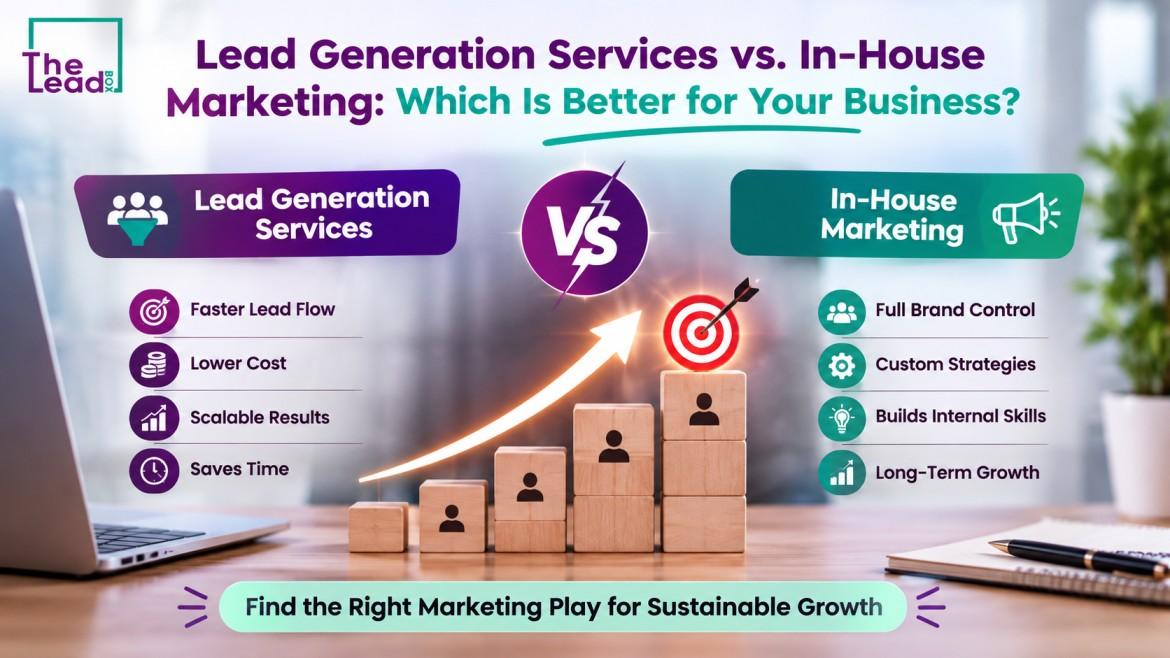
Generating a consistent flow of qualified leads is one of the biggest challenges businesses face today. Having a strong product or service is no longer enough. Companies need a reliable marketing strategy that can identify the right prospects, attract their attention, nurture their interest, and turn them into customers.
This creates an important question for business owners and marketing leaders: should you build an in-house marketing team or work with a professional lead generation agency?
Both approaches have advantages. An in-house team provides direct control and deep knowledge of the company, while a specialized lead generation partner can provide expertise, technology, data, and scalable processes without requiring a large internal team.
For many companies, the right choice depends on budget, sales goals, industry, internal expertise, and growth targets. In this article, we compare lead generation services with in-house marketing and explain how a company can decide which approach delivers better results.
What Is Lead Generation and Why Does It Matter?
Lead generation is the process of identifying potential customers and encouraging them to show interest in a company's products or services. A lead may come from search engines, paid advertising, LinkedIn, email marketing, content marketing, landing pages, webinars, referrals, or other digital channels.
A professional lead generation strategy focuses on more than increasing website traffic. The goal is to attract prospects who match the company's ideal customer profile and have a realistic possibility of becoming customers.
A strong lead generation program generally includes:
-
Ideal customer profile development
-
Audience research
-
Market and competitor research
-
Search engine optimization
-
Paid advertising
-
Landing page optimization
-
Content marketing
-
Email campaigns
-
LinkedIn and social selling
-
Lead qualification
-
CRM integration
-
Lead nurturing
-
Performance tracking and reporting
This is particularly important for B2B businesses where sales cycles can be long and purchasing decisions often involve several stakeholders.
Lead Generation Services vs. In-House Marketing
The main difference between these two approaches is how marketing resources are managed.
An in-house marketing model requires a company to recruit, train, manage, and retain its own marketing professionals. The team may include SEO specialists, content writers, paid advertising specialists, social media managers, designers, marketing analysts, and lead qualification professionals.
A lead generation agency provides access to a specialized team and established processes. Instead of building every capability internally, the company works with an external partner that manages specific or complete lead generation activities.
Neither option is automatically better for every business. The right choice depends on the organization's requirements.
Advantages of In-House Marketing
An in-house marketing team can be valuable when a company wants complete control over its marketing operations.
Key benefits include:
-
Direct communication between marketing and management
-
Strong understanding of company products and services
-
Greater control over brand messaging
-
Immediate access to internal data
-
Ability to make quick strategic changes
-
Long-term development of internal marketing expertise
An established company with sufficient budget and a large marketing workload may benefit from maintaining an internal team.
However, building a complete team can become expensive. Recruitment, salaries, software, training, management, employee turnover, and specialist resources can significantly increase marketing costs.
Advantages of Professional Lead Generation Services
Working with a specialized lead generation provider can give businesses access to multiple marketing skills without hiring every specialist internally.
A professional partner may provide:
-
Experienced lead generation specialists
-
Data-driven prospect research
-
Advanced marketing tools
-
Lead qualification systems
-
Campaign management
-
SEO and content expertise
-
Paid advertising knowledge
-
CRM and automation support
-
Performance reporting
-
Scalable campaigns
For companies that need qualified leads but do not want to build a large marketing department, this approach can be highly practical.
A specialized B2B lead generation agency can also help businesses reach decision-makers more efficiently by combining audience targeting, prospect research, content, outreach, and lead qualification.
Cost Comparison: Agency vs. In-House Team
Cost is often one of the most important factors in the decision.
An in-house team may require spending on:
-
Employee salaries
-
Recruitment
-
Training
-
Marketing software
-
CRM platforms
-
Advertising tools
-
Data platforms
-
Design resources
-
Content production
-
Management
-
Employee benefits
A B2B lead generation agency generally operates through a service fee or customized engagement model. The exact cost depends on campaign scope, industry, target market, lead volume, channels, and required services.
The important consideration is not simply the monthly marketing cost. Businesses should compare the cost of acquiring qualified opportunities and customers.
For example, a lower-cost marketing program may generate thousands of visitors but very few sales opportunities. A more specialized program may generate fewer leads but produce a significantly higher percentage of qualified prospects.
This makes cost per qualified lead and cost per acquisition more useful metrics than lead volume alone.
Which Option Provides Better Lead Quality?
Lead quality is one of the biggest differences between general marketing and specialized lead generation.
An in-house team can develop excellent lead qualification processes, but it may take considerable time to build the required expertise and technology.
A professional lead generation company typically uses structured processes to identify and qualify prospects before passing them to the sales team.
Lead quality can be evaluated using factors such as:
-
Industry
-
Company size
-
Location
-
Job title
-
Purchasing authority
-
Business requirements
-
Budget
-
Buying intent
-
Existing technology
-
Engagement level
For B2B companies, these factors can help sales teams spend more time with prospects who have a genuine business need.
How a Best Lead Generation Agency Can Improve Growth
Choosing a best lead generation agency should not be based only on the number of leads promised.
A strong partner should focus on the complete customer acquisition process.
The Lead Box can position its lead generation approach around understanding the target audience, developing targeted campaigns, improving prospect quality, and connecting marketing activities with business objectives.
The most valuable capabilities include:
-
Targeted prospect identification
-
Data-driven audience segmentation
-
B2B lead generation
-
Campaign strategy
-
Content and messaging
-
Lead qualification
-
Conversion optimization
-
Performance analysis
-
Continuous campaign improvement
The objective should be to create a predictable pipeline rather than generate random contact information.
When Should You Choose an In-House Marketing Team?
An in-house team can be the better choice when:
-
Marketing is a major long-term business function
-
The company has sufficient hiring and management resources
-
The business needs daily internal collaboration
-
Marketing requires deep product knowledge
-
The company has a large enough budget for specialists
-
Leadership wants complete operational control
In-house marketing can be especially useful for larger organizations with established processes and dedicated marketing leadership.
However, businesses should consider whether they can realistically recruit and retain specialists across every required marketing channel.
When Should You Choose a Lead Generation Agency?
External lead generation services can be a better option when:
-
The company needs leads quickly
-
Internal marketing expertise is limited
-
The sales team needs a consistent pipeline
-
Hiring a complete marketing team is expensive
-
The company wants access to specialized expertise
-
Marketing campaigns need to scale
-
The business is entering a new market
-
Existing campaigns are generating poor-quality leads
A B2B lead generation agency can be particularly valuable for technology companies, SaaS businesses, professional services, manufacturers, consultants, and other organizations with complex sales processes.
The Hybrid Approach Can Deliver the Best Results
Businesses do not always have to choose between an agency and an internal team.
A hybrid marketing model can combine internal knowledge with external expertise.
For example, an internal marketing manager can control brand strategy and business messaging while an external agency manages prospect research, SEO, paid campaigns, outreach, content production, or lead qualification.
This approach can provide:
-
Internal brand control
-
External specialist expertise
-
Faster campaign execution
-
Scalable resources
-
Lower recruitment pressure
-
Better access to marketing technology
For many growing businesses, a hybrid strategy can provide a practical balance between control and scalability.
Industry Applications of Lead Generation Services
Lead generation services can be adapted to different industries because customer acquisition requirements vary significantly by market.
B2B Technology and SaaS
Technology companies often need to identify decision-makers, demonstrate product value, nurture prospects, and support longer sales cycles.
Manufacturing
Manufacturers can use targeted B2B campaigns to reach procurement managers, plant managers, distributors, business owners, and other decision-makers.
Professional Services
Consulting, accounting, legal, IT, and business service providers can use content marketing, SEO, email outreach, and targeted campaigns to attract potential clients.
Healthcare and Specialized Services
Specialized service providers can use educational content, search marketing, local campaigns, and carefully targeted advertising to reach relevant audiences.
Current Lead Generation Trends Businesses Should Watch
The lead generation industry is becoming increasingly data-driven and automated.
Important trends include:
-
AI-assisted prospect research
-
Predictive lead scoring
-
Marketing automation
-
Account-based marketing
-
First-party data strategies
-
Personalized outreach
-
Conversational marketing
-
Search optimization for AI-generated answers
-
CRM-based customer journey tracking
-
Multi-channel campaigns
AI is also changing how customers discover companies. Businesses increasingly need content that answers specific questions clearly and demonstrates expertise rather than simply targeting keywords.
This means modern lead generation requires a combination of search visibility, useful content, audience data, personalization, and conversion optimization.
How to Choose the Right Lead Generation Partner
Before choosing a lead generation company, businesses should evaluate more than pricing.
Ask potential providers:
-
Do you understand our target market?
-
How do you define a qualified lead?
-
Which channels will you use?
-
How do you verify prospect data?
-
How do you measure campaign performance?
-
Can you integrate with our CRM?
-
How frequently will we receive reports?
-
How do you improve campaigns over time?
-
Can you provide relevant case studies or examples?
-
How will marketing and sales teams work together?
The best lead generation agency for one company may not be the right agency for another. Industry experience, methodology, transparency, technology, reporting, and lead quality should all influence the decision.
What the Future Looks Like for Lead Generation
The future of lead generation will increasingly focus on quality, intent, personalization, automation, and measurable revenue outcomes.
Businesses will move away from evaluating marketing success only through impressions, clicks, or raw lead numbers. Instead, marketing teams will increasingly measure marketing-qualified leads, sales-qualified leads, pipeline value, conversion rates, customer acquisition costs, and revenue contribution.
AI will also make prospect research and campaign personalization faster. However, human strategy will remain important because technology cannot completely replace understanding customer problems, positioning, messaging, and sales relationships.
Companies that combine high-quality data, useful content, automation, personalization, and strong sales alignment are likely to have a competitive advantage.
Final Verdict: Lead Generation Services or In-House Marketing?
There is no universal answer to whether an agency or an in-house team is better.
An in-house marketing team can provide control, product knowledge, and long-term internal capabilities. However, it requires significant investment in people, technology, training, and management.
Professional lead generation services can provide specialized expertise, scalable resources, marketing technology, and structured campaign processes without requiring a company to build a large internal department.
For businesses that need predictable growth, faster execution, and access to specialized B2B marketing expertise, working with a professional partner such as The Lead Box can be a practical solution.
Ultimately, the best approach is the one that generates qualified opportunities, supports the sales team, improves customer acquisition efficiency, and produces measurable business growth.
Frequently Asked Questions
What does a lead generation agency do?
A lead generation agency helps businesses identify potential customers, attract prospects, qualify leads, nurture opportunities, and create a consistent sales pipeline through channels such as SEO, paid advertising, content marketing, email, LinkedIn, outreach, and marketing automation.
Is hiring a lead generation agency better than building an in-house team?
It depends on the business. An agency can be more efficient for companies that need specialized expertise, faster campaign execution, or scalable resources without hiring a complete internal marketing department.
What is a B2B lead generation agency?
A B2B lead generation agency specializes in finding and qualifying potential business customers. It typically targets decision-makers such as business owners, executives, procurement managers, marketing leaders, IT managers, and other professionals based on an ideal customer profile.
How much do lead generation services cost?
Lead generation costs vary depending on the industry, target audience, campaign channels, geographic market, lead volume, and services required. Businesses should compare the cost against qualified leads, sales opportunities, customer acquisition cost, and revenue rather than looking only at the monthly service fee.
How can I choose the best lead generation agency?
Look for an agency that understands your industry, defines qualified leads clearly, uses reliable data, provides transparent reporting, understands your target audience, and has a structured process for improving campaign performance.
Can lead generation agencies work with an existing marketing team?
Yes. Many businesses use agencies alongside their internal marketing teams. The agency can manage specialized activities such as prospect research, SEO, paid campaigns, outreach, content, automation, or lead qualification while the internal team manages overall brand and marketing strategy.
How long does lead generation take to produce results?
The timeframe depends on the channel and sales cycle. Paid campaigns and outbound programs may produce opportunities relatively quickly, while SEO and content marketing generally require more time to build organic visibility and consistent traffic.
What is more important: lead quantity or lead quality?
Lead quality is generally more important than raw lead quantity. A smaller number of well-qualified prospects can produce more sales opportunities than a large database of poorly matched contacts.
Can lead generation services help SaaS companies?
Yes. SaaS companies can use lead generation services to identify target accounts, reach decision-makers, generate product interest, nurture prospects, and improve the conversion of marketing opportunities into sales conversations.
What is the difference between lead generation and digital marketing?
Digital marketing covers a broad range of online marketing activities, including brand awareness, SEO, social media, advertising, content, and customer engagement. Lead generation focuses specifically on attracting and converting potential customers into identifiable sales opportunities.
Why is data important in modern lead generation?
Data helps businesses understand their ideal customers, identify high-value prospects, personalize campaigns, prioritize leads, measure performance, and improve marketing decisions. Better data can help sales teams spend more time on prospects with stronger buying potential.
Data-Driven Lead Generation Metrics to Track
Businesses should use measurable performance indicators to evaluate whether their lead generation strategy is working.
Important metrics include:
-
Lead volume
-
Marketing-qualified leads
-
Sales-qualified leads
-
Lead-to-opportunity conversion rate
-
Opportunity-to-customer conversion rate
-
Cost per lead
-
Cost per qualified lead
-
Customer acquisition cost
-
Website conversion rate
-
Email engagement rate
-
Sales pipeline value
-
Revenue generated from marketing
Instead of asking only, "How many leads did we generate?", businesses should ask, "How many qualified opportunities did those leads create, and how much revenue did they contribute?"
That shift from lead volume to measurable business outcomes is one of the most important changes in modern lead generation.
Conclusion
Choosing between an in-house marketing team and professional lead generation services is ultimately a business strategy decision.
Companies with large internal resources may benefit from building their own marketing department. Businesses looking for specialized expertise, scalability, faster execution, and a predictable lead pipeline may benefit from working with a professional lead generation partner.
The most effective strategy is not necessarily the one that generates the most leads. It is the strategy that consistently reaches the right audience, creates qualified opportunities, supports the sales team, and contributes to sustainable revenue growth.
For businesses evaluating their options, The Lead Box can serve as a strategic lead generation partner focused on connecting businesses with relevant prospects and building a more efficient customer acquisition process.

 English
 Arabic
 French
 Portuguese
 Deutsch
 Turkish
 Dutch
Dutch
 Italiano
 Russian
 Romaian
 Portuguese (Brazil)
 Greek
Greek
