


7 Warning Signs Your Sewer Line Needs an Inspection
Your sewer line is easy to forget about, right up until it fails. And when it fails, it rarely does so without warning. The line almost always drops hints for weeks or months before a full backup, and homeowners who notice those hints get to handle a small, planned repair instead of an emergency. The trick is knowing which everyday annoyances are actually your sewer line asking for help. Here are seven warning signs that mean it is time for an inspection.
1. Several drains back up at the same time
One slow sink is a local clog. But when multiple fixtures back up together, especially the lowest drains in the house, the problem is not any single drain, it is the main line they all share. That shared backup is one of the clearest signs the sewer line itself is blocked or failing, and it will not fix itself.
2. The same drain clogs again and again
If you clear a drain and it clogs again within days or weeks, snaking is only punching a temporary hole through a bigger problem. Recurring clogs usually mean something structural in the line, roots, grease buildup, or a partial collapse, that keeps catching debris. An inspection shows what you keep hitting so you can fix it once.
3. A gurgling toilet when you run other water
When your toilet bubbles or gurgles as the shower, sink, or washing machine drains, air is being pulled backward through the toilet because the line cannot vent or flow properly. That shared airflow problem points at the main line or vent, not the toilet, and it is a common early sign of a sewer restriction.
4. A sewage smell indoors or in the yard
A healthy sewer line is sealed. If you catch a sewage odor near a floor drain, a cleanout, or out in the yard, gas is escaping somewhere it should not, often through a crack in the line. A persistent sewer smell that you cannot trace to a dry trap is a strong reason to have the line looked at.
5. Soggy or unusually green patches in the lawn
A leaking sewer line feeds the ground above it with water and nutrients. The result is a patch of lawn that stays soggy, or grows greener and faster than everything around it, even when it has not rained. In a dry Texas summer, that lush spot is not luck, it is a leak.
6. Slow drains across the whole house
When every drain in the house runs sluggishly, not just one, the restriction is downstream where all the lines meet, which is the main sewer line. Whole-house slowness is different from a single clogged fixture, and it usually means the problem is in the line that carries everything out.
7. Your home is older, with cast iron or clay pipe
Sometimes the warning is the house itself. Homes built before the 1980s often have cast iron or clay sewer lines that are now near the end of their service life, and in North Texas, expansive clay soil stresses those aging pipes further. If your home fits that profile, a baseline inspection is worth it even without symptoms, because catching corrosion or root intrusion early is far cheaper than reacting to a collapse.
What a sewer inspection actually involves
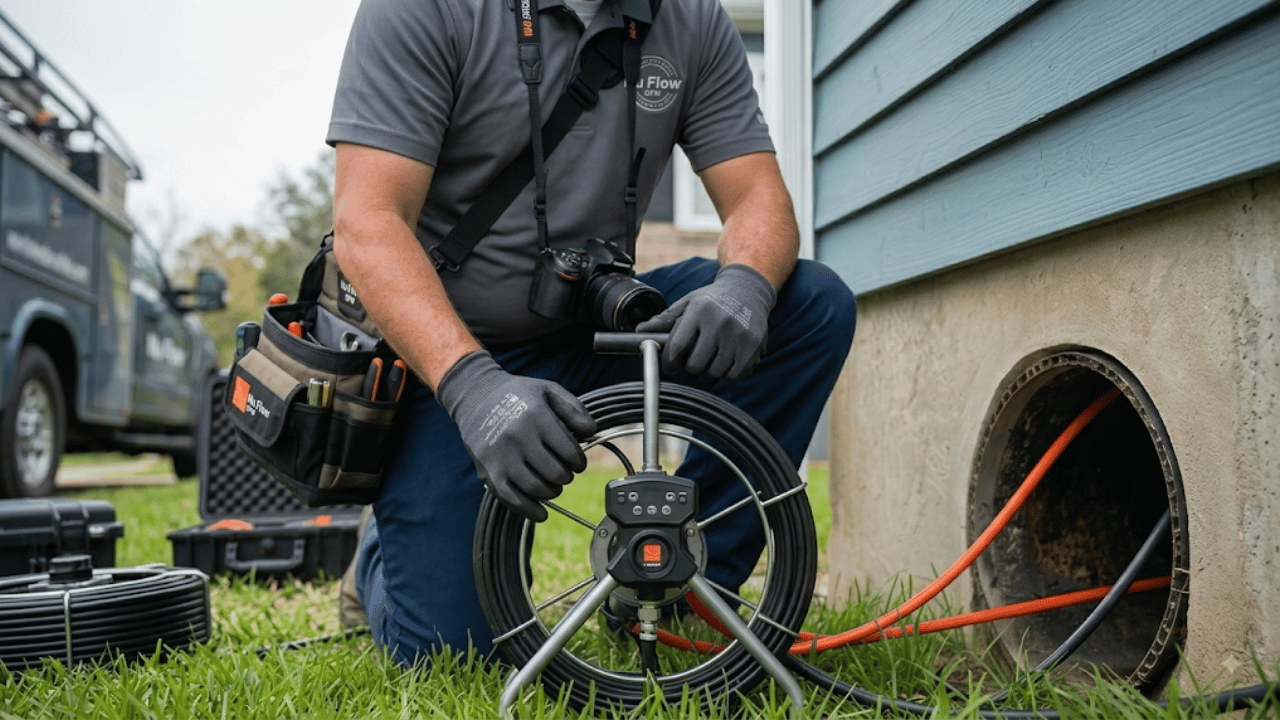
An inspection is simpler and less invasive than most people expect. A plumber feeds a waterproof camera inspection line into the sewer through a cleanout and runs it down the pipe, showing the inside of the line on a screen in real time. In under an hour it reveals the pipe material, the exact location of any problem, and whether the line is cracked but intact or fully collapsed. That single step turns a guessing game into a clear plan, and it is the difference between a targeted repair and unnecessary digging. You can read more about the warning signs your sewer line needs an inspection and what each one means.
Why catching it early matters
Every sign on this list gets worse if ignored. A partial clog becomes a full backup, a small crack lets in more roots, and a corroded line eventually collapses. Caught early, most sewer problems can be solved with trenchless lining and no trench across your yard. Caught late, they mean excavation, restoration, and sometimes cleanup inside the home. The inspection is the cheap step that keeps the repair cheap.
The bottom line
If you are seeing multiple slow drains, recurring clogs, a gurgling toilet, sewer odor, soggy lawn patches, or you own an older home on original pipe, your sewer line is worth a look before it fails. An inspection is quick, non-invasive, and often the smartest money you can spend on a home, because it turns a future emergency into a manageable repair.
Nuflow DFW is a licensed Plano plumber (RMP# 46694) serving the Dallas-Fort Worth Metroplex, with 24/7 availability. If you are seeing these signs, call (469) 701-0597 for a sewer camera inspection.

 English
 Arabic
 French
 Spanish
 Portuguese
 Deutsch
 Turkish
 Dutch
Dutch
 Italiano
 Russian
 Romaian
 Portuguese (Brazil)
