


How Long Is Joint Replacement Recovery?
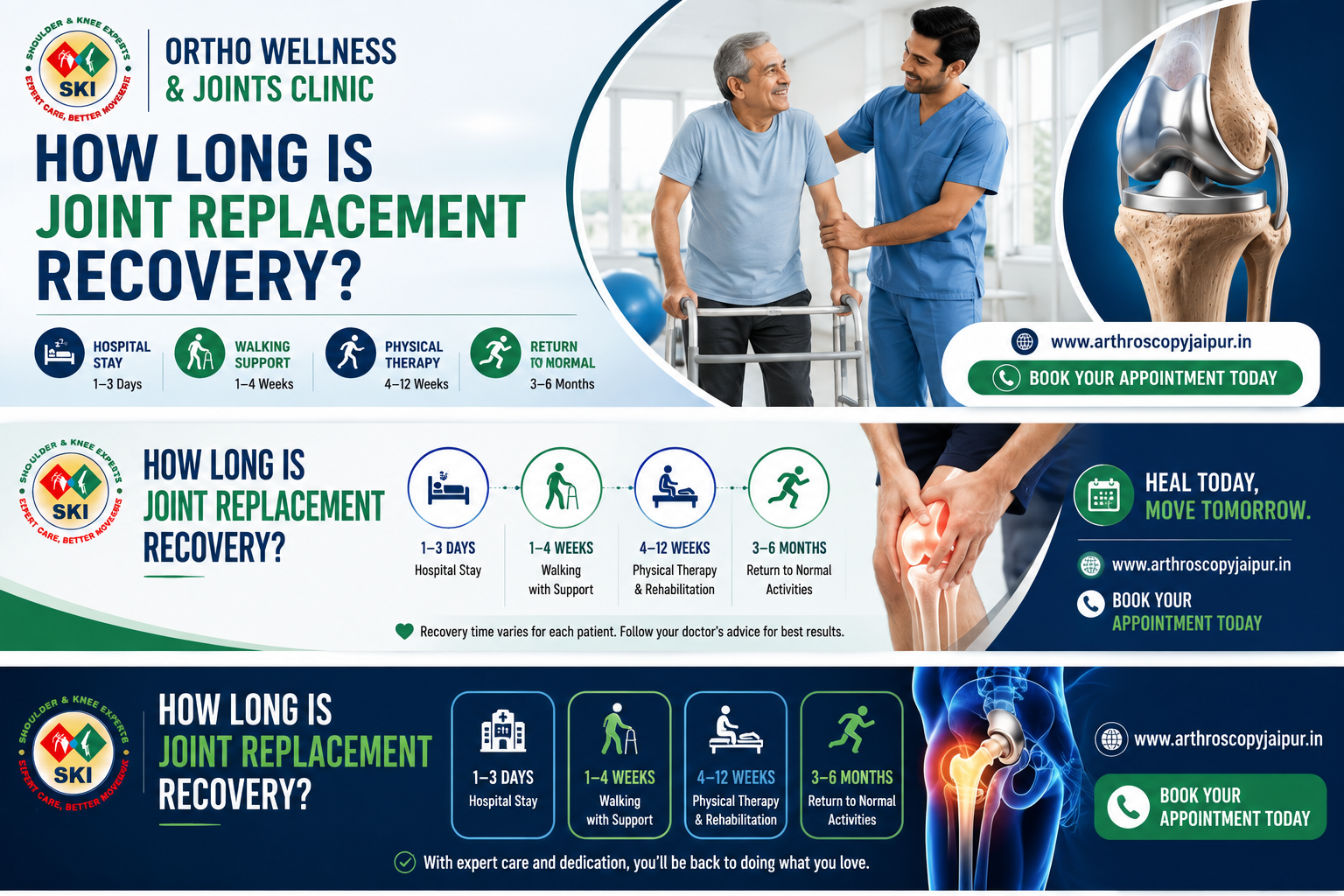
Joint replacement can provide significant relief for people living with severe arthritis, advanced joint damage, or persistent pain that has started limiting everyday activities. However, many patients have an important question before surgery: How long will it take to recover?
The answer is different for every individual. Recovery depends on the joint being replaced, surgical technique, overall health, muscle strength, age, activity level, and commitment to rehabilitation. At a trusted Joint Replacement Clinic in Jaipur, patients can receive personalized guidance about what to expect before, during, and after surgery.
Recovery Starts Before Surgery
Preparation plays an important role in the recovery process. Before joint replacement, the surgeon evaluates the patient's general health, joint condition, muscle strength, mobility, and medical history.
Patients may be advised to improve their fitness, maintain a healthy weight, strengthen supporting muscles, and complete necessary medical investigations before the procedure.
Understanding the rehabilitation process in advance also helps patients prepare mentally and practically for the weeks following surgery.
The First Few Days After Surgery
Modern joint replacement protocols often encourage patients to begin moving soon after surgery when medically appropriate.
The initial period usually focuses on pain control, wound care, safe movement, and preventing complications. Physiotherapy may begin early with simple exercises designed to improve circulation, joint movement, and muscle activation.
Patients may initially require a walker, crutches, or another form of support depending on the joint replaced and their individual recovery.
The First Few Weeks
During the early weeks, rehabilitation becomes increasingly important. Physiotherapy focuses on restoring movement, improving muscle strength, developing balance, and gradually increasing walking ability.
Patients may slowly resume everyday activities such as moving around the home, bathing, dressing, and performing light household tasks.
Recovery should not be rushed. Increasing activity too quickly can place unnecessary stress on healing tissues.
Progress During the First Few Months
As strength and mobility improve, patients generally become more independent.
Walking distance can gradually increase, support may be reduced when appropriate, and exercises become more challenging. Patients may also begin returning to work or other routine activities depending on their occupation and progress.
Regular follow-up appointments allow the surgeon to monitor healing and address any concerns.
Why Rehabilitation Makes a Difference
Joint replacement surgery replaces damaged joint surfaces, but the surrounding muscles still need time to regain strength and coordination.
A structured physiotherapy program can help patients:
- Improve joint flexibility
- Build muscle strength
- Restore balance
- Improve walking patterns
- Increase confidence during movement
- Return gradually to daily activities
Following the recommended exercises consistently can make a meaningful difference in functional recovery.
Knee and Hip Replacement Recovery Can Differ
Recovery is not identical for every joint.
Patients undergoing knee replacement may initially focus heavily on restoring knee bending, straightening, muscle strength, and walking ability. Hip replacement recovery may place greater emphasis on safe movement, gait training, hip strength, and gradually increasing activity.
Your surgeon and physiotherapist will develop a recovery plan according to the procedure performed and your individual needs.
When Can Patients Return to Normal Activities?
There is no single recovery timeline that applies to everyone. Some patients progress quickly, while others require additional time because of age, muscle weakness, other medical conditions, or complex joint damage.
Many routine activities can gradually be resumed during the early recovery period, while higher-impact activities generally require more time and professional guidance.
The most important indicator is functional progress rather than a fixed number of days.
Choosing the Right Orthopaedic Team
The quality of care extends beyond the operation itself. Accurate diagnosis, appropriate implant selection, surgical planning, physiotherapy, and follow-up all contribute to the recovery experience.
Dr. Abhishek Gupta, Senior Consultant Orthopaedic & Joint Replacement Surgeon, has more than 25 years of experience in joint replacement, arthroscopy, ligament treatment, and sports injury management. His patient-focused approach involves understanding each patient's lifestyle, mobility requirements, and treatment goals before developing an individualized plan.
His experience with both joint replacement and minimally invasive procedures also allows patients to be assessed comprehensively before deciding on the most appropriate treatment.
Other Orthopaedic Conditions May Need Specialized Care
A patient's overall mobility can be affected by problems in several joints. Sports-related shoulder injuries, for example, may require specialized evaluation when pain, weakness, or restricted movement persists despite conservative treatment.
Depending on the injury, Shoulder Injury Surgery in Jaipur may involve arthroscopic procedures or other surgical techniques designed to restore shoulder function.
Early diagnosis is important because treatment varies significantly depending on whether the problem involves a tendon, ligament, cartilage, or joint surface.
ACL Injuries Require a Different Recovery Path
Joint replacement recovery should also be distinguished from ligament rehabilitation.
Patients with knee instability following an ACL tear may require assessment from an ACL Repair Doctor in Jaipur. Depending on the injury and patient's activity requirements, treatment can involve structured rehabilitation or arthroscopic ligament reconstruction.
ACL recovery usually involves progressive strengthening, balance training, functional exercises, and sport-specific rehabilitation before an athlete can safely return to high-demand activities.
What Can Patients Do to Support Recovery?
Patients can actively contribute to their recovery by following medical and physiotherapy instructions carefully.
Helpful habits include:
- Attend scheduled follow-up appointments
- Complete prescribed physiotherapy exercises
- Maintain a healthy body weight
- Follow medication and wound-care instructions
- Avoid high-impact activities until cleared
- Increase activity gradually
- Maintain adequate nutrition and hydration
Consistency is often more important than trying to progress quickly.
Long-Term Results Depend on Joint Care
Recovery does not end once pain improves. Maintaining muscle strength, staying physically active within recommended limits, and protecting the replaced joint can support long-term function.
Patients should continue appropriate exercises and consult their specialist if they develop persistent pain, swelling, instability, or a noticeable change in movement.
A successful joint replacement should be viewed as the beginning of a healthier approach to mobility rather than the end of treatment.
Final Thoughts
Joint replacement recovery is a gradual journey, and the timeline varies from patient to patient. Early movement, personalized physiotherapy, proper medical follow-up, and realistic expectations all contribute to a successful recovery.
If you are considering treatment at a Sports Injury Doctor, consulting Dr. Abhishek Gupta can help you understand the procedure, expected recovery, rehabilitation requirements, and long-term activity goals. With more than 25 years of experience in joint replacement, arthroscopy, ligament treatment, and sports injuries, his comprehensive approach focuses on helping patients reduce pain, regain mobility, and return to everyday life with greater confidence.

 English
 Arabic
 French
 Spanish
 Portuguese
 Deutsch
 Turkish
 Italiano
 Russian
 Romaian
 Portuguese (Brazil)
 Greek
Greek
