


HubSpot Marketing Automation for Smarter Lead Nurturing & Growth
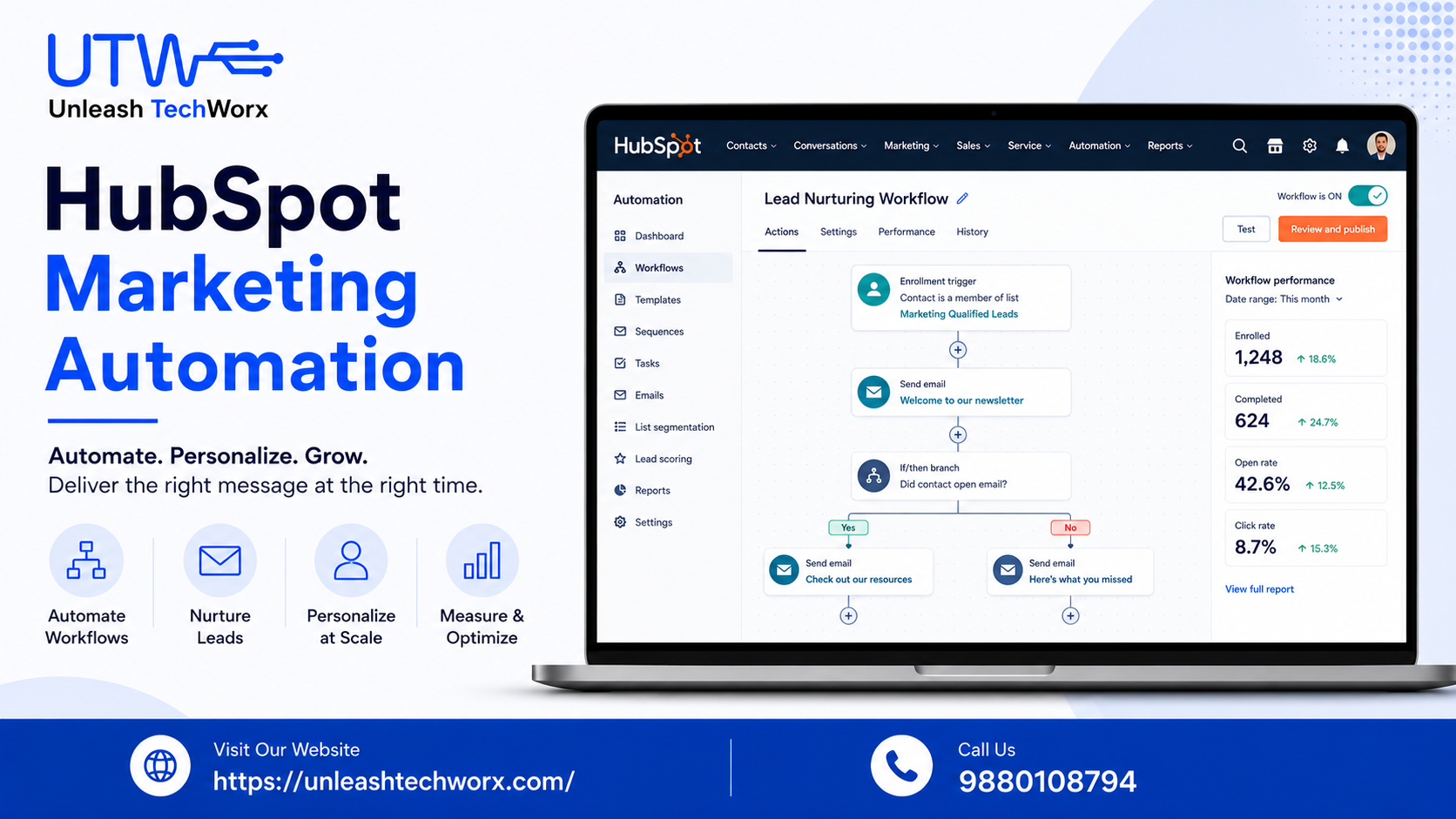
As the number of leads grows, repetitive follow-ups can take up a large part of the working day. Some prospects may receive communication too late, while others may receive messages that have little connection with their interests.
Stop Treating Every Lead the Same
Imagine that three people download the same guide from a website. The first person may be researching a problem for the first time. The second may already be comparing solutions. The third may be actively looking for a provider.
Sending all three people the exact same communication for several weeks may not produce the best experience. A better approach is to consider their engagement and interests. Automation can help marketers create different paths when contacts meet particular conditions. That makes communication more relevant without requiring a team member to manually manage every individual journey.
Turn Small Actions Into Useful Signals
Customers constantly provide signals through their online behavior.
A person may:
- Visit a service page repeatedly
- Download a resource
- Click an email
- Submit a form
- Return to the website after several days
- Engage with a particular campaign
Individually, these actions may seem small.
The Difference Between Sending and Nurturing
There is a big difference between sending emails and nurturing leads. Sending an email means delivering a message. Nurturing means understanding where a person is in the buying process and providing useful information that helps them move forward.
A nurturing journey might begin with educational content. After engagement increases, the communication can become more specific. Later, a relevant offer or sales conversation can be introduced. The purpose is not to pressure someone into buying. It is to make every interaction more useful.
Build a Journey Around Intent
Someone who only reads educational content may not be ready for a sales conversation. But if that same person starts visiting pricing or service pages and repeatedly engages with relevant content, their behavior may indicate stronger interest.
For example:
Content engagement → Higher interest → Relevant follow-up → Sales notification
The exact journey will depend on the business, but the principle remains the same: let customer behavior influence the next step.
Where Automation Can Save Marketing Time
Marketing teams often have a long list of repetitive responsibilities. Some of these activities are ideal for automation because they follow predictable rules.
Examples include:
- Sending confirmation emails
- Enrolling contacts into nurturing journeys
- Updating lifecycle information
- Managing contact lists
- Notifying internal teams
- Creating follow-up tasks
- Supporting re-engagement campaigns
HubSpot describes workflows as a shared automation engine that can operate across marketing, sales, service, and other business processes. This can reduce manual administration and give marketers more time for strategy and creative work.
Keep Human Communication Where It Matters
Good automation should not make a company feel less human. Some conversations should remain personal. A high-value prospect asking a detailed question may need a sales representative. A frustrated customer may need a real person. A complex business requirement may require a consultation.
Automation is most useful when it handles predictable tasks while people take over when judgment, empathy, or expertise is needed. That balance can make automated marketing feel more natural.
Use Content as Part of the Journey
Automation becomes much more useful when it is connected with good content. Different stages of the customer journey may require different types of information.
Early-stage prospects may need:
- Educational articles
- Guides
- Industry information
- Problem-focused resources
People further along may prefer:
- Service information
- Comparisons
- Case studies
- Product details
- Consultation opportunities
Instead of pushing the same content to everyone, businesses can use engagement information to guide people toward material that matches their current interests.
Re-Engage Contacts Without Starting Over
Not every lead disappears because they are no longer interested. Sometimes people become busy. Sometimes priorities change. Sometimes they simply need more time. A re-engagement campaign can give these contacts another opportunity to interact with the business.
A carefully planned sequence might offer a useful resource, ask whether their requirements have changed, or introduce updated information.The objective is to reopen the conversation without overwhelming the contact.
Keep Your CRM Working Behind the Scenes
Automation is not limited to customer-facing emails. It can also help maintain the information that marketing and sales teams depend on. For example, workflows can update records, manage lists, create tasks, assign ownership, and trigger internal notifications.
This behind-the-scenes organization matters because poor data can affect segmentation, personalization, reporting, and lead management. Clean processes make the rest of the marketing operation easier to manage.
Start Small Instead of Automating Everything
One of the biggest mistakes businesses can make is trying to automate their entire marketing operation at once. A better approach is to begin with a few processes that are repetitive and clearly defined.
For example, a company might start with:
New enquiry → Confirmation → Internal notification → Follow-up
Once that process works reliably, additional journeys can be introduced. This makes it easier to test results, identify problems, and improve the strategy before expanding it.
Review What Your Automation Is Actually Doing
- Are people engaging with the messages?
- Are contacts moving to the next stage?
- Are sales teams receiving useful leads?
- Are some emails being sent too frequently?
- Are any workflows outdated?
- Is the content still relevant?
HubSpot provides workflow history and performance/health views that can help teams monitor enrollments, completions, errors, and bottlenecks.
A Practical Automation Strategy From UnleashTechWorx
UnleashTechWorx focuses on using automation as part of a broader marketing strategy rather than treating it as a collection of disconnected workflows.
The right approach begins with understanding the customer journey, identifying repetitive processes, deciding where personalization matters, and then creating automation around those requirements. This can help businesses avoid unnecessary complexity while building marketing processes that are easier for teams to manage.
Think Beyond Automated Emails
It is easy to associate marketing automation only with email sequences. But modern automation can support much more than that. It can connect marketing activity with CRM updates, internal notifications, lead management, segmentation, and other business processes.
HubSpot's workflow system supports actions across marketing, sales, service, data, and connected tools depending on the account and setup. This broader perspective can help businesses build a more connected customer journey.
Conclusion
Effective automation is not about sending more messages or creating hundreds of workflows. It is about making the next customer interaction more timely, relevant, and useful. With HubSpot marketing automation, businesses can respond to customer activity, organize lead nurturing, reduce repetitive marketing work, and create journeys that adapt as prospects become more engaged.
The strongest results come when automation is combined with useful content, clean customer data, thoughtful segmentation, and human involvement where it matters. With UnleashTechWorx, businesses can take a practical approach to automation and build marketing processes designed around real customer behavior and long-term growth.
Frequently Asked Questions
1. What is HubSpot marketing automation?
HubSpot marketing automation uses triggers, workflows, and actions to automate repeatable marketing activities based on customer behavior or CRM information. These can include follow-up communication, segmentation, notifications, and record updates.
2. Can automation help nurture leads?
Yes. Businesses can create nurturing journeys that provide relevant information based on a contact's interests and engagement. This helps maintain communication with prospects who are not yet ready to make a decision.
3. What can trigger a HubSpot marketing workflow?
Triggers can include actions such as form submissions, website activity, campaign engagement, list membership changes, or relevant CRM property changes.
4. Does marketing automation replace human sales communication?
No. Automation is best suited to repetitive and predictable tasks. Personal conversations, complex questions, and high-value opportunities may still require direct involvement from marketing or sales professionals.
5. How should a business start with marketing automation?
Start with one or two repetitive processes that have a clear purpose, such as responding to new enquiries or nurturing a specific type of lead. Test the workflow, review its performance, and expand gradually as the process becomes reliable.

 English
 Arabic
 French
 Spanish
 Portuguese
 Deutsch
 Dutch
Dutch
 Italiano
 Russian
 Romaian
 Portuguese (Brazil)
 Greek
Greek
