


CNC Slant Bed Lathes Handle Chips Smartly
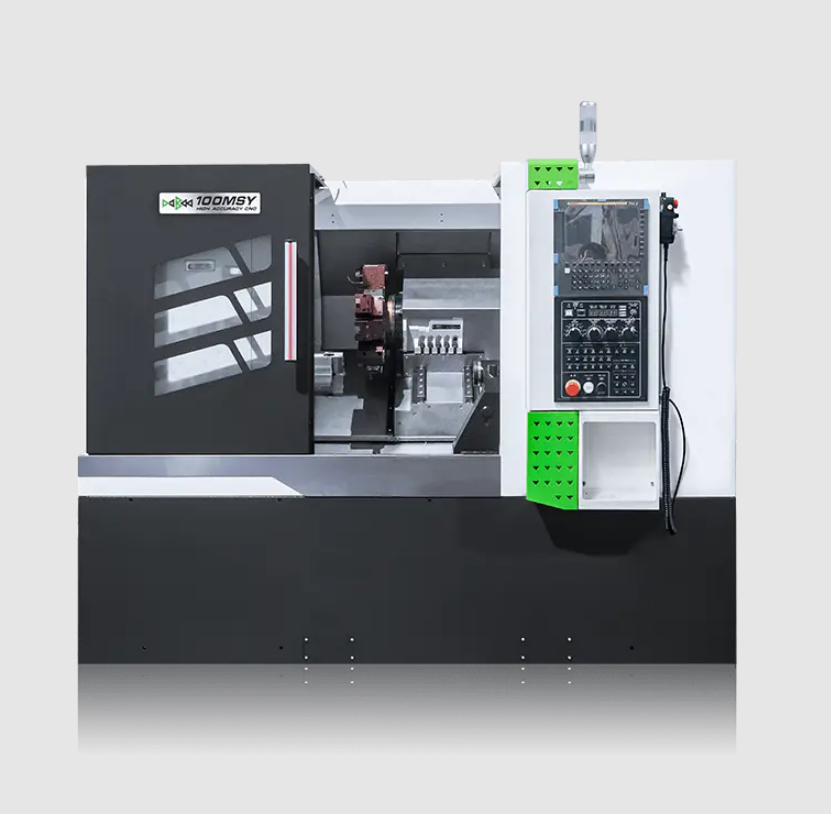
Machine shops chasing tighter tolerances often land on CNC slant bed lathes sooner rather than later, and there's a simple reason behind that pattern. Angled bed geometry lets chips and coolant slide downward naturally, keeping cutting zones cleaner during long production runs instead of piling debris around the workpiece.
Rigidity stands out right away once cutting begins. CNC slant bed lathes resist vibration better than flat alternatives built around different priorities, letting operators hold tighter tolerances on parts ranging from small fittings toward automotive shafts and industrial fittings. Smoother surface finishes follow naturally, meaning fewer tool marks and less rework pulled off completed batches.
Floor space matters too, particularly for shops watching square footage closely. These machines occupy smaller footprints compared bulkier flat-bed alternatives, letting facilities pack more equipment into limited bays without sacrificing turning capability. That density appeals to growing operations planning expansion around existing walls rather than constructing new buildings entirely.
Automation integrates smoothly onto this platform. Bar feeders, robotic loaders, and part catchers mount easily onto CNC slant bed lathes, supporting unattended cycles overnight when staffing runs thin. Programmers appreciate straightforward tool changer access too, since angled beds keep turrets positioned conveniently for quick indexing between operations.
Buyers evaluating options typically weigh spindle speed, chuck size, and turret capacity before settling on a particular configuration. Some CNC slant bed lathes favor gang tooling setups, others lean toward turret-based tool storage supporting complex part geometries requiring multiple operations without manual intervention.
Whatever specification chosen, one pattern holds steady across countless production floors: slant bed geometry solves chip management problems flat designs never fully addressed. That single structural choice ripples outward, influencing everything from surface finish quality toward how comfortably operators load and unload finished parts throughout a shift.
Shops producing valve bodies, shafts, flanges, and threaded fittings frequently gravitate toward CNC slant bed lathes precisely because consistency matters more than novelty. Sometimes the smarter engineering choice isn't flashy at all — it simply lets gravity handle a problem operators used to fight manually.

 English
 Arabic
 French
 Spanish
 Portuguese
 Deutsch
 Turkish
 Dutch
Dutch
 Italiano
 Russian
 Portuguese (Brazil)
 Greek
Greek
