


7 Warning Signs of Hidden Sewer Line Damage Beneath Your Property
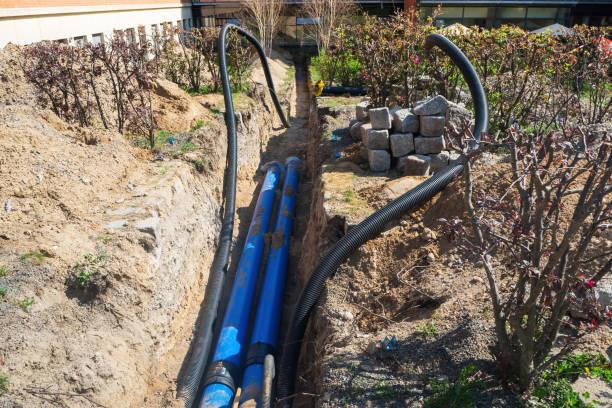
Sewer line damage can develop underground for weeks or months before an obvious plumbing failure appears. A cracked pipe or root intrusion may allow wastewater to escape while fixtures still drain normally. Sewer Line Leak Detection in Cape Cod, MA can help locate a concealed problem before excavation spreads across a large part of a yard.
1. Unexplained Wet Spots in the Yard
A patch of soil that stays damp after surrounding ground has dried deserves attention. Sewer leakage can keep soil moist without recent rain or irrigation. Grass above a leaking line may also grow faster or appear greener. Persistent moisture along the sewer route is more significant.
2. Sudden Changes in Drain Performance
A single slow drain often indicates a localized clog. If several fixtures begin draining slowly around the same time, the restriction may be farther downstream in the building sewer.
Repeated gurgling from toilets or drains can indicate abnormal air pressure inside the waste piping. A partial obstruction or root intrusion can interfere with flow. If routine drain cleaning provides only temporary relief, the line may need inspection.
3. Sewage Odors Around the Property
A persistent sewage smell outdoors can indicate wastewater or sewer gas escaping from a damaged pipe, failed connection, or compromised cleanout. Odors are more concerning when they occur near a lawn, driveway, foundation, or known sewer route.
An odor does not identify the exact failure point. Wind and soil conditions can move smells from their source. Professional sewer pipe inspection in Cape Cod, MA can help determine whether the odor is associated with a buried line or another plumbing component.
4. Sinkholes, Depressions, or Unstable Soil
A growing dip along a sewer route can indicate soil loss around a damaged pipe. Escaping water can carry fine soil into voids below the surface, causing settlement over time.
The condition deserves prompt attention when the depression is expanding or appearing near a paved area. A compromised line beneath a driveway can affect supporting soil. Locating the defect first can reduce unnecessary excavation.
5. Repeated Backups After Drain Cleaning
Recurring backups can indicate a sewer problem beyond an ordinary household clog. If a main drain backs up again shortly after cleaning, something may still be restricting the pipe.
Tree roots are common in older underground sewer systems. Roots can enter through joints or small cracks and create a rough surface that catches solids. Sewer line repair in Cape Cod, MA should be based on the location and condition of the damaged section rather than repeated clearing alone.
6. Changes in Foundation-Area Moisture
Unexpected moisture near a foundation can come from roof runoff, groundwater, grading, or plumbing leaks. A buried sewer defect becomes more plausible when moisture follows the known path of a sewer lateral or appears alongside sewer odors.
Older properties can have different buried pipe materials and routing. Clay, cast iron, and other materials deteriorate in different ways. A camera inspection can reveal a fracture, offset joint, root intrusion, or collapsed area without opening the entire ground surface.
At this stage, Blue Pacific Cape Cod can use the line's location and condition to identify the suspected defect before excavation.
7. Unusual Water Meter Activity
A water meter that records consumption when no fixtures are running can indicate a pressurized water leak, but it does not usually prove a sewer problem. Sewer lines generally carry wastewater by gravity, so unexplained meter movement points more directly toward the water supply side.
If the meter remains stable while wet ground, sewage odors, or drain problems continue, attention can shift toward the drainage system. Drain line inspection in Cape Cod, MA may help determine whether the issue lies within the building drain, sewer lateral, or another connected section.
What a Sewer Inspection Can Reveal
A sewer investigation can begin with the property's plumbing layout and symptoms. An inspection camera can travel through an accessible cleanout to view the pipe, revealing cracks, root growth, displaced joints, corrosion, blockages, or collapse.
Electronic locating equipment may identify the underground position and depth of a defect before excavation. This can help prevent unnecessary digging in unaffected sections of the property.
When Repair Becomes a Larger Decision
A damaged sewer line does not automatically require complete replacement. A limited defect may allow targeted repair, while widespread cracking or collapse can make replacement more practical. Pipe material, depth, soil conditions, accessibility, and nearby pipe condition also affect the choice.
Sewer line replacement in Cape Cod, MA becomes more relevant when inspection shows widespread deterioration rather than one repairable failure.
A Clear Path to the Right Repair
Repeatedly treating symptoms without locating their source can allow a concealed sewer defect to worsen. An inspection can document pipe condition, identify the affected area, and distinguish a localized obstruction from structural damage.
Property owners dealing with recurring backups, unexplained wet ground, sewage odors, or persistent drainage changes should arrange a sewer line assessment before excavation. Repairs should be based on inspection findings.
Pipe Condition Beneath the Surface
Underground sewer damage often produces small clues before a major plumbing emergency. A damp patch, recurring backup, or developing ground depression can justify investigation when several symptoms appear together.
FAQs
Can sewer line damage exist without indoor backups?
Yes. A partial defect can remain outside while enough wastewater continues moving through the pipe to prevent an immediate backup.
How long can a small sewer leak go unnoticed?
There is no fixed timeframe. Soil, pipe depth, leak size, and groundwater conditions affect how quickly evidence appears.
Can heavy rain make sewer line symptoms worse?
Yes. Saturated soil can change drainage around buried pipes, and damaged connections may allow additional water into the sewer system.
Do tree roots always mean sewer replacement?
No. Roots can sometimes be removed when the pipe remains structurally sound. Replacement becomes more relevant when roots have entered through significant cracks or displaced joints.
Can a sewer camera inspect every buried pipe?
No. Access depends on pipe diameter, entry points, bends, blockages, and collapse.
What records can help locate an older sewer line?
Property plans, plumbing records, prior repair invoices, and past excavation photos can provide useful clues. Older properties may require field locating.

 English
 Arabic
 French
 Spanish
 Portuguese
 Deutsch
 Turkish
 Dutch
Dutch
 Italiano
 Romaian
 Portuguese (Brazil)
 Greek
Greek
