


How to Choose the Right Precision Machining Services Provider
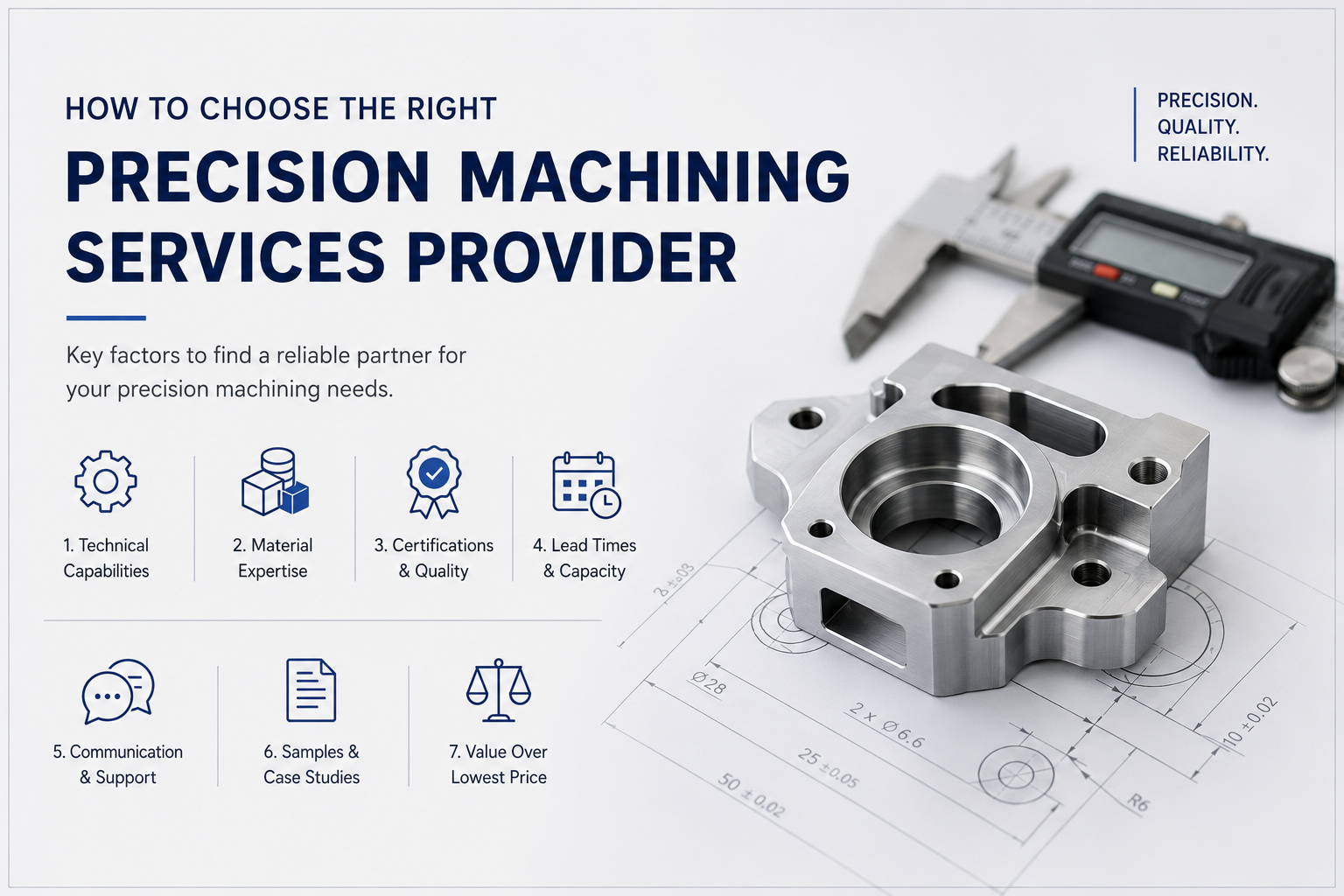
Introduction
Finding a precision machining partner sounds simple until you actually start looking. Suddenly you're comparing tolerances, materials, certifications, and lead times across a dozen shops that all claim to be "the best." If you've ever felt overwhelmed by that search, you're not alone. Choosing the wrong provider can mean delayed shipments, inconsistent quality, and components that just don't fit right. Choosing the right one, though, can turn into a long-term partnership that saves you time, money, and headaches.
Here's a practical, no-fluff guide to help you pick a precision machining services provider you can actually rely on.
1. Start With Their Technical Capabilities
Not every shop can handle every job. Before anything else, check what machines and processes they actually run - CNC milling, turning, EDM, grinding, or multi-axis machining. Ask about the tolerances they typically hold. If your parts need tolerances within ±0.001 inches, a shop that usually works at ±0.005 simply isn't the right fit, no matter how competitive their pricing looks.
2. Look at Material Expertise
Machining aluminum is a very different game from machining titanium or hardened steel. A provider with deep experience in your specific material will understand how it behaves under stress, heat, and cutting pressure. This directly affects part quality, tool wear, and turnaround time. Ask for examples of past projects using the same or similar materials you need.
3. Check Certifications and Quality Standards
Certifications like ISO 9001, AS9100 (for aerospace), or IATF 16949 (for automotive) aren't just badges - they reflect a provider's commitment to consistent, documented quality control. If your industry has specific compliance requirements, make sure your provider meets them before you sign anything.
4. Ask About Lead Times and Capacity
A great machinist with an overloaded schedule won't help you if your project has a tight deadline. Ask directly about current capacity, average lead times, and how they handle rush orders. A provider who's upfront about their limitations is often more trustworthy than one who promises everything and delivers late.
5. Evaluate Communication and Support
Good machining providers act like partners, not just vendors. They should be willing to review your designs, flag potential manufacturability issues early, and communicate clearly throughout production. If getting a straight answer during the quoting stage feels like pulling teeth, that's a red flag for how the relationship will go later.
6. Request Samples or Case Studies
Don't just take their word for it. Ask for sample parts, references, or case studies from projects similar to yours. A provider confident in their work will have no problem sharing proof of past success.
7. Compare Pricing - But Don't Chase the Lowest Bid
Price matters, but the cheapest quote often comes with hidden costs: longer lead times, lower tolerances, or poor after-sales support. Instead, look for value - a balance of quality, reliability, and fair pricing.
Conclusion
Choosing the right precision machining services provider isn't about finding the flashiest website or the lowest quote. It's about finding a partner who understands your materials, meets your tolerances, respects your deadlines, and communicates like a true collaborator. Take the time to vet capabilities, certifications, and past work before committing. The right choice today can save you countless production headaches down the road.
FAQs
1. What industries typically need precision machining services?
Aerospace, automotive, medical, defense, and industrial equipment manufacturers rely heavily on precision machining for critical components.
2. How do I know if a provider can meet tight tolerances?
Ask for their standard tolerance range and request sample parts or inspection reports from previous projects.
3. Is ISO certification necessary for every project?
Not always, but for regulated industries like aerospace or medical, certifications are often mandatory for compliance.
4. How long does precision machining typically take?
Lead times vary based on complexity, material, and order volume - ranging from a few days to several weeks.
5. Should I choose a local provider or work internationally?
Local providers offer easier communication and faster turnaround, while international ones may offer cost savings - the right choice depends on your priorities.

 English
 French
 Spanish
 Portuguese
 Deutsch
 Turkish
 Dutch
Dutch
 Italiano
 Russian
 Romaian
 Portuguese (Brazil)
 Greek
Greek
