


How to Register a Trademark in Dubai: Step-by-Step Guide
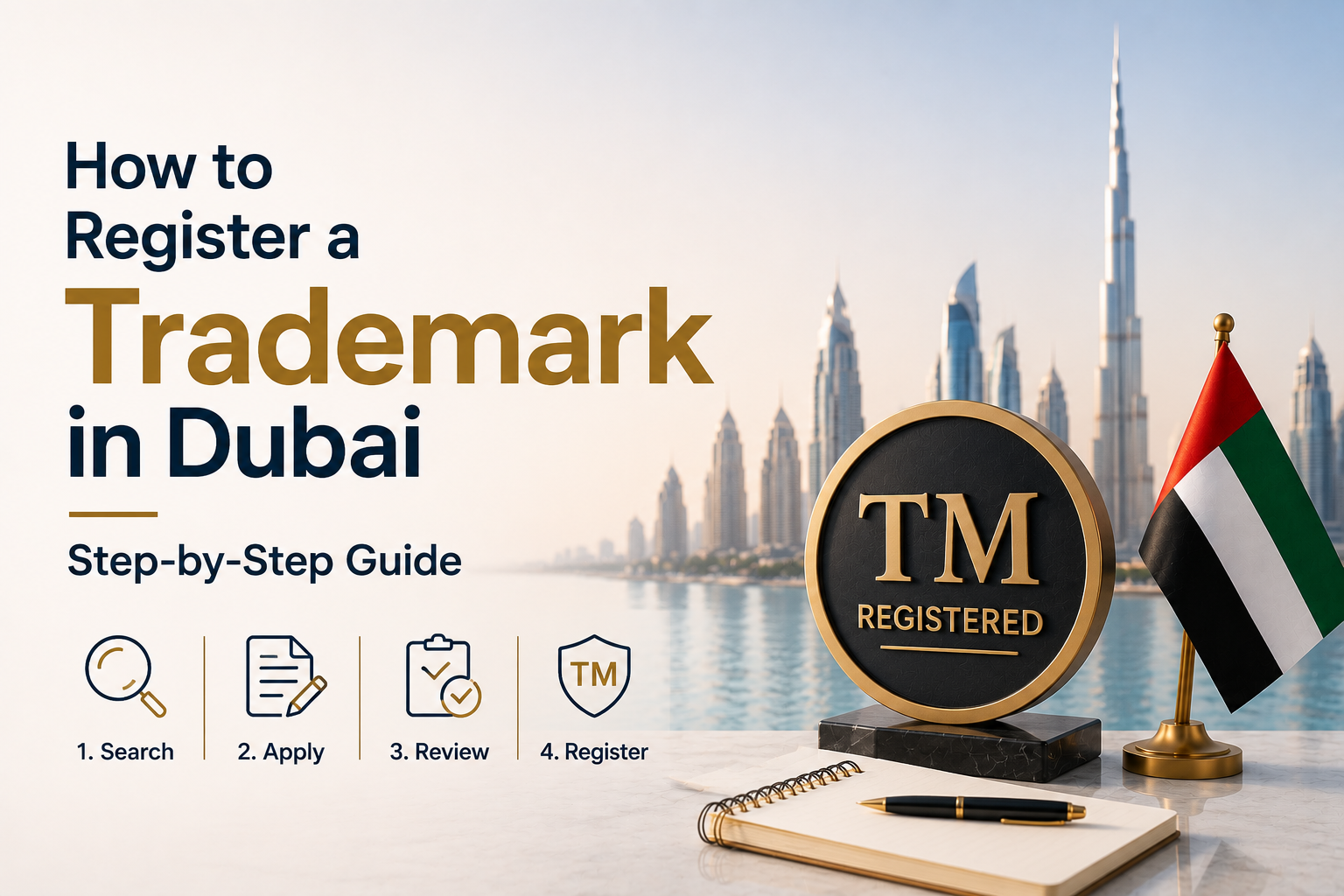
Building a recognizable brand is an important part of establishing a successful business in Dubai. Whether you operate a startup, e-commerce company, consultancy, retail business, or established corporation, protecting your brand name, logo, slogan, or other distinctive identity can help prevent unauthorized use by competitors. Trademark Registration Dubai provides legal protection for eligible marks and gives businesses stronger rights to use and enforce their registered brand.
In the UAE, trademark registration is handled at the federal level through the Ministry of Economy and Tourism, rather than through a separate Dubai trademark registry. UAE trademark legislation allows individuals and legal entities to register trademarks and permits registration across one or more classes of goods or services.
For businesses looking for professional guidance, Takween Advisory can help applicants understand the registration process, prepare documentation, select appropriate trademark classes, and navigate the application procedure.
What Is a Trademark?
A trademark is a distinctive sign used to identify the goods or services of one business and distinguish them from those of other businesses. Depending on the circumstances and applicable UAE requirements, trademarks can cover elements such as names, words, logos, designs, and other distinctive identifiers.
Registering a trademark is different from registering a company or trade name. A business licence allows you to legally conduct a particular business activity, while a trademark registration protects the brand identifier associated with your products or services.
This distinction is particularly important in Dubai's competitive business environment, where companies may invest significantly in brand development, marketing, websites, packaging, and customer recognition.
Why Should You Register a Trademark in Dubai?
Trademark registration can provide important commercial and legal advantages. A registered mark can strengthen your ability to prevent unauthorized use of the protected mark and create an identifiable intellectual property asset for your business.
Registration can also support brand expansion, licensing arrangements, franchising, investment discussions, and business valuation. For companies planning to build a long-term presence in the UAE, protecting the brand early can reduce the risk of costly disputes later.
Step-by-Step Process for Trademark Registration in Dubai
Step 1: Choose Your Trademark
The first step is to decide what you want to protect. This could be your company or brand name, logo, slogan, or another eligible distinctive mark.
Before submitting an application, consider whether the proposed trademark is distinctive and whether it could conflict with an existing protected mark. A strong trademark strategy should also consider how the brand may be used in the future.
Step 2: Conduct a Trademark Search
A trademark search is an important preliminary step. It helps identify potentially conflicting marks and reduces the risk of investing in an application that may face objections.
The search should consider similar spellings, pronunciations, visual elements, and related goods or services rather than looking only for an exact match.
Step 3: Select the Correct Trademark Class
Trademark applications are submitted according to the classification of goods and services. UAE regulations allow a trademark to be registered in one or more categories, with applications and fees applying according to the relevant classes.
Choosing the correct class is therefore essential. If your business operates across multiple product or service categories, you may need protection in more than one class.
For example, a technology company, clothing brand, restaurant, consultancy, and cosmetics business may require different trademark classifications depending on their activities.
Step 4: Prepare the Required Documents
The application generally requires information about the applicant and the proposed trademark. The implementing regulations specify information such as the trademark representation, applicant details, description of the trademark, and the goods or services covered by the application. Additional documents may be required depending on the applicant and nature of the mark.
Where an application involves a registered trademark agent, a duly authenticated power of attorney may be required. Foreign-language elements can also require certified Arabic translation in accordance with the applicable requirements.
Step 5: Submit the Application Online
Trademark applications are submitted electronically through the competent Ministry's services. The UAE's government services increasingly use digital identity systems, including UAE Pass, for access to online government services.
Applicants should carefully review all information before submission because errors in the applicant details, trademark representation, description, or classification can create unnecessary complications.
Step 6: Pay the Applicable Fees
Trademark registration involves government fees, and the amount can depend on the service and number of classes involved. The UAE's published fee schedule includes separate charges for filing, registration, publication, and other trademark-related services.
Because government fees and procedures can change, applicants should verify the current amount through the Ministry's official service before making payment.
Step 7: Examination by the Authorities
After submission, the application is reviewed by the competent authority. The examination process assesses whether the application satisfies the applicable legal requirements.
Not every proposed mark can be registered. UAE trademark legislation identifies categories of marks that may be excluded from registration, including certain marks that conflict with protected or well-known trademarks and marks that do not satisfy applicable legal requirements.
If an objection or refusal arises, the applicant may need to respond or take the appropriate legal or administrative action within the applicable timeframe.
Step 8: Publication and Opposition Period
Once the application progresses through the relevant examination process, publication may be required. Publication gives interested parties an opportunity to raise an objection according to the applicable UAE trademark procedures.
The objection process is an important reason to monitor the application after submission rather than assuming that filing automatically guarantees registration.
Step 9: Receive the Trademark Registration Certificate
If the application successfully completes the required procedures and there are no unresolved objections preventing registration, the trademark can be registered and the relevant certificate issued.
The registration creates an official record of the trademark and its owner in the UAE trademark system. The trademark register records information including the trademark, owner details, goods or services, and certain subsequent transactions affecting the mark.
How Long Does Trademark Registration in Dubai Take?
The overall timeline can vary depending on the application, examination, publication, objections, documentation, and other procedural factors. A straightforward application may progress more efficiently than an application involving objections, missing documents, classification issues, or disputes.
Businesses should therefore avoid relying on a fixed timeline unless it has been confirmed for their specific application and the current government process.
How Much Does Trademark Registration in Dubai Cost?
The cost depends on factors such as the number of classes, government charges, publication requirements, and whether professional assistance is used.
The published UAE fee schedule includes charges for filing and registering trademarks in a category, as well as separate charges for publication and other trademark services.
Since fees and government procedures can be updated, businesses should verify the current official charges before submitting an application.
Common Mistakes to Avoid
Businesses should avoid choosing a trademark without conducting adequate research, selecting unsuitable classes, submitting incomplete documents, or assuming that a trade licence automatically protects the brand.
Another common mistake is waiting until a brand becomes commercially successful before considering trademark protection. If another party registers a similar mark first, resolving the resulting dispute can become significantly more complicated.
Why Professional Trademark Assistance Can Help
Trademark registration may appear straightforward, but the quality of preparation can have a significant effect on the application. Professional assistance can help businesses conduct preliminary checks, identify suitable classes, prepare supporting documents, review application details, and respond appropriately if issues arise.
For Dubai businesses and entrepreneurs, obtaining guidance before filing can be especially useful when the trademark includes foreign-language words, multiple classes, logos, international ownership, or complex business structures.
Conclusion
Trademark registration in Dubai is an important step for businesses that want to protect their brand and establish stronger intellectual property rights in the UAE. The process generally involves selecting a distinctive mark, conducting a search, identifying the correct classes, preparing documentation, submitting the application, completing examination and publication requirements, and obtaining the registration certificate.
Because trademark protection is closely connected to the exact mark and classes covered by the registration, careful preparation is essential. Businesses should also check the latest requirements and government fees before submitting an application.
Frequently Asked Questions About Trademark Registration in Dubai
1. How do I register a trademark in Dubai?
Trademark registration is handled federally through the UAE's competent Ministry. The general process involves selecting a trademark, searching for conflicting marks, choosing the appropriate goods or services classes, preparing documents, submitting the application electronically, paying applicable fees, completing examination and publication requirements, and obtaining the registration certificate.
2. Can a foreigner register a trademark in Dubai?
Trademark legislation provides registration rights to physical and legal persons, subject to the applicable UAE requirements. The specific documentation and representation requirements can depend on the applicant's circumstances.
3. Is trademark registration mandatory in Dubai?
Trademark registration is not simply the same as obtaining a business licence, but businesses should consider registration if they want formal protection for their brand. Registration can provide stronger legal protection than relying solely on commercial use of an unregistered brand.
4. Can I register a company name as a trademark in Dubai?
A company or trade name and a trademark are separate forms of protection. A business name may potentially also function as a trademark if it meets the relevant requirements and is successfully registered as a trademark.
5. How many trademark classes can I register?
A trademark can be registered in one or more classes of goods or services. The appropriate number depends on what your business actually offers and the scope of protection you need.
6. What documents are required for trademark registration in the UAE?
Requirements depend on the applicant and trademark. The application can require the trademark representation, applicant information, description of the mark, relevant goods or services and class, along with supporting documents where applicable.
7. Can I register a logo and a brand name separately?
Yes, businesses can consider protecting different brand elements separately where appropriate. The best approach depends on how the name and logo are used and the type of protection the business wants.
8. What happens if someone objects to my trademark?
An interested party may be able to file an objection under the applicable trademark procedure. The applicant may then need to respond or pursue the appropriate administrative or legal remedy depending on the circumstances.
9. Does a Dubai trade licence protect my brand name?
No. A trade licence and trademark registration serve different purposes. A trade licence authorizes business activities, while trademark registration concerns protection of the registered brand or mark.
10. Why should I use a trademark consultant in Dubai?
A trademark consultant can assist with preliminary searches, classification, documentation, application preparation, and procedural follow-up. This can be particularly useful for businesses unfamiliar with UAE trademark requirements or applications involving multiple classes or international applicants.
11. Can a trademark be renewed in the UAE?
Yes. Trademark protection is subject to a defined protection period and renewal procedures under UAE law. Businesses should monitor renewal deadlines to maintain protection and avoid unnecessary interruption.
12. Is trademark registration useful for an online business in Dubai?
Yes. E-commerce businesses often rely heavily on brand names, logos, websites, social media identities, and product branding. Protecting the relevant trademark can therefore be an important part of an online brand's intellectual property strategy.
In short, registering a trademark in Dubai is more than an administrative formality—it is a strategic step toward protecting brand identity, supporting business growth, and strengthening intellectual property rights in the UAE.

 Arabic
 French
 Spanish
 Portuguese
 Deutsch
 Turkish
 Dutch
Dutch
 Italiano
 Russian
 Romaian
 Portuguese (Brazil)
 Greek
Greek
