


How Unc Thread Gauges Improve Precision in Industrial Thread Inspection
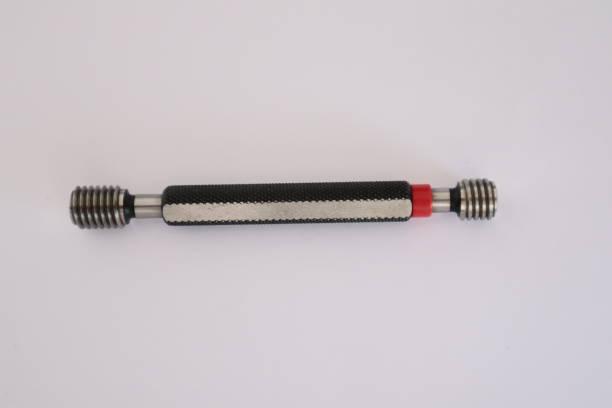
Precision is one of the most important requirements in modern manufacturing. Components may look simple, but even a small error in a threaded hole or fastener can affect assembly, performance, durability, and safety. For this reason, manufacturers need dependable inspection methods that can quickly confirm whether a threaded component meets its required specifications.
Thread inspection becomes especially important when producing parts in large quantities. Measuring every thread with complex instruments can slow production, while relying only on visual inspection may allow defects to pass unnoticed. This is where thread gauges provide a practical solution. Unc Thread Gauges are designed to help manufacturers verify Unified National Coarse threads efficiently and consistently, making them valuable tools for quality control operations.
Understanding UNC Threads
UNC stands for Unified National Coarse, a standardized thread system commonly used for general-purpose fastening applications. Coarse threads have a relatively larger pitch compared with fine threads and are widely used in machinery, automotive components, structural assemblies, and industrial equipment.
Because UNC threads are produced according to defined dimensional requirements, manufacturers must ensure that both internal and external threads conform to the appropriate specifications. An incorrect thread profile, pitch diameter, or tolerance can result in poor engagement between mating components.
Instead of depending entirely on advanced measuring equipment, manufacturers can use suitable gauges to perform fast dimensional and functional checks during production.
The Role of Thread Gauges in Industrial Inspection
Thread gauges are inspection tools designed to determine whether a threaded feature falls within an acceptable tolerance range. They are particularly useful in production environments where speed and repeatability are important.
For internal threads, plug gauges can be used to check whether the threaded hole has been manufactured correctly. For external threads, ring gauges can help verify the dimensions and functional fit of the thread.
The basic concept is straightforward. A properly manufactured thread should accept the appropriate GO gauge while rejecting the NO-GO gauge according to established inspection practices. This approach allows operators to identify components that may fall outside the required tolerance without spending excessive time on individual dimensional measurements.
Improving Inspection Accuracy
One of the biggest advantages of using dedicated gauges is consistency. Manual inspection can sometimes vary between operators, particularly when large quantities of components need to be checked. A properly manufactured gauge provides a defined reference against which the thread can be evaluated.
Unc Thread Gauges can therefore support more consistent inspection across different production batches. When the correct gauge is selected and maintained properly, inspectors can quickly determine whether a threaded feature meets the specified requirements.
This consistency is especially valuable for manufacturers supplying components to industries where dimensional accuracy and interchangeability are critical.
Faster Quality Control on the Production Floor
Industrial manufacturing often requires a balance between precision and productivity. A highly accurate inspection method is not always practical if it takes too long to perform.
Thread gauges offer a convenient alternative for routine checks. Operators can inspect threaded components quickly without setting up complicated measurement equipment for every part. This makes gauging particularly useful in production lines where hundreds or thousands of components may need inspection.
Faster inspection also helps manufacturers identify problems earlier. If a machining tool begins producing threads outside the required tolerance, routine gauge checks can reveal the issue before a large quantity of defective components is produced.
Supporting Interchangeability
Interchangeability is essential when components are manufactured separately but must eventually work together. A threaded fastener produced by one supplier should fit the corresponding threaded hole produced by another manufacturer when both follow the same applicable specifications.
Accurate thread inspection helps maintain this compatibility. By checking threads against appropriate standards, manufacturers can reduce the risk of components that are difficult to assemble or fail to engage correctly.
For businesses involved in automotive, machinery, engineering, and other industrial applications, reliable thread inspection can therefore contribute directly to smoother assembly and improved product consistency.
Reducing Defective Components
Thread-related defects can create significant costs. A component may pass several stages of production only to be rejected during final assembly because its thread does not fit correctly.
Routine inspection helps reduce this risk. Gauges can be incorporated into different stages of a manufacturing workflow, allowing operators to identify potential problems before components reach final assembly.
The approach can also reduce rework and scrap. When machining problems are detected quickly, production teams can investigate tooling, machine settings, material conditions, or other factors before the issue affects a larger batch.
Choosing a Reliable Gauge Supplier
The performance of a thread inspection system depends heavily on the quality and suitability of the gauges being used. Manufacturers should consider gauge accuracy, material, manufacturing quality, tolerance requirements, size availability, and inspection procedures when selecting a supplier.
Gaugestools provides thread inspection solutions for applications requiring dependable dimensional control. When selecting gauges, manufacturers should also make sure that the gauge specification matches the thread standard, size, class of fit, and application requirements.
A reliable supplier should also be able to provide clear product information and technical assistance when customers need help selecting the appropriate gauge.
Proper Gauge Handling and Maintenance
Even a high-quality gauge can lose its effectiveness if it is handled incorrectly. Gauges should be kept clean and protected from unnecessary impact, contamination, and corrosion.
Operators should avoid forcing a gauge into a threaded component. Inspection should be performed according to established procedures and without applying excessive pressure. Regular checks of gauge condition are also important because wear can affect inspection results.
Proper storage is equally important. Gauges should be protected from damage and stored in suitable conditions when they are not being used. A consistent maintenance routine can help extend service life and preserve inspection reliability.
Why Precision Inspection Matters
Precision inspection is not simply about rejecting defective parts. It is about maintaining control throughout the manufacturing process. Consistent thread inspection provides production teams with useful information about machining performance and product quality.
When suitable gauges are combined with proper machining practices, operators can establish a dependable quality-control process. This can improve production consistency, reduce avoidable rework, and support the manufacture of components that perform reliably in their intended applications.
Conclusion
Accurate thread inspection plays an important role in modern industrial manufacturing. From maintaining dimensional consistency to supporting interchangeability, reliable gauging can have a direct impact on product quality and production efficiency.
Unc Thread Gauges provide manufacturers with a practical method for checking Unified National Coarse threads against required specifications. Their speed, simplicity, and repeatability make them suitable for routine inspection across many industrial environments.
With properly selected inspection equipment and good handling practices, manufacturers can strengthen their quality-control procedures and reduce the likelihood of thread-related defects. Gaugestools can be considered as a source for thread inspection solutions when businesses require gauges suited to their specific manufacturing requirements.
FAQ
1. What are UNC thread gauges used for?
UNC thread gauges are used to inspect Unified National Coarse threaded features and determine whether they meet specified dimensional and tolerance requirements.
2. What is the difference between a GO and NO-GO gauge?
A GO gauge is generally used to verify that the thread can achieve the required functional fit, while a NO-GO gauge checks whether the feature remains within the specified tolerance limits.
3. Why is thread inspection important?
Thread inspection helps prevent assembly problems, reduce defective components, maintain interchangeability, and support consistent product quality.
4. How should thread gauges be maintained?
Gauges should be kept clean, protected from impact and corrosion, stored properly, and inspected regularly for signs of wear or damage.
5. How can manufacturers select the right thread gauge?
Manufacturers should consider the thread standard, nominal size, class of fit, tolerance requirements, application, and required gauge type before selecting an inspection tool.

 English
 Arabic
 French
 Spanish
 Portuguese
 Turkish
 Dutch
Dutch
 Italiano
 Russian
 Romaian
 Portuguese (Brazil)
 Greek
Greek
