


Why Every Food Processing Plant Needs an Autoclave Machine
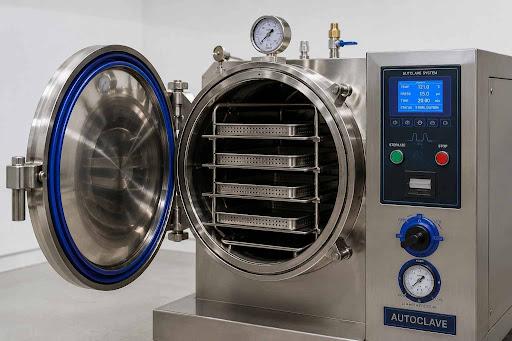
If you run or manage a food processing plant, you already know that one small mistake in sterilization can cost a company everything. A single batch of contaminated product can lead to recalls, lawsuits, and a brand name that never fully recovers. This is why more and more plants are turning to a piece of equipment that has quietly become one of the most important tools on the factory floor: the autoclave machine.
At Envitro Tech, we talk to food manufacturers every day who are trying to figure out the same thing. How do we make sure our food is truly safe, not just safe on paper. In this blog, we want to walk you through why an autoclave sterilizer matters so much, how it actually works, and what you should think about before bringing one into your plant.
So What Exactly Is an Autoclave
Let us keep this simple. An autoclave machine is basically a sealed steel chamber that uses steam under high pressure to kill off bacteria, viruses, fungi, and stubborn spores that regular boiling water just cannot touch. Boiling water tops out at 100 degrees Celsius, but many dangerous microorganisms can survive that easily. An industrial autoclave pushes the temperature much higher, usually past 121 degrees Celsius, and holds it there under pressure long enough to make sure nothing harmful is left behind.
In food processing, this method is often called retort processing, and you will hear people refer to these machines as food autoclaves or retort sterilizers. Different names, same idea: making food safe from the inside out, even after it has already been sealed in a can, pouch, jar, or bottle.
Why This Machine Matters So Much
It Kills What You Cannot See
Some of the most dangerous foodborne bacteria, like Clostridium botulinum, which causes botulism, do not show up as smell, color, or taste. You cannot catch them by looking at the product. A properly working autoclave sterilizer takes that guesswork out of the picture completely by destroying these spores before the product ever leaves the plant.
It Keeps Food Fresh Without Loading It with Preservatives
People today read labels more carefully than ever. Nobody wants a can full of chemicals just to keep it shelf-stable. An industrial autoclave lets a plant extend shelf life the natural way, through heat and pressure, instead of relying heavily on preservatives. That is a big selling point for brands trying to market themselves as clean and honest.
It Makes Audits and Certifications Way Less Stressful
If you have ever gone through an FDA or FSSAI audit, you know how much they care about proper thermal processing records for canned and low acid foods. Having a dependable autoclave machine on site, along with proper logs of temperature and pressure for every cycle, makes these audits much smoother. It also helps when you are working toward certifications like HACCP or ISO 22000.
It Gives You the Same Result Every Single Time
Doing sterilization by hand or with older equipment leaves too much room for error. Maybe the temperature was a little low one day, or the timing was off by a few minutes. That kind of inconsistency is risky in food safety. A good autoclave sterilizer, like the ones built by Envitro Tech, runs on programmable settings so every batch gets the exact same treatment, no guessing involved.
It Works for Almost Any Type of Food Product
Canned vegetables, seafood, dairy items, ready-to-eat meals- you name it, an autoclave machine can usually be set up to handle it. It also adapts to different packaging types like tin cans, glass jars, pouches, and bottles. That kind of flexibility means the machine grows with your business instead of becoming outdated the moment your product line changes.
It Protects You from Costly Recalls
A recall does not just cost money; it costs trust, and trust is much harder to rebuild than a bank balance. Good sterilization equipment catches the invisible threats that human eyes and manual checks simply cannot, which means fewer surprises down the line.
How the Process Actually Works
Here is a simple breakdown of what happens inside the machine.
-
Sealed food containers go into the autoclave chamber.
-
Steam fills the chamber, and pressure starts building.
-
Temperature climbs well past what boiling water could ever reach.
-
That heat is held steady for a set amount of time based on the product and container size.
-
The chamber cools down and pressure is released slowly so packaging does not get damaged.
-
Out comes fully sterilized, shelf-stable product, ready for storage or shipping.
Sensors and automated controls watch this entire process closely, which is exactly why picking a well-built autoclave sterilizer makes such a difference in the long run.
What to Think About Before Buying One
Not every food processing autoclave is the same, so it helps to think through a few things first.
How big does the chamber need to be for your daily output? What kind of packaging are you using: cans, pouches, or jars? Do you want full automation with programmable controls, or something simpler? How efficient is the machine with steam and energy? And just as important, will you get real support and spare parts when you need them?
This is exactly where a good manufacturer partner makes a real difference. At Envitro Tech, our team sits down with food processing businesses to understand their actual production needs and helps them choose the right autoclave machine setup, whether that means a smaller batch retort for a growing brand or a large industrial autoclave built for high-volume output.
Wrapping It Up
Food safety is not something you get to redo once it goes wrong. An autoclave machine does a lot more than heat food; it protects the people eating it, protects your brand, keeps you compliant with food safety rules, and gives your products a longer shelf life without cutting corners.
If your plant is aiming to grow and build long-term trust with customers, investing in a solid autoclave sterilizer is one of the smartest moves you can make. And with the right support from a partner like Envitro Tech, you get both safety and efficiency without having to choose one over the other.
Still relying on old-school sterilization methods? It might be the right time to see what a modern industrial autoclave can do for your production line and for the people who trust your food every single day.

 English
 Arabic
 French
 Spanish
 Portuguese
 Deutsch
 Turkish
 Italiano
 Russian
 Romaian
 Portuguese (Brazil)
 Greek
Greek
