


How Many PRP Sessions Are Needed for Hair Growth?
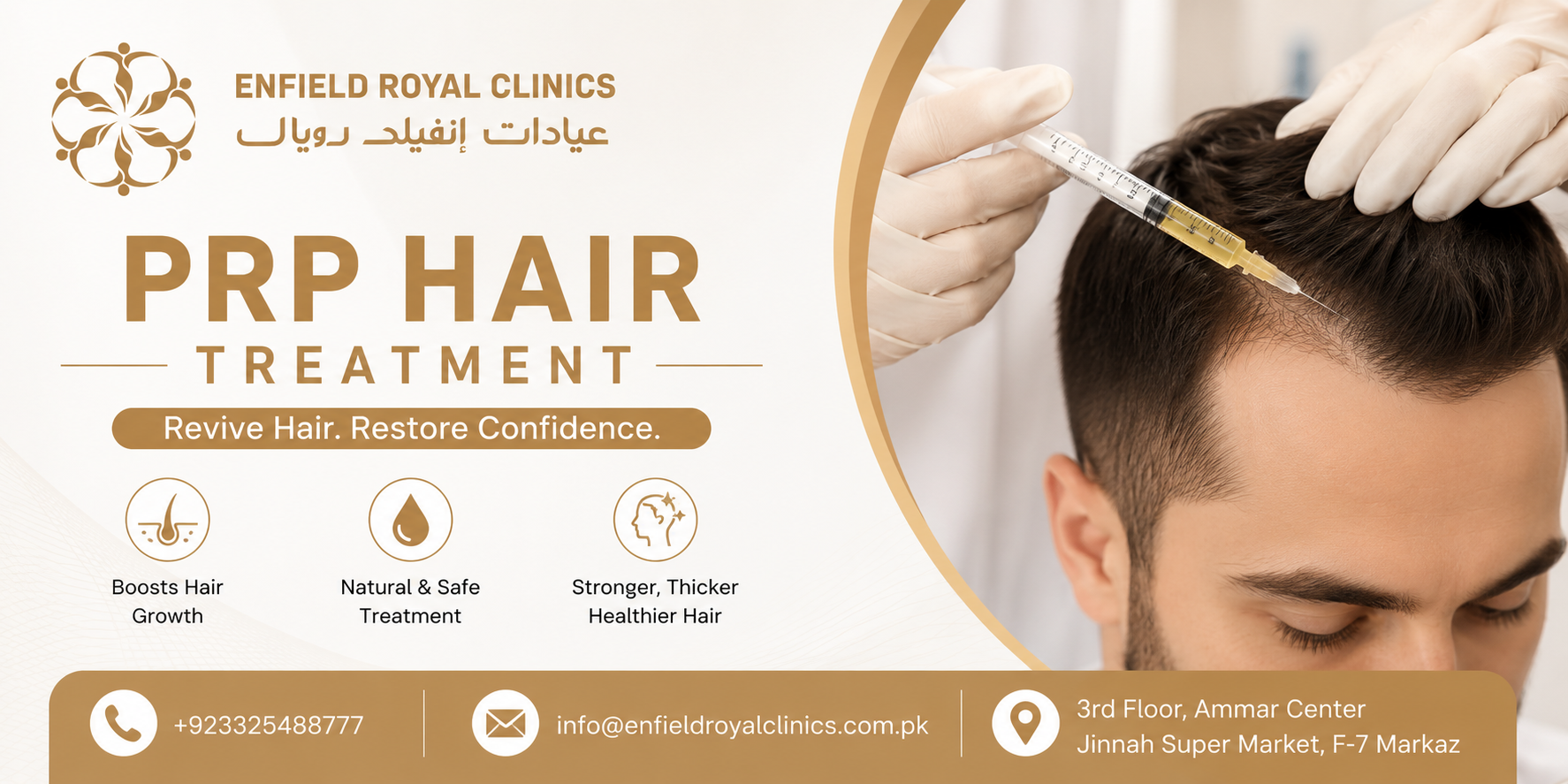
Hair growth is a gradual biological process, so treatments designed to support thinning hair usually require patience. One common question among people considering regenerative hair procedures is how many sessions they actually need to see a noticeable difference.
PRP uses platelet-rich plasma prepared from a patient's own blood. A small blood sample is processed to concentrate platelets and growth factors, which are then introduced into selected areas of the scalp. The aim is to support existing hair follicles and create a healthier environment for hair growth.
There is no single number of sessions that works for everyone. The appropriate treatment schedule depends on the cause of hair loss, its severity, follicle condition, age, general health, and how the individual responds.
What Is the Typical Treatment Schedule?
A course of treatment may involve several sessions rather than a single appointment. Many clinical protocols use an initial series of approximately three sessions, often spaced several weeks apart.
The exact schedule can vary depending on the patient's condition and the provider's protocol. Some people may require fewer sessions, while others with more noticeable thinning may need additional treatment.
The purpose of spacing appointments is to give the scalp and follicles time to respond between sessions. A qualified provider can adjust the schedule according to progress rather than following a fixed plan for every patient.
Why Are Multiple Sessions Often Recommended?
Hair follicles operate according to natural growth cycles. A single treatment cannot immediately change the entire cycle or produce visible hair overnight.
Repeated sessions are intended to provide ongoing support during the treatment period. Each appointment introduces platelet-rich plasma into selected areas, with the goal of maintaining biological stimulation around weakened follicles.
Multiple sessions may therefore be more useful than expecting one appointment to produce a complete transformation.
However, additional sessions do not automatically mean better results. Treatment should be based on the individual's response and clinical assessment.
When Do Results Usually Appear?
Results do not normally appear immediately. Hair needs time to move through its natural growth cycle.
Some people may first notice reduced shedding or subtle changes in hair texture. Improvements in thickness and visible density can take several months to become noticeable.
Because hair grows slowly, comparing photographs taken at appropriate intervals can provide a better indication of progress than checking the scalp every day.
Patients should therefore avoid judging the treatment too early.
What Factors Determine the Number of Sessions?
Several factors can influence how many sessions may be recommended.
Cause of Hair Loss
The underlying reason for hair loss is particularly important. Pattern hair loss, temporary shedding, and hair loss associated with medical conditions may require very different approaches.
Severity of Thinning
People with early or moderate thinning may have more viable follicles available for support. More advanced hair loss may require a broader treatment strategy.
Follicle Condition
The procedure is intended to support existing follicles. If follicles are severely damaged or permanently absent, additional sessions may not provide the desired improvement.
Individual Response
Every person's biology is different. Some individuals may respond more noticeably than others, even when they receive similar treatment.
Overall Health
Nutrition, hormonal balance, stress, medical conditions, and lifestyle can all influence hair health. Addressing these factors may be important for achieving better results.
Are Maintenance Sessions Necessary?
After completing an initial course, some patients may be advised to consider maintenance sessions.
Hair loss conditions such as androgenetic alopecia can continue over time because the underlying genetic tendency does not disappear. If the treatment produces improvement, periodic sessions may help maintain the desired effect in some individuals.
The timing of maintenance treatment varies. It may depend on the patient's progress, ongoing hair loss, and response to the initial course.
Maintenance should be determined during follow-up appointments rather than performed automatically.
Can One Session Be Enough?
One session may provide some biological activity, but it is generally difficult to judge the full effect of hair restoration after only one appointment.
The treatment is designed to support gradual changes rather than deliver an instant cosmetic transformation. For this reason, providers often recommend an initial series when they believe the patient is a suitable candidate.
If someone experiences only limited improvement, the provider may reassess the diagnosis, treatment technique, and other possible causes of hair loss before recommending additional sessions.
Can More Sessions Improve Results?
More treatment is not necessarily better. Once the scalp has received an appropriate course, continuing indefinitely without evaluating the response may not provide additional benefits.
A professional should monitor changes in hair density, thickness, shedding, and scalp condition. If progress has reached a plateau, other treatment options may need to be considered.
This is why personalized planning is more important than choosing the highest possible number of sessions.
What Should You Do Between Sessions?
Taking care of the scalp between appointments can support overall hair health. Patients should follow the aftercare instructions provided by their clinician and maintain a balanced diet with adequate essential nutrients.
Managing excessive stress, avoiding unnecessary chemical or mechanical damage, and treating underlying scalp conditions can also be beneficial.
If significant or sudden shedding occurs between appointments, it is worth informing the treating professional rather than simply adding more sessions.
Is PRP Suitable for Everyone?
Not everyone with hair loss is an ideal candidate. The procedure may be considered for certain types of nonscarring hair loss when follicles remain viable.
People with unexplained or sudden hair loss should first receive an appropriate evaluation. Underlying hormonal, nutritional, medical, or medication-related causes may need to be addressed.
A consultation can help determine whether this treatment is appropriate or whether another approach would be more suitable.
Final Thoughts
So, how many PRP sessions are needed for hair growth? There is no universal number, but an initial course commonly involves several sessions spaced weeks apart. The exact schedule should be based on the individual's hair loss pattern, follicle condition, health, and treatment response.
Visible improvement can take several months because hair follows a slow natural growth cycle. Some patients may also benefit from maintenance sessions after their initial course.
Rather than focusing only on the number of appointments, it is more important to receive an accurate diagnosis, follow a personalized treatment plan, and maintain realistic expectations about what the procedure can achieve.
For more information visit Enfield royal clinic in islamabad

 English
 Arabic
 French
 Spanish
 Deutsch
 Turkish
 Dutch
Dutch
 Italiano
 Russian
 Romaian
 Portuguese (Brazil)
 Greek
Greek
