


Agricultural Alternators: A Buyer's Guide for Tractor & Farm Equipment Owners
Introduction
When a tractor, combine, or loader won't hold a charge, the whole workday stops. The alternator is the part quietly keeping your equipment's electrical system alive, recharging the battery, running lights and controls, and powering onboard electronics while the engine runs. Choosing the right replacement isn't just about matching your equipment's brand. Voltage, amperage, mounting, pulley type, and regulator design all matter. This guide walks through how agricultural alternators work, the warning signs of a failing unit, and what to check before you buy, so you can get back to work with confidence.
What Does an Agricultural Alternator Do?
An agricultural alternator is a generator built for tractors, combines, loaders, sprayers, and other farm and heavy equipment. As the engine runs, the alternator converts mechanical energy into electrical energy, producing alternating current that's converted to direct current for the battery and electrical system. A voltage regulator keeps that output steady.
In practice, the alternator has two jobs:
-
Recharge the battery after starting.
-
Keep the electrical system powered while the engine runs.
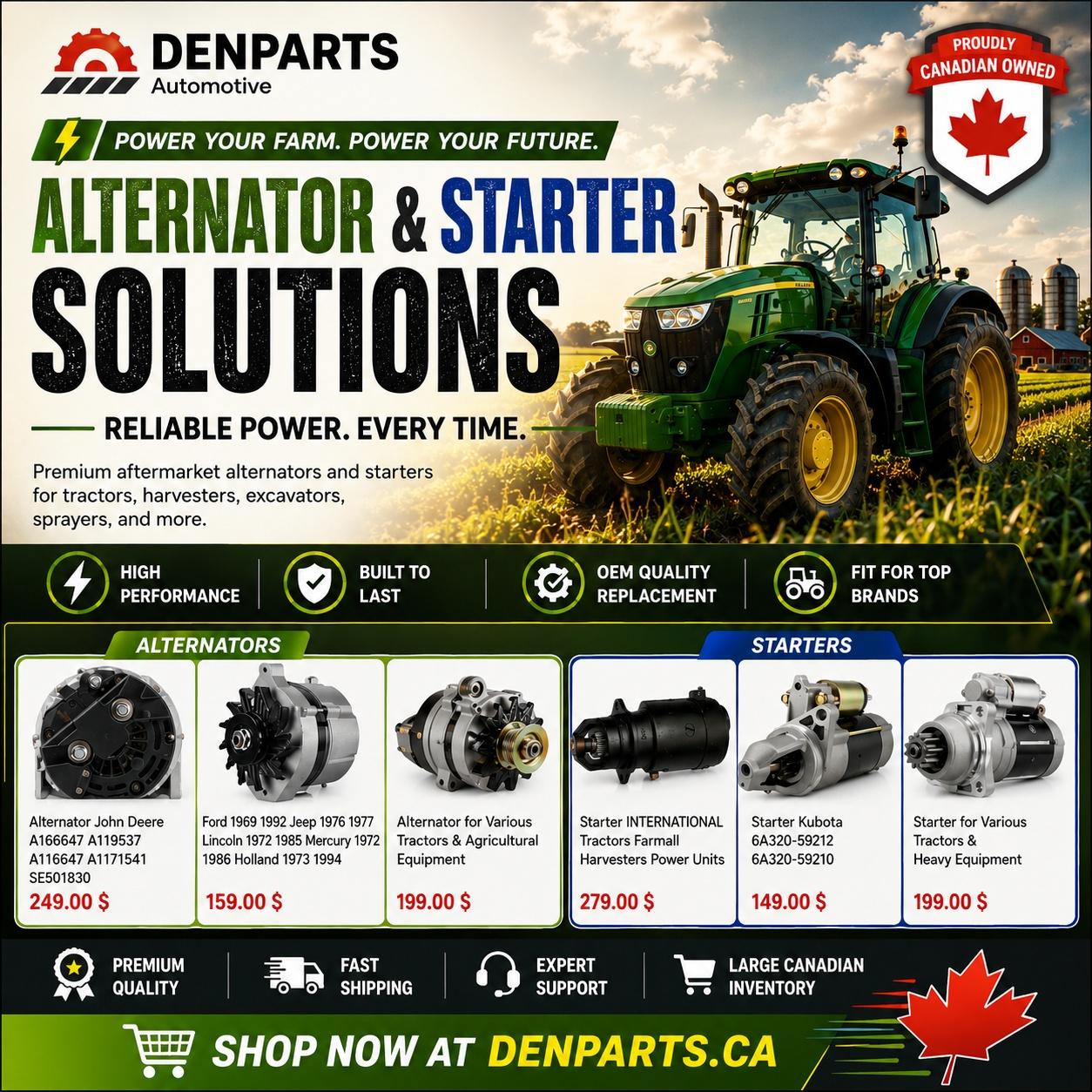
Modern farm equipment asks a lot of its electrical system, work lights, monitors, GPS and guidance systems, cab electronics, and more. Denparts carries agricultural electrical components across a wide range of equipment makes, so whatever's on your machine, there's likely a match in the catalog.
Why a Dependable Alternator Matters
Farm equipment works hard: long hours, dust, vibration, heat, and heavy electrical loads all add up. When the charging system starts to slip, it rarely fails without warning first.
Signs your alternator may need attention:
-
Battery losing charge repeatedly, even after a full charge
-
Dashboard battery or charging warning light staying on
-
Headlights or work lights dimming, especially at idle
-
Trouble starting after the machine has been running
-
Electrical accessories acting inconsistently
-
Low voltage reading at the battery
-
Unusual noise from the alternator bearing or belt
That said, these symptoms can also point to a worn belt, a bad ground connection, a weak battery, or loose wiring ,not necessarily the alternator itself. Diagnosing the actual cause before replacing the part saves time and money.
What to Check Before Buying a Replacement
The most common mistake in buying a replacement alternator is shopping by brand and model alone. Even within the same tractor family, alternators can differ by engine, production year, and electrical configuration. Before ordering, compare:
Voltage, Confirm it matches your machine's electrical system.
Amperage, Higher output isn't automatically better; match the original spec for your equipment.
Mounting, Check the mounting ears, bolt spacing, and overall dimensions against your existing unit.
Pulley and belt design, The pulley type and size need to match so the alternator spins at the correct speed relative to the engine.
Regulator and fan setup, Internal vs. external regulation, fan placement, and plug configuration should mirror the original.
Cross-reference and OEM information, Where available, matching your equipment's OEM reference is the most reliable way to confirm fit, especially for older or less common models.
If you're ever unsure, comparing photos of your old unit against the listing, or reaching out to Denparts directly, is the safest way to avoid an ordering mistake.
Brands and Equipment We Cover
Denparts stocks a large, actively updated selection of agricultural alternators for equipment from major manufacturers, including John Deere, Massey Ferguson, Case, New Holland, Deutz, Kubota, Caterpillar, Oliver, Agco, and more, covering tractors, combines, loaders, and other heavy farm machinery. Because fitment can vary by engine and production year even within the same model line, we recommend confirming your equipment's exact application and existing part details against the listing, or contacting our team, before placing an order.
How to Choose the Right Replacement
Start by pulling together your equipment's details: manufacturer, model, year (if known), engine, and the part number on your existing alternator if it's still legible.
Then compare that information against the replacement listing, checking:
-
OEM or cross-reference number, when available
-
Voltage
-
Amperage
-
Mounting dimensions
-
Pulley type and size
-
Rotation direction
-
Regulator type
-
Electrical connections and plug type
-
Application details, exact equipment, engine, and production range
If anything is unclear, it's worth reaching out before ordering rather than after. A quick check up front avoids the hassle of a return.
Why Buy Your Agricultural Alternator from Denparts
Sourcing electrical parts for older or less common farm equipment can be a challenge, but the goal shouldn't just be finding the cheapest option. It should be finding the right one. Denparts.ca maintains one of the largest agricultural parts inventories in Canada, with alternators for a wide span of brands and applications, all searchable by equipment model, engine, or part reference. As a Canadian-based supplier, we understand the seasonal pressure farmers and equipment owners are under ,and we're set up to help you find the correct part the first time, not just quickly.
Conclusion:
A dependable alternator keeps your tractor, combine, or loader charged and running through long working days. When it's time to replace one, take the extra few minutes to verify voltage, amperage, mounting, pulley type, regulator, and application details rather than relying on brand and model alone. It's a small step that prevents a lot of downtime.

 English
 Arabic
 French
 Spanish
 Portuguese
 Deutsch
 Turkish
 Dutch
Dutch
 Russian
 Romaian
 Portuguese (Brazil)
 Greek
Greek
