


How to Choose and Style Linen Napkins for a Beautiful, Reusable Table Setting
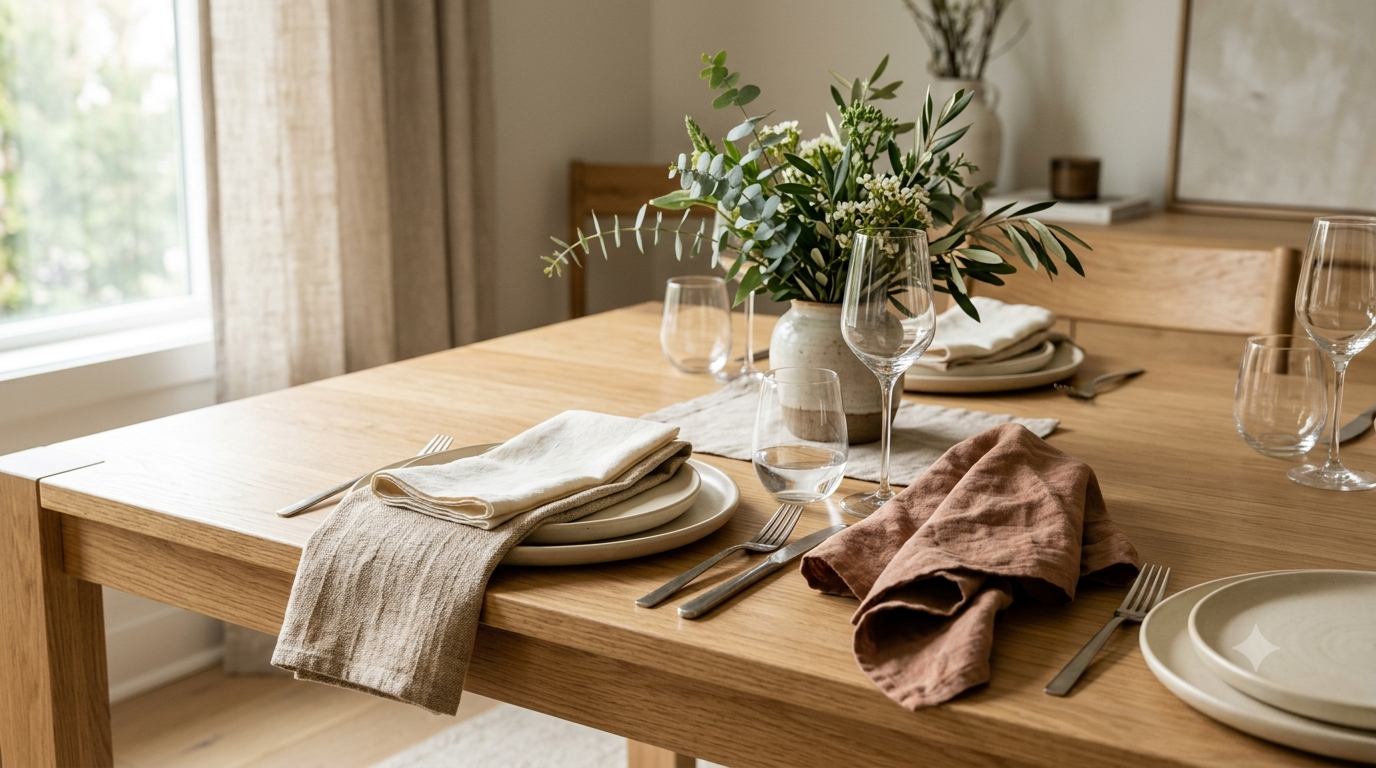
A thoughtfully set table does not need elaborate decorations to feel inviting. Sometimes, the simplest details make the biggest difference. Linen napkins, natural-fiber placemats, understated dinnerware, and a few seasonal accents can transform an everyday meal into a more considered dining experience.
Among table textiles, linen napkins are especially versatile. Their relaxed texture works just as well with a casual breakfast as it does with a dinner party or holiday gathering. They can also be folded, rolled, layered, or styled with napkin rings to suit different occasions.
But choosing the right napkins involves more than picking a color you like. Size, weave, fabric weight, texture, care requirements, and the rest of your table setting all influence how the finished table looks and functions. Here is how to make those choices with confidence.
Why Linen Napkins Are a Popular Choice for Dining
Linen has a distinctive natural texture that can add visual interest without overwhelming a table. Unlike highly formal-looking textiles, it can feel comfortably relaxed while still looking polished.
One reason linen napkins work across different dining styles is their adaptability. A neutral napkin can complement rustic wood, modern ceramics, traditional dinnerware, or colorful seasonal decorations. More expressive shades can become part of the table's visual theme.
Reusable napkins can also become a practical part of a household's dining routine. Instead of treating table textiles as something reserved exclusively for celebrations, many people incorporate them into ordinary meals. Over time, this makes the dining table feel more intentional without requiring elaborate décor.
Choosing the Right Linen Cloth Napkins
When comparing linen cloth napkins, consider how you actually plan to use them rather than focusing only on appearance.
Start With Size
Napkin dimensions affect both function and presentation. Larger napkins provide more fabric for folding and can create a more formal appearance, while moderately sized options may be convenient for everyday meals.
Think about your table size and dinnerware, too. A very large napkin may compete visually with a small place setting, while a smaller napkin can get lost beside larger plates and serving pieces.
Consider Weave and Texture
Linen can have a smooth, refined appearance or a more visibly textured character depending on the weave and finishing. If your dinnerware already has patterns or strong textures, a relatively understated napkin may create better balance.
For a rustic or relaxed table, visible texture can add warmth and depth.
Choose Colors With the Whole Table in Mind
Rather than matching napkins exactly to plates or tablecloths, consider complementary tones. Cream, natural, beige, muted green, soft blue, and other understated shades can work as versatile foundations.
For special occasions, a deeper or seasonal color can create a focal point without requiring additional decorations.
Linen Dinner Napkins for Everyday and Special Occasions
Linen dinner napkins can easily move between everyday dining and more formal occasions.
For a weekday family meal, pair them with simple dinnerware, wooden or woven placemats, and a small centerpiece. The result can feel welcoming without being overly formal.
For a dinner party, fold each napkin neatly and place it on the plate or beside the cutlery. Adding a simple napkin ring can introduce another decorative element while keeping the setting organized.
For holidays and celebrations, use color and accessories to change the character of the same napkins. A neutral linen napkin can look completely different when paired with seasonal greenery, ceramic ornaments, candles, or a contrasting table runner.
The advantage of choosing versatile table linens is that they do not have to be reserved for one particular occasion. A thoughtfully selected set can become part of many different table settings throughout the year.
Linen-Like Napkins vs. Natural Linen
Not every napkin with a linen-inspired appearance is made from linen. Shoppers may encounter products described as linen like napkins, which are designed to reproduce some of the visual qualities associated with linen while using other fibers or blends.
The distinction matters because fiber content can influence texture, drape, absorbency, durability, washing requirements, and overall feel.
When comparing natural linen with linen-like alternatives, check the product description and care instructions rather than judging the material solely by appearance. A linen-like fabric may appeal to someone looking for a particular texture or maintenance routine, while natural linen may be preferred by someone specifically seeking a plant-based textile with its characteristic hand feel.
Neither choice needs to be treated as universally better. The appropriate option depends on the household, the intended use, and how much maintenance the owner is comfortable with.
Understanding Linen Fabric for Napkins
The choice of linen fabric for napkins affects how the finished napkin behaves on the table and after washing.
Several characteristics are worth considering:
- Weight: Lightweight fabric may create a softer, more casual appearance, while heavier fabric can hold folds more distinctly.
- Weave: Different weaves produce different textures and visual effects.
- Softness: The feel of the fabric matters because napkins are handled throughout a meal.
- Absorbency: Consider how the textile performs for everyday dining and spills.
- Drape: A fabric that falls naturally can create attractive folds when placed on a plate or beside cutlery.
- Care requirements: Always check the manufacturer's instructions before washing, drying, ironing, or treating stains.
The word "linen" alone does not tell you everything about a napkin. Looking at the fiber content and care information gives you a better understanding of what you are actually choosing.
How to Style Linen Napkins on a Dining Table
Once you have chosen your napkins, styling them is an opportunity to personalize the table.
Keep It Simple With a Fold
A straightforward rectangular or triangular fold can look elegant without feeling overly formal. Place the folded napkin beneath the fork, beside the plate, or directly on the dinnerware depending on the rest of your arrangement.
Try a Napkin Ring
Napkin rings are an easy way to add structure. Wood, metal, ceramic, woven, or natural-material rings can each create a different mood. Keep the ring relatively simple if the napkin itself has a noticeable texture or color.
Layer With Placemats
A linen napkin can become part of a layered setting with a placemat and table runner. To avoid a visually crowded table, vary textures while keeping the color palette coordinated.
For example, a woven placemat, plain ceramic plate, textured linen napkin, and simple glassware can create plenty of visual interest without excessive decoration.
Use Seasonal Color
You do not need separate napkins for every holiday. A versatile neutral collection can be adapted throughout the year.
Try warm earth tones for autumn, softer greens for spring, lighter neutrals for summer, or deeper shades during winter gatherings. Small decorative details can provide the seasonal element while the napkins remain useful year-round.
Caring for Linen Napkins
Proper care can help table linens remain useful and attractive over time, but there is no single care routine that applies to every linen product.
Always begin with the manufacturer's care label. Instructions can vary depending on the fabric composition, construction, finishing, and any additional materials used.
For general maintenance, consider these habits:
- Treat stains promptly. Gently address spills according to the fabric's care instructions rather than allowing stains to sit unnecessarily.
- Use the recommended wash cycle and temperature. Avoid assuming that all linen can be washed in exactly the same way.
- Dry according to the care label. Some fabrics may benefit from air drying, while others may have different recommendations.
- Iron or steam as appropriate. Linen's natural texture can look attractive slightly relaxed, so a completely pressed appearance is not always necessary.
- Store clean and completely dry. Fold napkins neatly and keep them in a dry storage area away from anything that could transfer color or odor.
If you like a relaxed table, embracing a little natural texture can also make linen easier to live with. The goal is not necessarily to keep every napkin perfectly crisp.
Choosing Reusable Table Linens for Your Home
When selecting reusable table linens, think beyond a single dinner setting. Consider how often you entertain, whether the napkins will be used primarily for everyday meals, and what colors already exist in your dining space.
A useful checklist includes:
- Fiber content and fabric construction
- Napkin size and shape
- Texture and overall appearance
- Color versatility
- Compatibility with existing dinnerware
- Washing and care requirements
- Whether the design works for both casual and formal meals
- How easily the napkins can be incorporated into seasonal settings
It can also be useful to explore collections rather than choosing each textile in isolation. Brands such as All Cotton and Linen, for example, provide inspiration for combining cotton and linen home textiles with different dining styles. Looking across coordinated textile options can help you think about napkins as part of a broader table setting rather than as standalone accessories.
A Simple Approach to a More Thoughtful Table
Creating an attractive dining table does not require a complicated formula. Start with functional pieces, establish a restrained color palette, and add texture through natural-looking textiles.
Linen napkins can serve as the bridge between practicality and décor. A simple folded napkin can make a weekday meal feel more intentional, while the same textile can be dressed up with dinnerware, glassware, candles, or seasonal accents for a celebration.
Most importantly, choose table linens that fit the way you live. Consider the fabric, size, care requirements, and versatility before committing to a particular style. Whether you prefer natural linen, a linen blend, or linen-like alternatives, understanding the material will help you make a choice that works beyond a single photograph or occasion.
Conclusion
The best dining textiles are those that combine function with a sense of personal style. Linen napkins offer plenty of flexibility: they can be casual or refined, understated or colorful, and suitable for everyday meals as well as special gatherings.
By paying attention to fabric, weave, size, color, care, and how each piece works with the rest of your table, you can create dining settings that feel considered without becoming complicated. Choose reusable pieces thoughtfully, care for them according to their specific instructions, and let your table evolve with the seasons. A well-chosen napkin may be a small detail, but it can make the entire dining experience feel more welcoming.

 English
 Arabic
 French
 Spanish
 Portuguese
 Deutsch
 Turkish
 Dutch
Dutch
 Russian
 Romaian
 Portuguese (Brazil)
 Greek
Greek
