


Taxi Dispatch Software: Building the Modern Mobility Operation
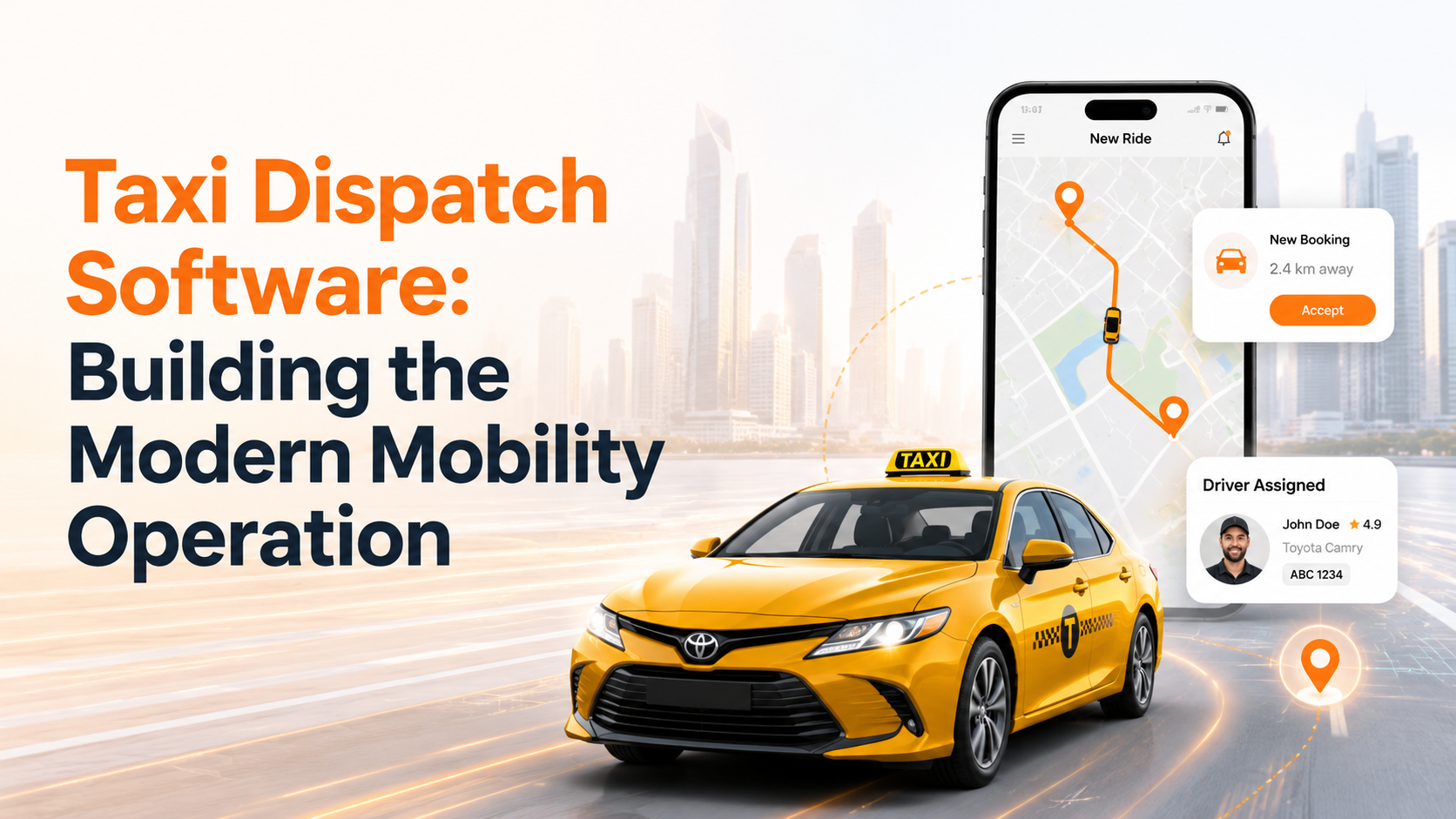
The taxi industry is entering a more operationally demanding phase. Taxi dispatch software is no longer simply a digital replacement for radio dispatch or telephone bookings—it is becoming the technology layer connecting fleet operations, drivers, customers, payments, analytics, and emerging mobility models. For taxi companies, private-hire operators, airport transfer businesses, and growing mobility startups, this shift creates an opportunity to compete through operational intelligence rather than fleet size alone.
The market is being reshaped by several forces simultaneously: AI-assisted dispatch, cloud platforms, digital payments, EV adoption, branded passenger applications, and growing competition from ride-hailing and autonomous mobility providers. A 2026 survey of 517 taxi, chauffeur, limo, and ride-hailing operators reported that AI-assisted dispatch adoption had increased substantially year over year, while branded passenger apps and cloud-based systems continued to gain traction.
For operators, the message is clear: dispatch technology is moving from a back-office convenience to a core business infrastructure.
AI-Powered Fleet Management Is Changing Dispatch
Traditional dispatching typically focuses on one question: Which driver should take this ride?
Modern systems need to answer a much broader set of questions:
- Where will demand increase next?
- Which vehicles are likely to become available?
- How can empty mileage be reduced?
- Which driver can complete the trip efficiently?
- How should airport, corporate, and scheduled bookings be prioritized?
- How can ETAs remain accurate when traffic conditions change?
This is where AI-assisted dispatch and predictive fleet management are gaining importance. Industry research in 2026 highlights applications such as predictive driver allocation, dynamic ETA refinement, demand forecasting, and automated pricing or quotation workflows.
Rather than waiting for demand to appear, operators can use historical and real-time data to make more informed positioning and allocation decisions.
However, professional operators should avoid choosing software simply because it carries an “AI-powered” label. The real value comes from how effectively intelligence is connected to dispatch workflows and measurable fleet outcomes.
Automation should improve utilization, reduce unnecessary driver downtime, and support faster decisions—not simply create another dashboard.
Taxi Booking App and Connected Mobility Experience
Passenger expectations have fundamentally changed. Customers increasingly expect mobile booking, accurate ETAs, digital payments, driver information, trip notifications, and convenient rebooking.
This makes the passenger application an important part of the broader dispatch ecosystem.
A modern taxi booking app should connect directly with dispatch and fleet operations so that passenger demand immediately becomes actionable information for the operator. This creates a continuous flow:
Customer booking → intelligent allocation → driver acceptance → live trip monitoring → digital payment → trip analytics
That connected approach can help businesses eliminate operational silos and create a more consistent passenger experience.
Cloud deployment is also becoming increasingly important. A 2026 taxi technology report found cloud-hosted dispatch systems were prevalent among surveyed operators, reflecting the industry's broader movement toward connected software stacks rather than isolated legacy systems.
EVs Are Creating a New Dispatch Challenge
Electrification is another major factor changing fleet management.
An EV taxi cannot always be dispatched using the same logic as a conventional vehicle. Battery level, remaining range, charging locations, charging time, and trip distance can influence whether a vehicle is suitable for a particular booking. Current EV-focused dispatch approaches therefore increasingly incorporate battery monitoring, charging-aware scheduling, and range-conscious job allocation.
For operators transitioning toward electric fleets, this is an important consideration when evaluating dispatch technology. Software needs to understand not only where the vehicle is, but also whether it is operationally ready for the next trip.
Preparing for a More Competitive Mobility Market
Taxi businesses are also facing competition from increasingly sophisticated ride-hailing and autonomous mobility networks. Recent market developments show autonomous ride services expanding in several U.S. cities, adding another layer of competition to the broader mobility ecosystem.
This does not mean traditional taxi operators need to imitate every technology trend. Instead, they need to strengthen the areas they can control: service reliability, fleet utilization, customer relationships, corporate accounts, local market knowledge, and operational efficiency.
The right dispatch platform can provide the foundation for that strategy.
What Should Operators Look For?
A professional evaluation should go beyond a long feature checklist. Consider whether the platform supports:
- Intelligent or automated dispatch
- Real-time fleet and driver visibility
- Passenger and driver applications
- Demand and operational analytics
- Digital and cashless payment options
- Corporate and scheduled bookings
- Route and ETA optimization
- EV-aware fleet management
- API and third-party integrations
- Scalable cloud infrastructure
- Branded customer experiences
The objective is not to purchase the platform with the most features. It is to select technology that directly improves the economics and service quality of the fleet.
The Strategic Role of Taxi Dispatch Software
Taxi dispatch software is evolving into the operating backbone of modern mobility businesses. AI can support better allocation, connected applications can improve customer experience, analytics can strengthen decision-making, and EV-aware capabilities can prepare fleets for electrification.
For operators entering 2026 with growth in mind, the bigger question is no longer “Do we need dispatch software?”
It is:
“Can our current technology help us operate a more intelligent, efficient, and competitive fleet?”
If the answer is no, upgrading your dispatch infrastructure could become one of the most valuable operational investments for the next stage of growth.

 Arabic
 French
 Spanish
 Portuguese
 Deutsch
 Turkish
 Dutch
Dutch
 Italiano
 Russian
 Romaian
 Portuguese (Brazil)
 Greek
Greek
