Introduction
Customers no longer follow a single path when shopping online. A person might discover a product through an Instagram Reel, watch a product review on YouTube, visit a Shopify store from their phone, compare products later on a laptop, and finally complete the purchase after receiving an email from the brand.
This connected behavior has made omnichannel ecommerce more important than ever. Brands need to create consistent experiences across social media, websites, marketplaces, email, mobile devices, and other customer touchpoints.
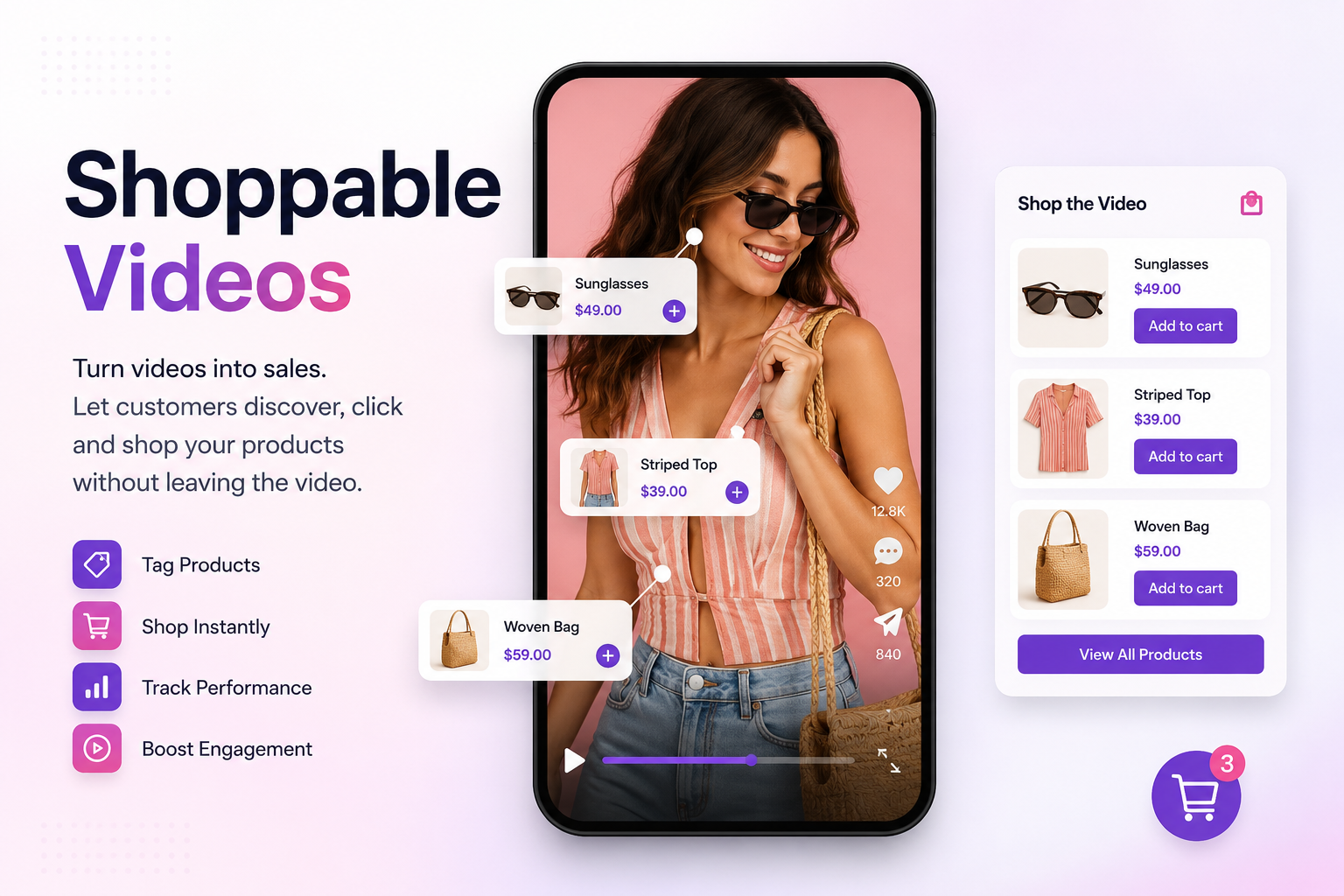
Shoppable videos can play an important role in connecting these experiences. With Shopify Shoppable Videos, merchants can turn product-focused video content into interactive shopping experiences where customers can discover products, explore details, and move toward purchase directly from engaging content.
Instead of treating video as a standalone marketing format, ecommerce brands can use it throughout the customer journey. A product demonstration published on social media can become shoppable content on a Shopify store. A customer review can appear on a product page. An influencer video can support product discovery across multiple channels.
For Shopify beginners, established ecommerce professionals, small online businesses, and content creators, this approach can make video content more valuable while creating a smoother path from discovery to conversion.
What Is Omnichannel Ecommerce?
Omnichannel ecommerce is an approach where a brand creates a connected shopping experience across multiple channels.
These channels can include:
- Ecommerce websites
- Instagram and Facebook
- TikTok
- YouTube
- Email marketing
- Mobile apps
- Physical stores
- Marketplaces
- Search engines
- Messaging platforms
The key difference between multichannel and omnichannel commerce is integration.
A multichannel business may sell through several channels independently. An omnichannel business connects those channels so customers can move between them with less friction.
For example, a shopper could discover a product on Instagram, visit the website, save the product, return through an email campaign, and complete the purchase later.
The experience feels like one continuous journey rather than several disconnected interactions.
Why Video Matters in Omnichannel Ecommerce
Video fits naturally into omnichannel strategies because consumers already encounter video across many platforms.
Short-form videos, tutorials, reviews, livestreams, and demonstrations can help brands communicate product benefits quickly.
A product image can show appearance, but video can demonstrate:
- How the product works
- How it looks in use
- How it compares with alternatives
- How customers can use it
- What the product looks like in real-world settings
This makes video particularly valuable during the awareness and consideration stages of the buying journey.
When shopping functionality is added, video can also contribute directly to conversion.
How Shoppable Videos Connect the Omnichannel Journey
1. Turning Social Media Discovery Into Shopping
Social media is often the starting point for product discovery.
A customer may encounter a product while scrolling through Instagram or TikTok without actively searching for it.
Traditional social content creates an additional step:
See video → Visit profile → Find website → Search for product → Purchase
Shoppable content can shorten this journey.
Customers can interact with the featured product and move toward the product page or purchase experience without manually searching for the item.
This is especially useful for visually driven categories such as fashion, beauty, home décor, food, and electronics.
2. Bringing Social Content to Your Shopify Store
Brands don't have to limit their videos to social media.
Existing content can be repurposed across the ecommerce website.
For example, a fashion brand could use the same styling video across:
- Instagram
- TikTok
- Homepage
- Collection pages
- Product pages
- Email campaigns
The content remains familiar while reaching customers at different stages of the journey.
This also reduces the amount of new content the marketing team needs to produce.
3. Creating Better Product Pages
Product pages traditionally rely on photographs, descriptions, specifications, and reviews.
Adding shoppable video can make the page more dynamic.
A clothing product page could feature a short video showing:
- How the garment fits
- Different styling options
- Fabric movement
- Available colors
- The product in everyday use
Customers can see the product beyond the static images.
For products where fit, size, texture, or functionality matters, this additional context can help shoppers make more informed decisions.
4. Connecting Influencer Content With Ecommerce
Influencer marketing is another important part of omnichannel ecommerce.
A creator might introduce a product to thousands of potential customers through a review or tutorial.
Instead of letting that content disappear into a social media feed, brands can reuse approved creator videos on their ecommerce channels.
For example:
Instagram influencer video → Shopify product page → Product discovery → Purchase
This creates continuity between the creator's recommendation and the brand's ecommerce experience.
It also gives influencer content a longer lifespan.
Shoppable Videos Across Different Customer Journey Stages
Shoppable videos aren't limited to the final purchase stage.
Awareness
At the awareness stage, short videos can introduce products to potential customers.
Examples include:
- Lifestyle videos
- Influencer content
- Product teasers
- Short demonstrations
The objective is to generate curiosity.
Consideration
Customers at this stage want more information.
Useful content includes:
- Product demonstrations
- Tutorials
- Comparison videos
- Customer reviews
- FAQs
Product links can help interested viewers explore products immediately.
Conversion
At the conversion stage, videos can reinforce purchasing decisions.
Examples include:
- Detailed product demonstrations
- Testimonials
- Styling guides
- Before-and-after videos
- Product bundles
The focus should be on removing uncertainty and making the next step easy.
Retention
Video can continue to support customers after the purchase.
Brands can create:
- Setup tutorials
- Product care videos
- Recipe videos
- Usage guides
- Cross-selling recommendations
For example, a coffee brand could send customers a video showing different brewing techniques and recommend complementary coffee accessories.
The Role of User-Generated Content
User-generated content can strengthen an omnichannel strategy because it brings real customer experiences into the shopping journey.
Examples include:
- Unboxing videos
- Customer reviews
- Product tutorials
- Before-and-after videos
- Styling videos
- Customer recipes
A skincare brand, for instance, could display customer videos on its product pages while also sharing them through social media and email.
This creates consistency across channels while adding social proof.
Always obtain the necessary permission before using customer-created content commercially.
How Shoppable Videos Improve Cross-Selling
Omnichannel ecommerce isn't only about selling one product.
Brands can use interactive video to introduce related products naturally.
Imagine a video featuring a home office setup.
The video could highlight:
- Desk
- Office chair
- Monitor
- Desk lamp
- Keyboard
- Laptop stand
Instead of recommending these products separately, the video demonstrates how they work together.
This can encourage customers to explore more products and potentially increase average order value.
Repurposing Content for Multiple Channels
One of the biggest benefits of shoppable video is content efficiency.
A single video can potentially be adapted for:
- Instagram Reels
- TikTok
- YouTube Shorts
- Shopify homepage
- Product pages
- Email campaigns
- Landing pages
- Digital advertising
For example, a 60-second product tutorial could become:
- A short social media clip
- A full product-page video
- An email feature
- A paid advertising creative
- A section of a longer tutorial
This allows businesses to maximize the return from their video production efforts.
How to Build an Omnichannel Shoppable Video Strategy
Step 1: Identify Your Best Content
Start with videos that already perform well.
Look for content with strong:
- Views
- Watch time
- Engagement
- Product interest
- Social shares
These videos provide a useful starting point.
Step 2: Match Videos to Products
Identify the products featured in each video and make sure shoppers can easily find them.
Avoid tagging products that have little connection to the content.
Step 3: Adapt Content to Each Channel
Don't simply upload the exact same video everywhere.
Consider:
- Video dimensions
- Audience expectations
- Video length
- Captions
- Calls to action
- Placement of product links
The core content can remain consistent while the presentation changes.
Step 4: Create a Consistent Experience
Use consistent:
- Branding
- Product information
- Messaging
- Visual identity
- Calls to action
Customers should recognize the same brand regardless of where they encounter the video.
Step 5: Track Performance
Measure how videos perform across channels.
Important metrics include:
- Video views
- Watch time
- Product clicks
- Click-through rate
- Add-to-cart rate
- Conversion rate
- Revenue
- Average order value
This data helps you identify which channels and content formats generate the strongest results.
Common Mistakes to Avoid
A poorly connected omnichannel strategy can create more confusion instead of reducing it.
Avoid:
- Using inconsistent product information
- Sending customers through unnecessary steps
- Publishing irrelevant videos
- Ignoring mobile users
- Using different messaging across channels
- Failing to optimize video loading
- Adding too many product links
- Treating every channel exactly the same
The goal is consistency without repetition.
A Practical Example
Imagine a Shopify store selling premium skincare products.
The brand creates a short video showing a creator's nighttime skincare routine.
The video features three products.
On Instagram, viewers can discover the products through social content. On the Shopify store, the same video appears on the skincare collection page. Individual product pages feature shorter versions alongside product information and customer reviews.
The brand then includes the video in an email campaign targeting customers interested in skincare.
The content now supports several touchpoints instead of existing only on Instagram.
The customer can discover the brand through social media, research products on the website, receive additional information through email, and purchase when ready.
That is the value of combining shoppable video with an omnichannel strategy.
Conclusion
Shoppable videos can become a powerful connection point between different ecommerce channels. They help brands transform social media content, influencer videos, product demonstrations, and customer-generated content into interactive shopping experiences.
For Shopify merchants, the opportunity is not simply to add more videos to a store. It's to create a consistent journey where customers can discover products on one channel and continue exploring them on another without losing context.
Start by identifying your strongest video content. Repurpose it across relevant channels, connect featured products, maintain consistent messaging, and measure the results.
Most importantly, think about the customer journey rather than individual channels. When social media, your Shopify store, email campaigns, and other touchpoints work together, shoppable video can help turn scattered interactions into a connected ecommerce experience.
FAQ
1. What role do shoppable videos play in omnichannel ecommerce?
Shoppable videos connect product discovery and shopping across channels. They allow customers to discover products through engaging video content and move toward purchasing with fewer steps.
2. Can Shopify stores use shoppable videos across multiple channels?
Yes. Merchants can repurpose video content across social media, ecommerce pages, email campaigns, landing pages, and other relevant customer touchpoints.
3. What types of videos work best for omnichannel ecommerce?
Product demonstrations, tutorials, influencer videos, customer reviews, styling videos, unboxing content, and user-generated videos can all work well depending on the product and target audience.
4. How can shoppable videos increase ecommerce conversions?
They provide additional product context while reducing the gap between discovery and purchase. Customers can see products in use and quickly explore the featured items.
5. How should businesses measure shoppable video performance?
Track metrics such as views, watch time, product clicks, click-through rate, add-to-cart rate, conversions, revenue, and average order value. Compare results across channels to understand what works best.




 English
 Arabic
 French
 Spanish
 Portuguese
 Deutsch
 Turkish
 Dutch
Dutch
 Italiano
 Russian
 Romaian
 Greek
Greek
