


Is Your Industrial Ventilation Fan Costing You Workers?
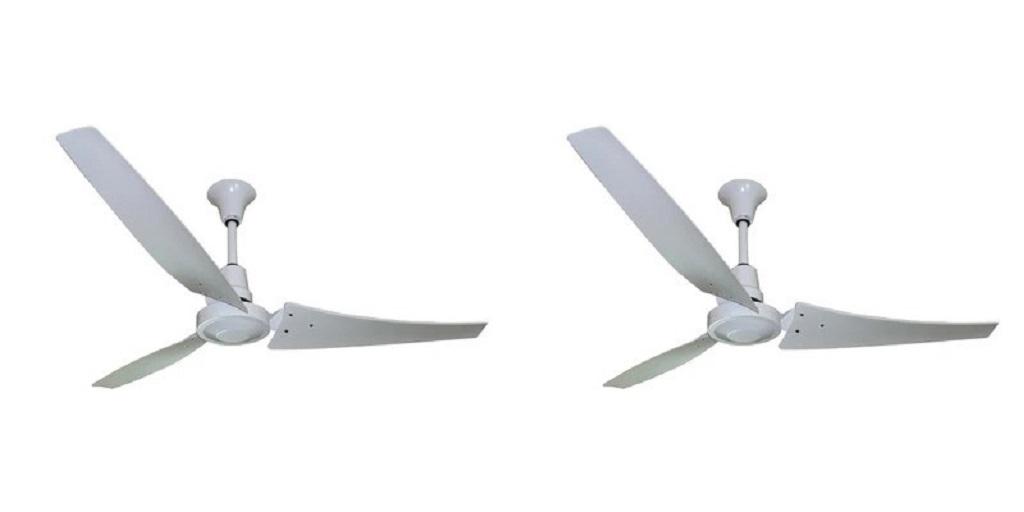
A lot of facilities managers blame productivity slumps on scheduling, staffing, or morale. Walk through a warehouse in July, or step onto a production floor thick with chemical fumes, and the real culprit becomes obvious. Poor air quality costs businesses more than most people track, and it rarely announces itself with a single incident. Choosing the right industrial ventilation fan is one of those decisions that compounds over time, showing up in absenteeism numbers, inspection reports, and employee turnover long before anyone connects the dots.
What Your Industrial Ventilation Fan Choice Actually Tells You
Different environments have completely different problems, and sourcing equipment without acknowledging that distinction creates more issues than it solves. A commercial exhaust fan rated for a restaurant kitchen will struggle in a 50,000 sq ft distribution center dealing with heat loads from both machinery and summer temperatures. Warehouse ventilation solutions need to account for air volume, ceiling height, occupancy, and the specific contaminants present, not just whether a unit clears a minimum CFM threshold.
The facilities that get this right usually stopped treating an industrial ventilation fan as a commodity purchase and started approaching it as a system decision. A heavy-duty industrial fan designed for a food processing facility carries entirely different ratings and build requirements than one built for a metalworking shop generating fine metallic particulate. Matching equipment to actual conditions is basic due diligence.
In environments where flammable gases, vapors, or combustible dust are present, getting that wrong becomes a safety issue with real legal and human consequences. Factory ventilation systems in chemical plants, refineries, or any facility handling solvents require explosion-proof ventilation fans specifically rated for those conditions. A standard motor produces sparks. That is not a risk any facility should accept.
When an Industrial Ventilation Fan Isn't Enough on Its Own
Circulation and exhaust are not the same thing, and confusing them produces equipment purchases that move air without actually solving anything. Industrial air circulators redistribute air within a space to reduce hot spots and improve comfort across the floor, but they don't remove contaminated air. Exhaust fans pull polluted or heated air out and require makeup air to replace what's removed. Duct fans industrial ventilation setups commonly rely on are built to push or pull air through ductwork across longer distances where direct fan placement isn't possible.
Getting those categories crossed means buying the wrong equipment twice. A warehouse with excellent air movement but no actual contaminant removal is still a compliance problem waiting for an inspector. A facility exhausting stale air without accounting for makeup air ends up with negative pressure, pulling uncontrolled air in through gaps in the building envelope. The industrial ventilation fan you choose should reflect which of those problems you're actually dealing with, and ideally someone who understands the difference should be involved in that call.
HVAC industrial solutions handle this by treating air management as a system rather than a set of isolated units, which matters most when a facility has multiple zones, varying contamination risks, and inconsistent occupancy patterns across the floor.
Finding the Right Industrial Ventilation Fan Without Starting Over
Most facilities don't need to replace everything. They need to fill specific gaps, whether that's an explosion-proof unit for a chemical storage area, duct fans for a long exhaust run, or industrial air circulators for a section of the warehouse that runs consistently hot.
Sourcing that equipment gets easier when you're working with a supplier that offers the full range rather than just the most common configurations. NorthStock carries a wide selection of industrial ventilation fans and commercial equipment across all of these categories, from heavy-duty fans and air circulators to commercial exhaust fans and full makeup air units. For facilities teams dealing with compliance pressure, seasonal discomfort, or specific contamination concerns, it's worth exploring what's available on their website before assuming a fix requires a major overhaul.
For more information about Washdown Heater and Modine Unit Heaters Please visit: NorthStock Inc.

 Arabic
 French
 Spanish
 Portuguese
 Deutsch
 Turkish
 Dutch
Dutch
 Italiano
 Russian
 Romaian
 Portuguese (Brazil)
 Greek
Greek
