


A Beginner’s Roadmap to Becoming a Certified Information Technology Professional
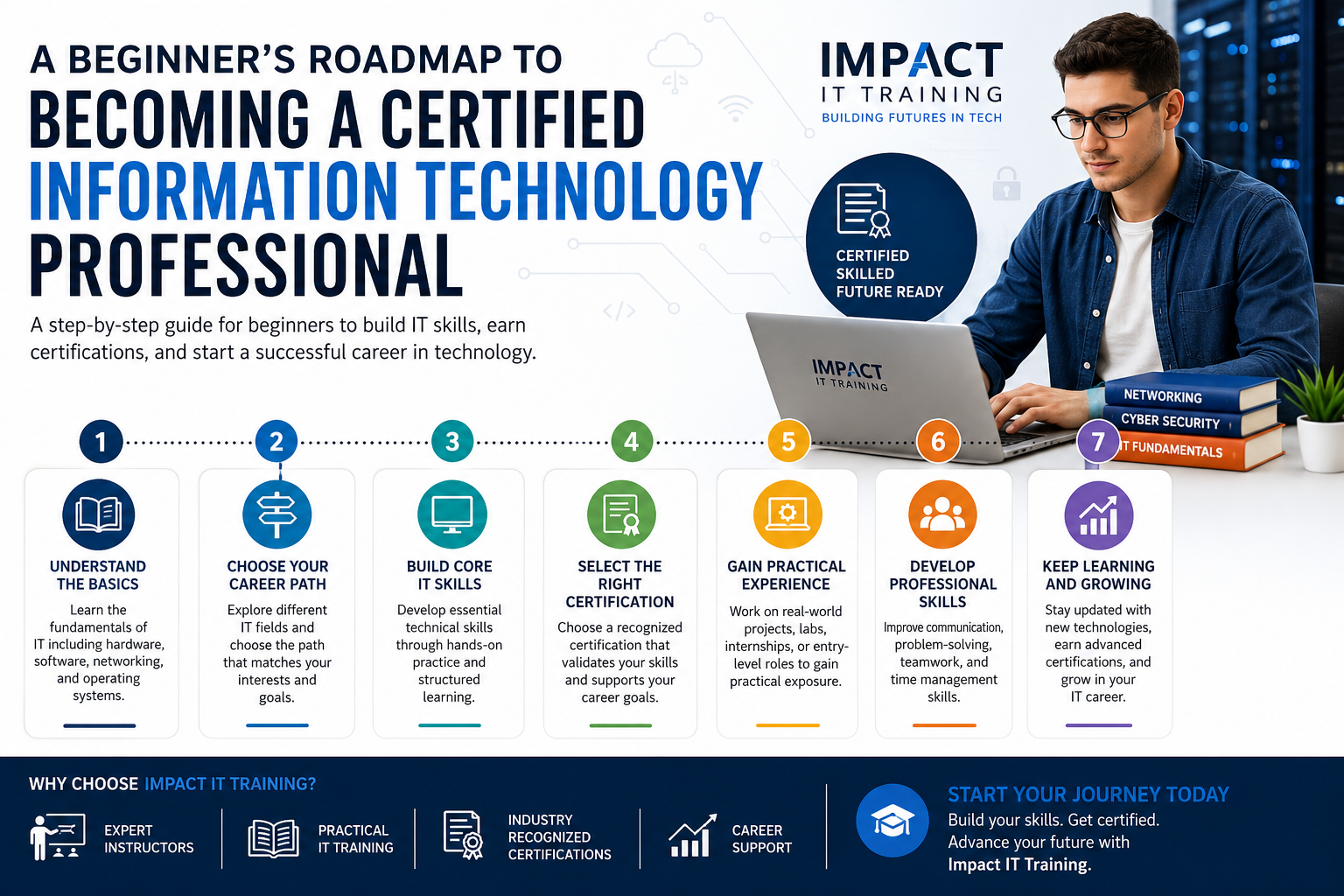
Starting a career in IT can feel overwhelming because the technology industry includes many different roles, skills, and career paths. The good news is that you do not need to learn everything at once. With the right plan, practical training, and recognised qualifications, beginners can build a strong foundation and move towards a professional IT career.
For anyone interested in certified information technology, the journey starts with understanding basic IT concepts and choosing training that matches their career goals. This guide explains a simple roadmap for beginners who want to develop their IT skills and become job-ready.
1. Understand the Basics of Information Technology
Before choosing an advanced certification, beginners should understand the fundamentals of IT. These include computer hardware, operating systems, software, networking, databases, cybersecurity, and basic troubleshooting.
A strong understanding of these areas makes it easier to learn advanced technologies later. Entry-level IT training can also help learners become more confident when working with computers and common workplace technology.
You do not necessarily need years of experience before starting. Many introductory IT qualifications and courses are designed for people with little or no previous experience.
2. Choose the Right IT Career Path
IT is a broad industry, so the next step is deciding which area interests you most. Some popular career directions include:
- IT support and technical support
- Networking
- Cybersecurity
- Cloud computing
- Software and web development
- IT service management
- Systems administration
- Data and database management
For example, someone who enjoys solving technical problems may prefer IT support, while someone interested in protecting systems may choose cybersecurity.
Your career goal should influence the type of certification and training you select.
3. Build Your Core IT Skills
Once you have chosen a direction, focus on developing practical skills. Beginners should not rely only on theoretical knowledge. Employers often look for people who can apply what they have learned to real technical situations.
For an IT support career, useful skills can include troubleshooting hardware and software problems, understanding operating systems, basic networking, security awareness, and communicating with users. The UK's National Careers Service highlights technical knowledge, analytical thinking, customer service, and attention to detail as important skills for IT support technicians.
This is where structured it training courses can make a difference. A well-planned course can provide a clear learning path instead of requiring beginners to search for disconnected information online.
4. Select a Recognised Certification
After building your foundation, consider an IT certification that supports your chosen career path. Certifications can help demonstrate specific knowledge and skills to potential employers.
Depending on your goals, you may explore certifications related to IT support, networking, cloud technologies, cybersecurity, or IT service management. Prospects notes that professional certifications can help demonstrate technical expertise in areas such as programming, software, and methodologies.
However, do not choose a certification simply because it sounds impressive. Check its prerequisites, syllabus, assessment method, relevance to your target role, and recognition within the industry.
5. Gain Practical Experience
Certification is valuable, but practical experience can make your knowledge much stronger. Beginners can practise through home labs, technical projects, simulations, volunteering, internships, or entry-level work.
For example, you could practise installing software, setting up a small network, troubleshooting common computer problems, or creating a basic cybersecurity lab.
Practical experience helps you understand how IT concepts work outside the classroom and gives you useful examples to discuss during job interviews.
6. Develop Professional Skills
Technical knowledge is only one part of becoming an IT professional. Communication, teamwork, problem-solving, organisation, and customer service are also important.
IT professionals often need to explain technical problems to people who may not have technical backgrounds. Being able to communicate clearly can therefore make a significant difference in the workplace.
7. Keep Learning as Technology Changes
Technology continues to evolve, so becoming certified is not the final step. IT professionals need to keep developing their knowledge as new technologies, security threats, software, and workplace systems emerge.
The National Cyber Security Centre, for example, highlights the importance of quality training for developing cybersecurity knowledge and skills.
Regular training, professional development, practical projects, and additional certifications can help you stay competitive.
Start Your IT Journey With Impact IT Training
Choosing the right training provider can make your learning journey more structured and manageable. Impact IT Training can help learners develop relevant IT knowledge through focused training designed to support professional development.
Instead of trying to learn every technology at once, start with the fundamentals, identify your career direction, select suitable training, gain practical experience, and continue building your skills.
Conclusion
Becoming a certified information technology professional is a journey that starts with strong fundamentals and grows through training, certification, practical experience, and continuous learning. Beginners should focus on one step at a time rather than trying to master every area of IT immediately.
With the right it training courses, career planning, and practical experience, you can build the knowledge and confidence needed to move towards an IT career. Start with your interests, choose a suitable learning path, and keep improving your skills as technology develops.
Frequently Asked Questions
1. What does certified information technology mean?
Certified information technology generally refers to IT knowledge and skills supported by recognised professional certifications or qualifications. The exact certification depends on the IT career path and specialisation.
2. Can beginners start IT training without previous experience?
Yes. Many introductory IT qualifications and training programmes are designed for people who are new to technology. Starting with basic computer, networking, and troubleshooting concepts can provide a strong foundation.
3. Which IT certification should a beginner choose?
It depends on your career goal. Someone interested in technical support may choose an entry-level support certification, while another learner may prefer networking, cybersecurity, cloud, or IT service management.
4. Are IT training courses useful for career development?
Yes. Structured it training courses can help learners develop specific technical knowledge, prepare for certifications, and build skills relevant to their chosen career path.
5. Is certification enough to get an IT job?
Certification can demonstrate knowledge, but it is not the only factor employers consider. Practical experience, problem-solving ability, communication skills, and relevant technical knowledge can also strengthen your job prospects.

 English
 Arabic
 French
 Spanish
 Portuguese
 Deutsch
 Dutch
Dutch
 Italiano
 Russian
 Romaian
 Portuguese (Brazil)
 Greek
Greek
