


Top Construction Companies In New Jersey Keep Builds On Time
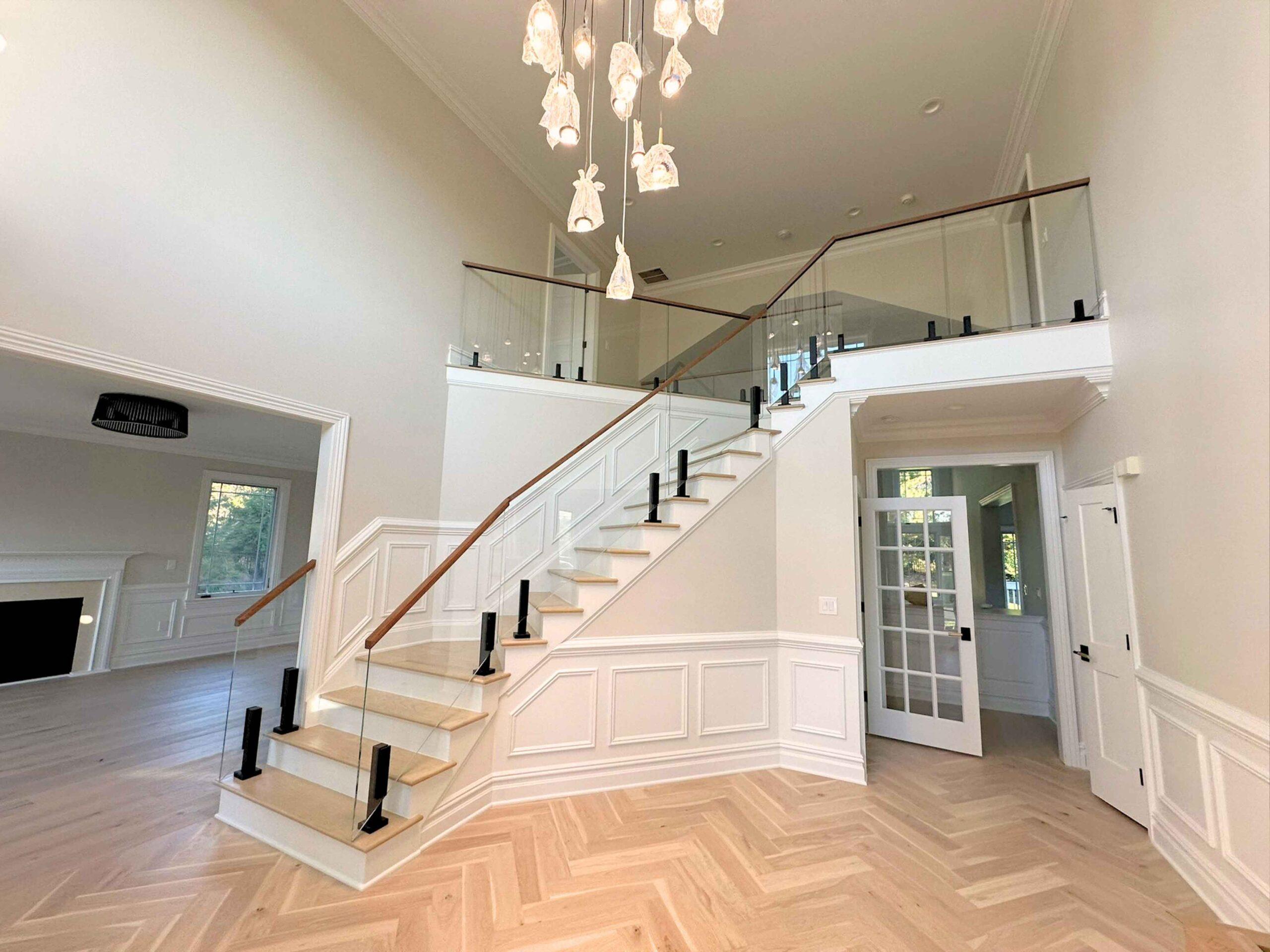
How Do Top Construction Companies in New Jersey Keep Major Home Projects From Falling Behind Schedule?
Quick Answer
Major residential projects stay on schedule when decisions are controlled before they become field problems.
The top construction companies in New Jersey do not treat a project schedule as a calendar filled with dates. They connect architectural decisions, municipal approvals, procurement lead times, inspections, trade handoffs, homeowner selections, and site conditions into one operating plan.
When those dependencies are managed together, delays can often be identified while they are still small enough to control.
The principle is simple:
Protect tomorrow’s work today.
That means knowing not only what is happening on the jobsite now, but also what must be approved, ordered, inspected, or completed so work can continue two, three, or even six weeks from now.
Introduction
A home project can look busy and still be falling behind.
Crews may be working. Deliveries may be arriving. Progress photos may look encouraging.
Yet the schedule can already be losing ground because a permit review is unresolved, a cabinet drawing is still awaiting approval, an inspection has not been requested, or one material decision is quietly blocking several trades.
That is where experienced project control separates motion from progress.
Top construction companies in New Jersey understand that the most dangerous delay is rarely the one everyone can already see.
It is the delay forming three steps ahead.
Strong residential construction teams build schedules around dependencies, not optimism. They ask what must be designed, approved, ordered, inspected, delivered, and completed before the next activity can begin.
That discipline protects more than a completion date. It protects trade productivity, homeowner expectations, material sequencing, and the financial efficiency of the project.
The real question is not whether pressure will appear during a major build or remodel.
It will.
The real question is whether the project has been structured to absorb that pressure before days turn into weeks and small disruptions begin controlling the calendar.
The Schedule Starts With Logic, Not Dates
A residential construction schedule is only as strong as the logic underneath it.
Excavation depends on permits and site readiness.
Foundation work depends on excavation.
Framing depends on foundation completion and material availability.
Rough electrical, plumbing, and HVAC depend on framing reaching the appropriate stage.
Insulation and drywall depend on rough inspections.
Cabinet installation depends on field measurements, approved drawings, production, delivery, and room readiness.
Each phase is connected.
Experienced New Jersey builders identify those relationships early and determine which activities have little or no scheduling flexibility.
In project management, these activities form the critical path. If a critical-path activity moves, the completion date may move with it unless the lost time can be recovered somewhere else.
A useful construction schedule should answer four questions:
-
What must happen first?
-
What can happen simultaneously?
-
What cannot begin until another activity is finished?
-
Which unfinished task could move the completion date?
A schedule that cannot answer those questions is not really controlling the project.
It is simply displaying dates.
The strongest construction teams also look beyond individual tasks and identify constraints around them. A framing crew may be available, for example, but that availability means little if structural details remain unresolved or materials have not arrived.
Scheduling therefore begins with one essential principle:
Ready work is productive work.
Close Decisions Before They Become Emergencies
Late decisions rarely stay small once construction begins.
A faucet selection can affect plumbing locations.
An appliance specification can change cabinetry dimensions, electrical requirements, ventilation, and clearances.
A ceiling detail may affect framing, recessed lighting, HVAC routes, and finish carpentry.
A shower configuration can influence plumbing rough-ins, waterproofing, tile layouts, niches, and glass measurements.
This is why leading New Jersey construction companies manage a decision schedule alongside the construction schedule.
The rule is simple:
If a decision affects work behind a finished surface, resolve it before that surface closes.
Consider a wall-mounted faucet.
To a homeowner, it may look like a finish selection.
To the construction team, it can determine rough plumbing height, valve positioning, framing or backing requirements, sink dimensions, mirror placement, and tile layout.
One unresolved selection can therefore hold several downstream activities.
A professional construction company in New Jersey should make upcoming decisions visible well before crews depend on them. Homeowners should know what needs approval, why it matters, and what date the project needs the decision.
That creates time for informed choices instead of rushed reactions.
Urgency is expensive. Foresight is cheaper.
The same principle applies to cabinetry, appliances, plumbing fixtures, lighting, doors, hardware, flooring, tile, millwork, specialty finishes, and virtually every selection that creates a downstream dependency.
Procurement Is Really Time Control
Ordering a product and having a product available for installation are two completely different milestones.
Many construction materials pass through several stages before they ever reach the jobsite:
Selection → Approval → Shop Drawings → Field Verification → Release → Fabrication → Freight → Receiving → Installation
Any one of those stages can affect the schedule.
That is why experienced residential builders track significant materials against the date the field actually needs them, rather than simply recording when the purchase order was issued.
Windows, cabinetry, specialty glass, custom doors, mechanical equipment, plumbing fixtures, appliances, stone, and fabricated components often deserve particular attention because their availability can influence multiple later activities.
The best teams plan backward from the installation date.
If cabinetry requires eight weeks of production plus two weeks for drawings and homeowner approval, the real decision deadline is not installation week.
It may be ten or more weeks earlier.
A strong procurement log should identify:
-
Selection and approval status
-
Required field measurements
-
Shop drawing status
-
Release date
-
Expected production period
-
Anticipated delivery date
-
Storage or receiving requirements
-
Installation date
-
The activity waiting on that material
That last item matters.
A delayed fixture is inconvenient.
A delayed fixture that prevents a wall from closing, an inspection from occurring, or another trade from starting is a schedule constraint.
Materials do not merely have prices.
They have schedule consequences.
For sophisticated residential project teams, procurement is therefore not an administrative function sitting apart from construction.
It is production planning.
Trade Sequencing Must Match The Real Jobsite
A schedule can look perfect on a computer and still fail inside the house.
Trades need more than a calendar date.
They need readiness.
That means predecessor work is complete, access is available, necessary materials are on site, dimensions are confirmed, conflicts are resolved, and required inspections have been released.
Electrical rough work, for example, is not truly ready because framing is “almost finished.”
Wall locations must be stable. Ceiling details may need confirmation. Mechanical routes cannot still be moving. Required fixtures and equipment specifications must be available.
Calling a crew before those conditions are met often creates partial work, return trips, idle time, or rushed decisions.
And adding more workers does not automatically create more progress.
More people on site can produce less work if the space is not ready for them.
Trade stacking may create:
-
Blocked access
-
Crowded work areas
-
Damaged finished surfaces
-
Rework
-
Incomplete installations
-
Lost productivity
-
Additional return visits
The better model is controlled handoff.
One trade finishes its defined scope. The work is reviewed. Required inspections or quality checks occur. Then the next trade enters a genuinely ready area.
This is how disciplined residential construction teams gain time without rushing workmanship.
They reduce the dead space between activities rather than trying to accelerate every activity simultaneously.
Inspections Are Release Gates, Not Paperwork
An inspection is not simply an administrative requirement sitting somewhere on the schedule.
It is permission for the next phase of work to proceed.
That distinction changes how experienced project managers approach inspections.
Leading residential construction companies in New Jersey account for municipal notice requirements, inspector availability, documentation, trade readiness, correction time, and the downstream work waiting for approval.
Before an inspector arrives, the field team should already be asking:
-
Is the required work fully complete?
-
Are tests prepared?
-
Are fasteners, connections, and required components accessible?
-
Are approved drawings available?
-
Are required documents ready?
-
Is the area safe and accessible for inspection?
A failed or missed inspection can disrupt far more than the inspection itself.
It may affect insulation, drywall, cabinetry, finishes, equipment startup, flooring, or another trade that has already been booked.
That is why a construction company in New Jersey should treat inspections as formal release gates inside the production schedule.
The inspection is not the interruption.
Poor preparation is.
When inspections are integrated into the schedule instead of treated as afterthoughts, the project team has more control over what happens immediately afterward.
Changes Need A Time Review, Not Just A Price
Change orders are usually discussed as financial events.
They are also scheduling events.
Move a wall after framing and electrical routes may change. HVAC distribution may need adjustment. Materials may need to be reordered. Drawings may require revision. Completed work may need removal. Municipal review or reinspection may become necessary.
Change a shower configuration and plumbing, waterproofing, tile, glass measurements, and later finish work can all be affected.
That is why experienced construction teams evaluate the time effect of a requested change before field authorization.
A proper change review should ask:
-
Which drawings need revision?
-
Which completed work is affected?
-
Which trades need to return?
-
Which materials must change or be reordered?
-
Does the change create new approvals or inspections?
-
Does it affect another scheduled activity?
-
Does it touch the critical path?
One sentence captures the principle:
A change is not small if it touches the critical path.
This is also why sophisticated project teams separate a homeowner request from authorization to build it.
A requested change should first move through technical review, pricing review, schedule review, documentation, and formal approval.
Only then should the field execute it.
Formal change control prevents a casual conversation on Tuesday from becoming a three-week scheduling problem in September.
Weekly Reviews Catch Delays While They Are Still Small
Major construction projects rarely jump from perfectly on schedule to significantly delayed overnight.
They lose time in fragments.
Two days disappear during framing.
A selection approval moves by three days.
A supplier misses a release date.
An inspection request is submitted later than planned.
A trade cannot return until the following week.
Individually, each disruption may appear manageable.
Together, they can consume the schedule margin protecting completion.
Top construction companies in New Jersey compare planned progress with actual field status regularly rather than waiting until a milestone is obviously late.
A useful weekly review should examine:
-
Work completed versus work planned
-
Critical-path activities
-
Two- to six-week look-ahead schedules
-
Outstanding design decisions
-
Homeowner approvals
-
Long-lead procurement
-
Upcoming inspections
-
Trade availability
-
Open field issues
-
Activities approaching schedule sensitivity
The most valuable question in that meeting is not:
“Are we busy?”
It is:
“What could stop the next three weeks of work?”
That question changes the entire conversation.
Instead of reporting yesterday’s problem, the team begins searching for tomorrow’s obstruction.
A strong project team can then move work, escalate decisions, verify materials, coordinate trades, or address field conditions before they begin affecting the homeowner's completion expectations.
That is proactive schedule control.
Communication Should Remove Bottlenecks, Not Create Noise
Many construction schedule failures are communication failures wearing construction clothes.
A designer is waiting for an approval.
The homeowner believes the builder is handling it.
The supplier is waiting for dimensions.
Procurement believes the field has already measured.
The field assumes the order was released.
Everyone is communicating.
Nothing is moving.
Strong construction management removes that ambiguity by assigning important open items three things:
An owner. A due date. A consequence.
Who is responsible?
When is the answer required?
What happens if the deadline is missed?
Once those three points are visible, accountability becomes much easier to manage.
A professional construction company in New Jersey should also help homeowners distinguish between decisions that can wait and decisions that are becoming schedule-sensitive.
That means explaining not only what must be decided but why the project needs the answer by a particular date.
Good communication is not constant communication.
It is useful information arriving before someone has to stop working.
The strongest project teams therefore do not measure communication by the number of calls, messages, or emails sent.
They measure it by whether the person responsible for the next decision received enough information and enough time to act.
The Best Schedules Also Protect Quality
Keeping a project on time should never mean forcing unfinished work through the next phase.
Speed without readiness usually creates rework.
And rework is one of the fastest ways to lose both time and quality.
Experienced New Jersey home builders protect schedules by creating quality checks at critical handoff points.
Before drywall closes a wall, rough work should be reviewed.
Before cabinetry arrives, field conditions and dimensions should be confirmed.
Before finish materials enter a room, prerequisite work should be complete.
Before final turnover, incomplete or deficient work should be identified systematically rather than discovered randomly.
This creates an important distinction:
Schedule discipline is not about working faster. It is about preventing work from having to be done twice.
A project that moves quickly but repeatedly returns to completed areas is not efficient.
The best-performing teams protect both quality and time because each supports the other.
Contingency Planning Matters Before Something Goes Wrong
Not every disruption can be prevented.
Weather changes.
Municipal review periods can vary.
Existing conditions may become visible only after demolition.
Suppliers can experience unexpected issues.
The objective of professional construction management is therefore not to pretend uncertainty does not exist.
It is to understand where uncertainty is likely to appear and build response options before it does.
That may involve:
-
Identifying alternate sequencing
-
Releasing long-lead materials earlier
-
Creating decision deadlines with schedule margin
-
Maintaining qualified trade alternatives
-
Protecting weather-sensitive activities
-
Planning inspections before crews demobilize
-
Identifying work that can proceed while another issue is resolved
The difference between a disruption and a major delay is often the existence of a workable next move.
A resilient schedule does not assume everything will go perfectly. It knows what happens when it does not.
Conclusion
Schedules usually begin breaking before the delay becomes obvious.
One unresolved decision affects procurement. A late material affects a trade. A missed trade window affects an inspection. The inspection affects the next phase.
The calendar may show one delayed activity.
The project is experiencing a chain reaction.
That is why top construction companies in New Jersey treat time as an operating system built from design decisions, procurement, municipal approvals, inspections, trade handoffs, quality control, homeowner communication, and real field conditions.
For homeowners evaluating a construction company in New Jersey, the completion date printed on a proposal should therefore be only the beginning of the conversation.
Ask about the system behind that date.
How are selections tracked?
How are long-lead materials identified?
Who monitors upcoming constraints?
How are changes reviewed for schedule impact?
How are inspections integrated into the workflow?
How far ahead is the team looking?
Established design-build firms such as WA Construct emphasize many of these same principles through detailed pre-construction planning, defined selections, project visibility, coordinated teams, and structured communication. The broader lesson is not about choosing a builder because of one promise. It is about understanding whether the company has a repeatable system capable of supporting that promise.
Because credible schedules are not created by confidence alone.
They are built from preparation, accountability, and thousands of decisions made before the jobsite has to wait for them.
Frequently Asked Questions (FAQs)
1. What Usually Causes Major Home Projects To Fall Behind Schedule?
Major residential projects commonly fall behind because of late design decisions, permitting delays, long-lead materials, failed or missed inspections, trade availability, unexpected site conditions, and poor sequencing. The problem is rarely one isolated event. Delays become serious when one unresolved issue begins preventing several later activities from starting.
2. How Early Should Material Decisions Be Made?
Material decisions should be completed according to procurement lead time rather than the date installation begins. Custom cabinetry, windows, specialty glass, appliances, fixtures, and fabricated products may require approvals, measurements, production, and freight well before the field needs them. Professional builders therefore work backward from the installation date to determine the true selection deadline.
3. Why Is The Critical Path Important In Residential Construction?
The critical path identifies activities that have little scheduling flexibility and can directly affect project completion when delayed. Understanding it helps the construction team distinguish between an inconvenience that can be absorbed and a delay that requires immediate action to protect the overall schedule.
4. Can A Small Design Change Delay A Large Home Project?
Yes. A visually small change may create a large schedule effect if it influences framing, plumbing, electrical, HVAC, cabinetry, inspections, or material orders. The size of a change should therefore be judged by the number of downstream activities it affects, not simply by how small it appears on a drawing.
5. How Often Should A Major Construction Schedule Be Reviewed?
The schedule should be reviewed continuously at the project-management level, with structured reviews of upcoming activities, constraints, procurement, decisions, inspections, and trade readiness. Short-term look-ahead planning is particularly valuable because it reveals problems before they reach the current work area.
6. Why Can Inspections Delay Construction?
Inspections can delay a project when work is incomplete, requests are submitted too late, corrections are required, documentation is unavailable, or the next trade has been scheduled before approval is secured. Treating inspections as scheduled release gates helps prevent one inspection from disrupting multiple downstream activities.
7. How Do Top Construction Companies In New Jersey Reduce Schedule Risk?
Top construction companies in New Jersey reduce schedule risk by coordinating design decisions, material lead times, permits, inspections, trade handoffs, quality checks, and homeowner approvals within one project-control system. They also use look-ahead planning to identify upcoming constraints before those constraints stop field production.
8. What Should Homeowners Expect From A Construction Company In New Jersey?
A construction company in New Jersey should provide realistic scheduling expectations, clearly communicate upcoming decisions, explain current constraints, document important changes, coordinate trades, and give homeowners visibility into what is happening next. Good schedule communication should help homeowners make timely decisions rather than simply report completed work.
9. How Can Material Lead Times Affect A Home Construction Schedule?
Long-lead materials can affect several phases when approval, fabrication, freight, or delivery does not align with field sequencing. A late window, cabinet package, fixture, or specialty component may prevent related rough work, finishes, measurements, or inspections from proceeding. Early procurement planning reduces this risk.
10. What Role Does The Homeowner Play In Keeping The Project On Schedule?
Homeowners protect the schedule by reviewing selections, approving decisions, responding to time-sensitive questions, and following agreed decision deadlines. A strong builder should make those responsibilities clear well in advance so homeowners have enough information and time to make confident choices without creating unnecessary urgency.

 English
 Arabic
 French
 Spanish
 Portuguese
 Deutsch
 Turkish
 Dutch
Dutch
 Italiano
 Russian
 Portuguese (Brazil)
 Greek
Greek
