


Newborn Screening Kit: Supporting Early Detection and Better Infant Care
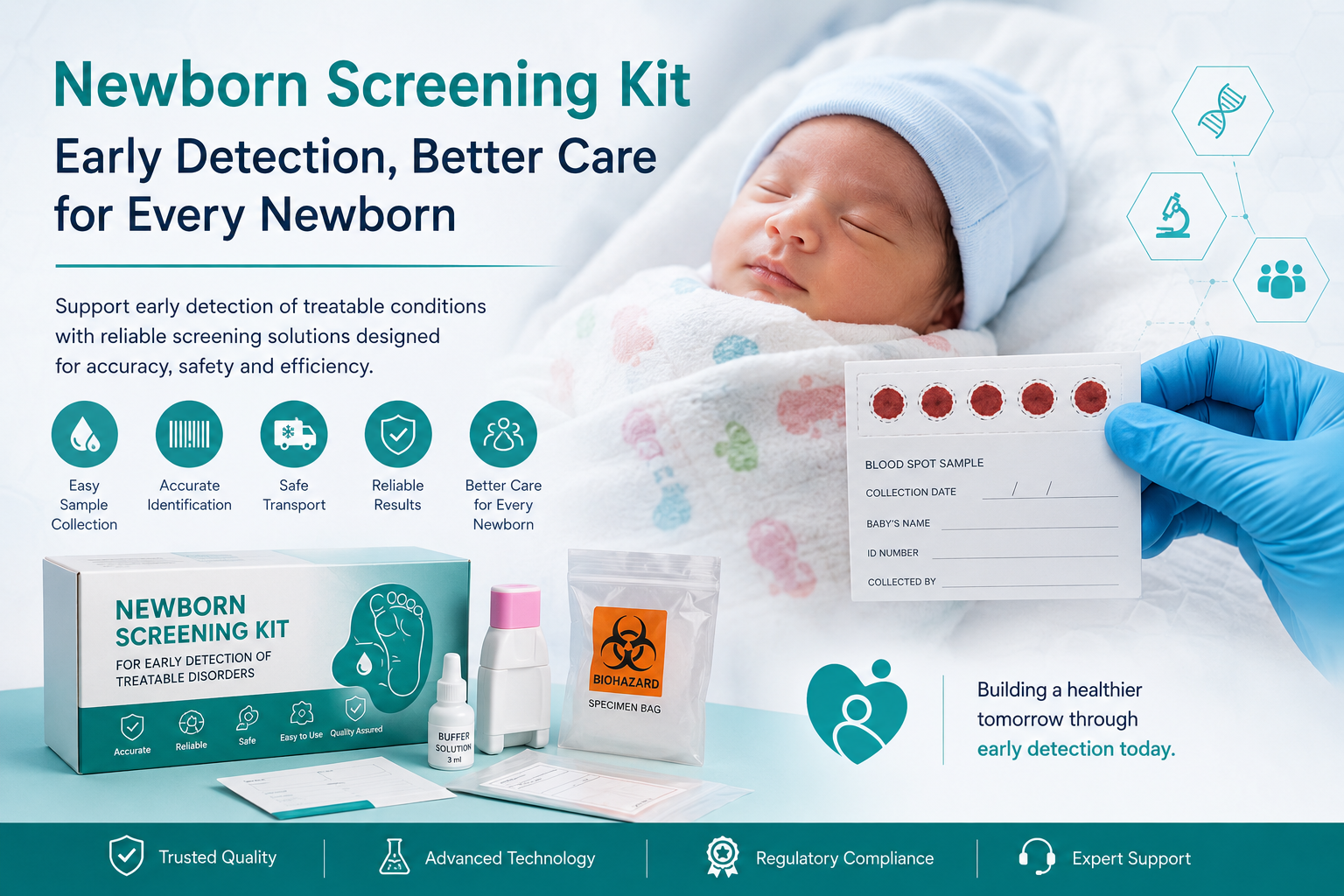
Newborn screening is an important part of modern healthcare because it helps identify certain health conditions in babies before noticeable symptoms appear. Early identification can allow healthcare professionals to begin appropriate monitoring, diagnosis, and treatment at the right time. A reliable Newborn Screening Kit can help healthcare providers efficiently collect and process samples while maintaining the accuracy and consistency required for screening programmes.
As newborn screening programmes continue to expand across hospitals, maternity centres, diagnostic laboratories, and public health initiatives, healthcare organisations need dependable screening solutions that fit their workflow. Choosing suitable screening equipment and working with experienced NewBorn Screening Companies can help healthcare facilities establish an efficient screening process.
What Is Newborn Screening?
Newborn screening is a preventive healthcare programme performed shortly after birth to check babies for selected congenital, metabolic, endocrine, genetic, and other conditions. Many of these conditions may not show obvious signs during the first few days of life. Screening helps identify babies who may require further diagnostic evaluation.
The screening process generally involves collecting a small biological sample from the newborn, processing it using an appropriate laboratory method, and evaluating the results against established screening criteria. A positive screening result does not necessarily confirm a disease. Instead, it indicates that additional diagnostic testing may be required.
Early screening can therefore help healthcare teams make timely clinical decisions and provide appropriate follow-up care.
Importance of a Reliable Newborn Screening Kit
Sample collection and handling are critical stages of newborn screening. A well-designed Newborn Screening Kit can help standardise these steps and reduce avoidable variations during sample collection.
Depending on the screening programme and testing methodology, a kit may include components required for sample collection, identification, transportation, and laboratory processing. Standardised kits can help healthcare professionals follow established procedures more consistently.
A suitable kit should support:
-
Convenient and standardised sample collection
-
Accurate patient identification and documentation
-
Safe handling and transportation of samples
-
Compatibility with the intended screening workflow
-
Consistent laboratory processing
-
Efficient sample management
-
Reliable quality control procedures
Healthcare facilities should select screening solutions according to their clinical requirements, laboratory workflow, applicable regulations, and the conditions being screened.
Conditions That Can Be Identified Through Screening
The specific conditions included in newborn screening programmes vary between countries, regions, and healthcare systems. Depending on the programme, screening may cover selected metabolic disorders, endocrine disorders, haemoglobin-related conditions, genetic disorders, and other congenital conditions.
The purpose of screening is not to replace diagnostic testing. Instead, it helps identify newborns who may benefit from additional investigation. This makes screening an important first step in a broader pathway involving confirmatory testing, clinical assessment, treatment, and long-term follow-up where necessary.
Healthcare professionals should therefore interpret screening results within the appropriate clinical context and follow established protocols for positive or inconclusive results.
Choosing the Right Newborn Screening Kit
When evaluating a Newborn Screening Kit, healthcare providers should consider more than just the individual components included in the package. The solution should fit into the complete screening workflow, from sample collection through laboratory analysis and reporting.
Important considerations include sample requirements, ease of use, labelling and identification, transportation requirements, storage conditions, compatibility with testing methods, and quality assurance procedures.
Healthcare organisations should also consider supplier experience, technical support, product documentation, regulatory requirements, and supply continuity. These factors can be particularly important for hospitals and laboratories managing a high volume of newborn screening samples.
Role of NewBorn Screening Companies
Experienced NewBorn Screening Companies play an important role in supporting healthcare organisations with screening products and solutions. Beyond supplying individual products, established companies can provide solutions designed around sample collection, laboratory workflows, testing requirements, and quality management.
When evaluating potential suppliers, healthcare providers can consider their experience in newborn screening, product quality systems, technical expertise, manufacturing capabilities, regulatory compliance, and after-sales support.
A reliable supplier should also understand the practical challenges faced by hospitals and laboratories. Consistent product availability, clear documentation, responsive technical assistance, and appropriate training can contribute to a smoother screening programme.
Improving Newborn Screening Workflows
Efficient newborn screening requires coordination between maternity units, healthcare professionals, laboratories, and follow-up services. Standardised procedures can help minimise errors during sample collection, identification, transportation, and processing.
Digital documentation and laboratory information systems can further support sample traceability and result management. When combined with appropriate screening kits and established quality-control procedures, these technologies can help healthcare organisations improve operational efficiency.
Regular staff training is also important. Healthcare professionals involved in newborn screening should understand sample collection procedures, identification requirements, storage and transportation conditions, and the appropriate response to screening results.
Supporting Early Healthcare Decisions
The value of newborn screening extends beyond the initial test. Early identification can create an opportunity for healthcare teams to investigate potential conditions before clinical symptoms become apparent. Timely follow-up may support earlier intervention when a condition is confirmed.
For parents and families, an organised screening pathway can also provide reassurance that their newborn is being assessed according to established healthcare protocols. Effective communication is essential, particularly when explaining that a screening result is not the same as a confirmed diagnosis.
Conclusion
A dependable Newborn Screening Kit can be an important component of an effective newborn screening programme. From sample collection and identification to laboratory processing and follow-up, every stage of the screening pathway requires appropriate procedures, quality controls, and reliable solutions.
Healthcare providers should evaluate Newborn Screening Companies based on product quality, technical expertise, regulatory considerations, workflow compatibility, and ongoing support. With the right screening solutions and a well-managed clinical process, hospitals and laboratories can strengthen newborn screening programmes and support timely healthcare decisions for infants.
Trivitron Healthcare provides healthcare and diagnostic solutions that meet modern clinical and laboratory requirements. Its newborn screening solutions can help healthcare organisations build efficient screening workflows while maintaining a focus on quality, reliability, and patient care.

 English
 French
 Spanish
 Portuguese
 Deutsch
 Turkish
 Dutch
Dutch
 Italiano
 Russian
 Romaian
 Portuguese (Brazil)
 Greek
Greek
