


The Secure Evolution: A Deep Dive into the Global Cardless ATM Industry
The Dawn of Digital Cash Access
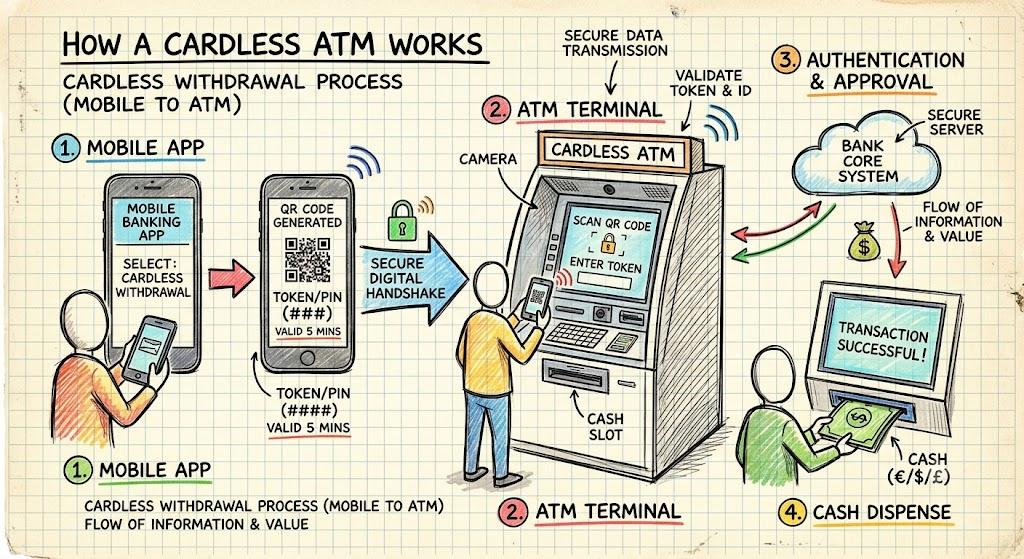
The financial services sector is in the midst of a profound digital transformation, and nowhere is this more apparent than at the point of cash withdrawal. The traditional reliance on physical plastic cards is steadily giving way to a more secure, convenient, and modern method of accessing funds. The global Cardless ATM industry represents this paradigm shift, encompassing the technologies, software, and hardware that allow consumers to withdraw cash using their smartphones or other digital identifiers instead of a debit card. This evolution is driven by overwhelming consumer demand for seamless mobile-centric experiences and a pressing need from financial institutions to combat card-related fraud, such as skimming. By leveraging technologies like QR codes, Near Field Communication (NFC), and app-generated one-time passcodes, the cardless ATM industry is fundamentally redefining the user experience at the terminal. It transforms the ATM from a simple cash dispenser into a dynamic, interactive endpoint of a bank's digital ecosystem, enhancing customer engagement and operational efficiency. This transition is not merely an incremental upgrade but a foundational change in how physical cash and digital banking intersect in the 21st century.
An Ecosystem of Collaborative Innovation
The cardless ATM industry is not built by a single entity but is a complex ecosystem of collaborating players. At its core are the financial institutions—banks and credit unions—that drive adoption by integrating cardless functionality into their mobile banking applications. They are the primary interface with the end consumer. Supporting them are the major ATM manufacturers, such as Diebold Nixdorf, NCR Corporation, and Hyosung. These hardware giants are pivotal, developing new ATM models with built-in NFC readers and high-resolution screens for QR codes, as well as offering software and hardware upgrade kits for the millions of legacy machines already in the field. Alongside them are the specialized software and fintech companies that often provide the underlying technology platform. These firms develop the secure transaction protocols, the mobile software development kits (SDKs) that banks integrate into their apps, and the backend systems that authenticate and process the cardless requests. This symbiotic relationship between banks, hardware manufacturers, and software innovators is essential for creating a secure, reliable, and user-friendly cardless experience, ensuring interoperability and driving the market forward.
Economic Drivers and Security Imperatives
The rapid expansion of the cardless ATM industry is propelled by strong economic incentives and critical security imperatives. For financial institutions, the return on investment is multi-faceted. Firstly, cardless transactions significantly mitigate the risk of card skimming, a prevalent form of fraud that costs the industry billions annually. By removing the physical card from the transaction, the primary vector for skimming attacks is eliminated. Secondly, it reduces operational costs associated with physical card issuance, replacement of lost or stolen cards, and dispute resolution related to fraud. From a customer relationship perspective, offering a modern, convenient feature like cardless withdrawal is a powerful tool for attracting and retaining tech-savvy customers, particularly younger demographics who are mobile-native and expect seamless digital experiences. The convenience factor of not needing to carry a physical wallet, coupled with the enhanced security of two-factor authentication (e.g., phone and PIN/biometric), creates a compelling value proposition that drives consumer adoption and reinforces the bank’s image as a technology leader.
Navigating the Challenges to Widespread Adoption
Despite its clear benefits and strong growth trajectory, the cardless ATM industry faces several challenges that must be addressed for universal adoption. The most significant hurdle is the cost and logistical complexity of upgrading the vast existing global fleet of ATMs. While new machines often come with cardless capabilities, retrofitting older models with NFC readers, QR code scanners, and the necessary software can be a substantial capital expense for banks and independent ATM operators. Another challenge is the lack of universal interoperability. Currently, most cardless solutions are proprietary to a specific bank or network; a customer of Bank A cannot typically use their app to perform a cardless transaction at an ATM owned by Bank B. Establishing a standardized, open protocol for cardless transactions across different institutions is a crucial next step for creating a truly seamless user experience. Furthermore, issues of digital literacy and the digital divide must be considered, ensuring that customers who are less tech-savvy or lack a smartphone are not left behind as the industry transitions.
Explore More Like This in Our Reports:
Customer Information System Market

 English
 Arabic
 French
 Spanish
 Portuguese
 Turkish
 Dutch
Dutch
 Italiano
 Russian
 Romaian
 Portuguese (Brazil)
 Greek
Greek
