


How Can Real Estate Software Dubai Solutions Improve Property Management and Sales?
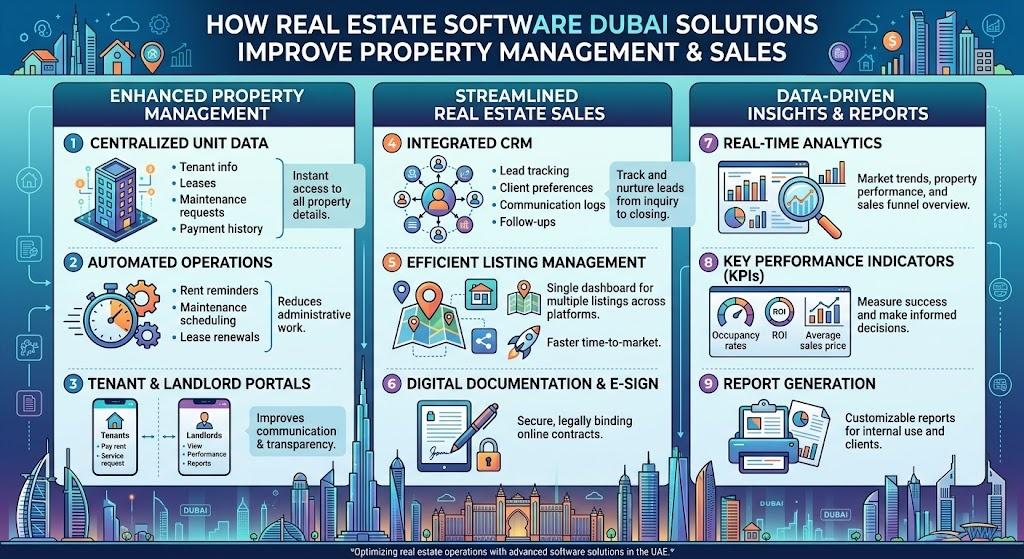
Dubai's property market has grown into one of the most dynamic and competitive real estate ecosystems in the world. With thousands of listings, a high volume of investor interest from abroad, and a fast-moving sales cycle, property companies operating in the emirate face a unique set of operational challenges. Manual processes, scattered spreadsheets, and disconnected communication channels simply cannot keep pace with the speed and scale required today. This is where real estate software Dubai solutions step in, offering brokerages, developers, and property managers the tools they need to run leaner, smarter, and more profitable operations.
In this article, we explore how modern real estate software is reshaping property management and sales across Dubai, and why adopting the right platform can be the difference between a thriving agency and one left behind.
The Growing Need for Real Estate Technology in Dubai
Dubai's real estate sector is shaped by a few defining characteristics: a large percentage of international buyers, a fast transaction pace, strict regulatory requirements from bodies like the Dubai Land Department (DLD) and RERA, and a highly competitive brokerage landscape. Agencies that still rely on manual data entry, paper contracts, or basic spreadsheets often struggle with lost leads, delayed follow-ups, and inconsistent reporting.
As the market has matured, so have client expectations. Buyers and tenants now expect instant responses, digital documentation, virtual property tours, and transparent communication throughout the transaction. Meeting these expectations at scale is nearly impossible without a centralized software system that connects every part of the business, from marketing to closing.
Centralizing Property Listings and Data
One of the most immediate benefits of real estate software is the ability to centralize all property data in one place. Instead of maintaining separate lists for available units, sold properties, and pending deals across multiple spreadsheets or email threads, agents and managers can access a single, real-time database.
Unified Property Database
A unified database ensures that every team member, whether in sales, marketing, or operations, is working from the same accurate information. This eliminates the common problem of two agents pitching the same unit to different clients or providing outdated pricing information.
Automated Portal Syndication
Most real estate platforms built for the Dubai market include integrations with major property portals such as Bayut, Property Finder, and Dubizzle. Instead of manually re-entering listing details on each site, agencies can publish once and automatically syndicate across multiple channels, saving hours of administrative work every week.
Streamlining Lead Management and Sales Pipelines
Sales performance in real estate is heavily dependent on how quickly and effectively leads are followed up. A well-designed CRM built into real estate software gives sales teams the structure they need to convert more inquiries into closed deals.
Lead Capture and Distribution
Leads generated from property portals, social media campaigns, or the company website can be automatically captured and routed to the right agent based on predefined rules, such as location specialty, language, or workload. This reduces response times dramatically, which is critical in a market where buyers often reach out to several agencies simultaneously.
Pipeline Visibility and Forecasting
Sales managers gain a clear view of where every deal stands, from initial inquiry to viewing, negotiation, and closing. This visibility allows for more accurate revenue forecasting and helps identify bottlenecks in the sales process before they affect overall performance.
Automated Follow-Ups
Automated reminders and drip email or WhatsApp sequences ensure that no lead falls through the cracks. Even when agents are juggling dozens of active clients, the system prompts timely follow-ups, which significantly improves conversion rates over time.
Enhancing Property Management Efficiency
Beyond sales, real estate software plays a critical role in the day-to-day management of rental and owned properties. This is particularly valuable for property management companies overseeing large portfolios across multiple Dubai communities.
Tenant and Lease Management
Digital lease tracking allows property managers to monitor renewal dates, rent escalation clauses, and Ejari registration status without digging through paper files. Automated alerts notify staff well ahead of lease expirations, reducing vacancy periods and missed renewal opportunities.
Maintenance and Service Requests
Tenants can submit maintenance requests directly through a portal or mobile app, which are then automatically assigned to the appropriate vendor or in-house technician. This creates a transparent audit trail and improves tenant satisfaction, since issues are resolved faster and with clear communication.
Financial and Rent Collection Tracking
Automated invoicing, payment reminders, and integration with UAE-compliant payment gateways simplify rent collection significantly. Property managers can generate real-time financial reports showing occupancy rates, collected versus outstanding rent, and overall portfolio performance without manual reconciliation.
Supporting Regulatory Compliance
Operating in Dubai's real estate sector means adhering to specific local regulations, including RERA registration requirements, DLD transaction protocols, and Ejari lease registration. Purpose-built real estate software often includes compliance features that reduce the administrative burden on agencies.
Document Management and Audit Trails
Digital storage of trade licenses, RERA certificates, tenancy contracts, and transaction documents ensures everything is organized and retrievable during audits or disputes. Version histories and audit trails add another layer of accountability that manual filing systems simply cannot match.
Standardized Contracts and Forms
Built-in templates aligned with DLD and RERA standards help agents generate accurate, compliant contracts quickly, reducing the risk of errors that could delay or invalidate a transaction.
Improving the Client Experience
Modern buyers and tenants judge real estate companies not just on the properties available, but on how smooth the overall experience feels. Software solutions directly influence this perception.
Virtual Tours and Digital Marketing Tools
Integrated tools for 3D virtual tours, high-quality photography management, and social media scheduling allow agencies to market properties more effectively, reaching a wider pool of local and international buyers without extra manual effort.
Self-Service Client Portals
Many platforms now offer client-facing portals where buyers or tenants can view documents, track application status, make payments, and communicate with their agent, all in one place. This transparency builds trust and reduces the volume of routine status-check calls agents need to handle.
Data-Driven Decision Making
Perhaps the most transformative benefit of real estate software is the shift from gut-feeling decisions to data-driven strategy. Dashboards and analytics tools consolidate information on sales performance, marketing ROI, agent productivity, and portfolio health.
Performance Analytics
Management can identify top-performing agents, best-converting lead sources, and underperforming listings, allowing for targeted coaching and smarter marketing budget allocation.
Market Trend Insights
Some platforms incorporate market data feeds, helping agencies benchmark pricing against comparable properties and advise clients with greater confidence and accuracy.
Choosing the Right Software Partner
With numerous vendors offering real estate software Dubai solutions, agencies should evaluate platforms based on local market fit, including RERA and DLD compliance features, portal integration capabilities, Arabic and English language support, and proven scalability for growing portfolios. A platform that is generic or built primarily for other markets may lack the localized features that make daily operations genuinely easier.
Conclusion
The Dubai real estate market rewards speed, accuracy, and professionalism, qualities that are difficult to maintain consistently without the right technology backbone. Real estate software solutions tailored to the Dubai market help agencies and property managers centralize data, streamline sales pipelines, automate property management tasks, maintain regulatory compliance, and deliver the kind of client experience that today's buyers and tenants expect. For any real estate business looking to scale sustainably in this competitive landscape, investing in the right software is no longer optional, it is a foundational business decision.

 English
 Arabic
 French
 Portuguese
 Deutsch
 Turkish
 Dutch
Dutch
 Italiano
 Russian
 Romaian
 Portuguese (Brazil)
 Greek
Greek
