


What Can Mansen Inflatable Tent Manufacturer Offer For Outdoor Events
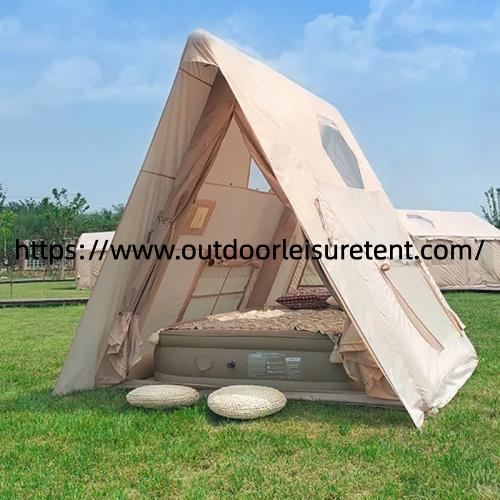
Inflatable Tent Manufacturer selection should begin with clear questions rather than a simple price comparison. Buyers need to understand fabric specifications, seam construction, inflation methods, dimensions, anchoring, customization, packaging, testing, and production schedules before approving an order. Current B2B buying guidance also recommends checking material details, blower arrangements, safety documentation, spare parts, and customization timing before committing to a commercial purchase.
The first question should concern the intended application. A structure designed for weekend camping may have different requirements from one used at exhibitions, weddings, festivals, sports activities, or promotional events. Buyers should explain where the product will be used, how often it will be installed, how many people it needs to accommodate, and whether transportation is frequent. This information gives the manufacturer a useful starting point for recommending suitable configurations.
Material specifications deserve careful attention. Instead of asking only whether a fabric is waterproof, buyers can request the actual fabric type, denier, coating, thickness, weight, and available testing information. Oxford fabric, PVC, and TPU can provide different combinations of flexibility, weight, weather suitability, and handling characteristics. The right selection depends on the intended application and operating environment. Recent sourcing guides also emphasize comparing material specifications rather than relying on broad material names alone.
Seam construction is another area worth discussing. Buyers should ask how seams are joined, which areas receive additional reinforcement, and how leakage or pressure retention is checked. For structures that use continuous airflow, the condition of seams, valves, air channels, and connection points can affect the overall setup. A sample allows buyers to inspect these details directly instead of relying entirely on product photographs.
The inflation system should receive its own set of questions. Buyers can ask whether the structure uses continuous airflow or a sealed air system, what blower specifications are recommended, how much power is required, and whether a backup connection is available. These details matter when products are used for several hours at an event or when electrical conditions vary between venues. Some commercial buyers also request replacement blower information before placing an order.
Weather conditions should be discussed in practical terms. Rain, wind, sunlight, humidity, and ground conditions can differ greatly between regions. Rather than relying on general weather claims, buyers can request applicable test information and installation guidance. Wind tolerance should be connected with the recommended anchoring system and actual site conditions. A manufacturer should also clarify which conditions require the structure to be taken down.
Anchoring is particularly important for outdoor applications. Buyers should ask which ground stakes, ropes, weights, or other components are supplied and which surfaces they are designed for. Grass, soil, asphalt, concrete, and sand may require different solutions. Venue requirements should also be reviewed before installation. A suitable structure still needs an appropriate anchoring plan for its operating environment.
Customization is often a major consideration for retailers and event companies. Buyers can ask about fabric colors, printed graphics, logo placement, removable panels, entrances, windows, internal layouts, and accessories. They should also confirm artwork requirements and request a digital proof before production. Custom print timing can affect the overall purchasing schedule, so it is useful to confirm production arrangements before approving an order.
Minimum order quantity is another practical question. A buyer testing a new market may prefer a smaller trial order, while an established distributor may require several configurations at once. Customization level can influence production quantities and preparation time. Current sourcing information shows that order quantities vary considerably according to whether a product uses stock specifications, branding changes, or a fully customized structure.
Production capacity should also be discussed. Buyers can ask about monthly output, quality inspection procedures, sample approval, production scheduling, and how changes are handled after approval. A useful production conversation should make responsibilities clear on both sides. Buyers can also request information about replacement valves, blowers, repair materials, and other components that may be needed during regular commercial use.
Packaging is easy to overlook during the quotation stage. Yet package dimensions and weight can affect warehouse space, shipping arrangements, and handling costs. Buyers should confirm the package contents, carton dimensions, product labels, instruction materials, and accessory list. For customized orders, packaging can also carry brand information that needs to match the approved artwork.
Mansen develops outdoor shelter products with attention to practical configurations, materials, customization, and manufacturing requirements. Buyers can discuss product dimensions, fabric choices, printing, accessories, packaging, and intended applications according to their individual markets. This approach allows each order to begin with a clearer understanding of what the customer actually needs.
A sample inspection is a useful step before bulk production. Buyers can inflate the structure, check the air system, inspect seams and connection points, review the fabric, test entrances and windows, and examine the packing method. It is also helpful to record approved specifications so that future orders can be compared against the same reference.
Communication should continue after the sample stage. Buyers can confirm production dates, inspection arrangements, packaging requirements, shipping preparation, and replacement component availability before the order is finalized. Clear written specifications reduce uncertainty and make it easier for both parties to identify changes before production begins.
For retailers, event companies, distributors, and outdoor brands, choosing a supplier is ultimately about matching product details with real market requirements. Asking precise questions about materials, structure, inflation, anchoring, customization, testing, packaging, and production can make the purchasing process more practical.
Mansen offers outdoor shelter solutions for different applications and purchasing requirements. Buyers can review available product information and configurations at https://www.outdoorleisuretent.com/ and use those details as a starting point for discussing suitable specifications, customization options, and production needs.

 English
 Arabic
 French
 Spanish
 Portuguese
 Turkish
 Dutch
Dutch
 Italiano
 Russian
 Romaian
 Portuguese (Brazil)
 Greek
Greek
