


What Happens When Anxiety Starts Interfering With Work, Relationships, or Daily Life?
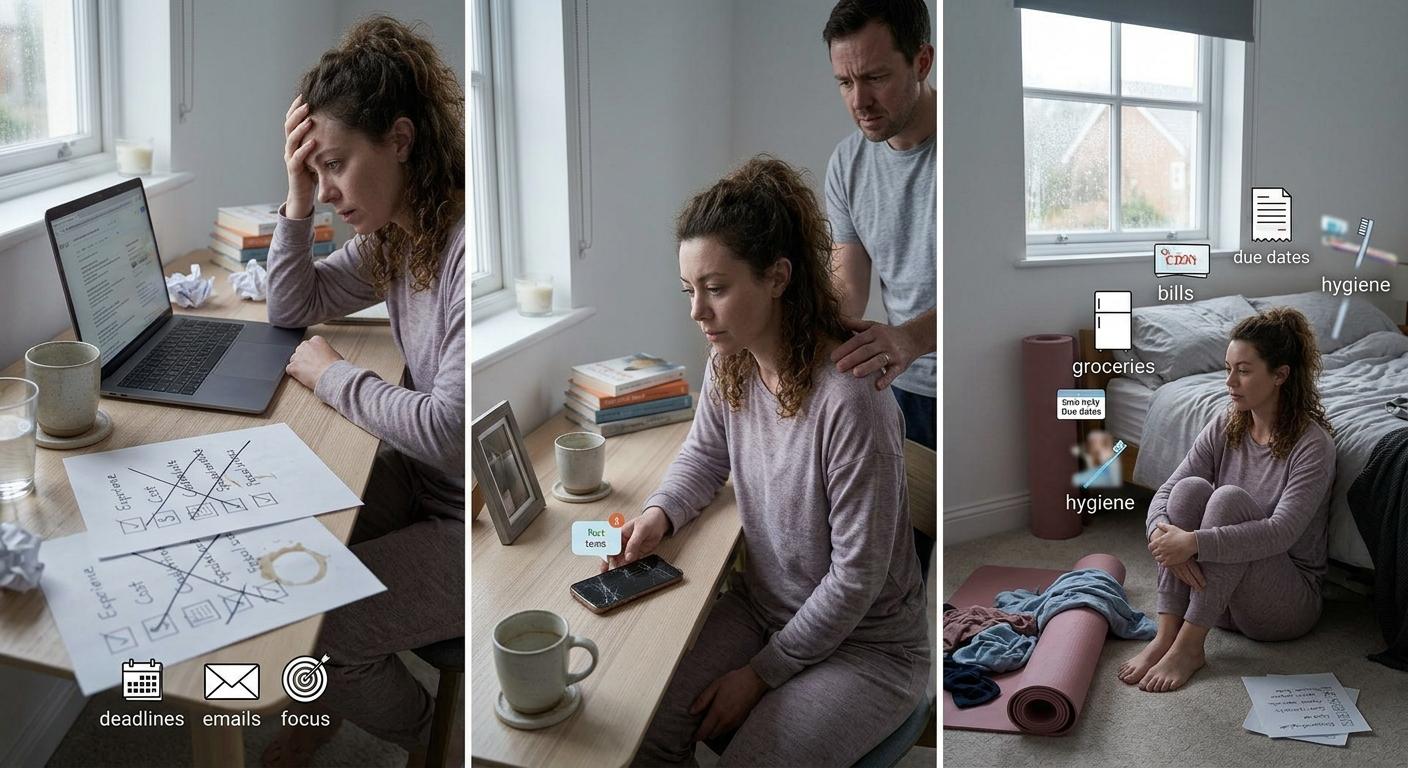
Anxiety becomes more concerning when it stops feeling like an occasional response to pressure and begins affecting how you function day to day. You may find it harder to concentrate at work, avoid social situations, struggle to communicate with people you care about, or spend much of your time anticipating problems. Anxiety affecting daily life can also influence sleep, motivation, decision-making, and physical well-being. Recognizing these changes can help you understand when ordinary worry may have developed into a problem worth discussing with a mental health professional.
What Does Anxiety Look Like in Everyday Life?
Anxiety is a normal human response to perceived threats, uncertainty, or stressful situations. It can help you prepare for an important presentation, exam, interview, or difficult conversation.
The problem is not necessarily experiencing anxiety.
The bigger question is what anxiety is making you do—or preventing you from doing.
Someone might worry about an upcoming work deadline and then return to normal once it is completed. Another person may continue worrying long after the situation has passed, repeatedly checking their work, imagining negative outcomes, or struggling to concentrate on anything else.
Anxiety can involve emotional, physical, cognitive, and behavioral symptoms. These may include:
-
Persistent worry
-
Restlessness or feeling on edge
-
Irritability
-
Difficulty concentrating
-
Muscle tension
-
Sleep difficulties
-
Rapid heartbeat
-
Avoidance of stressful situations
-
Repeated reassurance-seeking
-
Difficulty relaxing
Not everyone experiences anxiety in the same way, and experiencing one of these symptoms does not automatically mean that someone has an anxiety disorder.
What matters is the overall pattern and its effect on your life.
When Does Anxiety Become a Problem?
Anxiety may deserve closer attention when it becomes persistent, difficult to control, or disproportionate to the situation and begins interfering with everyday functioning.
For example, you may technically be going to work every day but find that most of your mental energy is spent worrying. You may still attend social events but constantly think about what other people might be thinking about you.
This distinction is important.
Functioning is not always the same as feeling well.
Someone can continue meeting responsibilities while experiencing significant internal distress.
NIMH explains that anxiety-related symptoms can become clinically significant when they interfere with daily activities and responsibilities.
How Can Anxiety Affect Your Work?
Work often requires concentration, decision-making, communication, and the ability to handle uncertainty.
Persistent anxiety can make each of these more difficult.
Difficulty Concentrating
You may sit in front of a task while your mind keeps returning to unrelated worries.
Instead of focusing on:
“What do I need to complete?”
your thoughts may repeatedly move toward:
“What if something goes wrong?”
This can make ordinary tasks take longer.
Fear of Making Mistakes
Anxiety may cause you to repeatedly check emails, documents, presentations, or completed tasks because you are afraid of making an error.
Reviewing your work is normal.
Repeated checking because you cannot tolerate uncertainty can become exhausting.
Avoiding Responsibilities
You might postpone meetings, difficult conversations, presentations, applications, or assignments because thinking about them makes you anxious.
Avoidance can provide temporary relief.
However, when avoidance becomes the main way you manage anxiety, the situation may become harder to handle over time.
Reduced Productivity
An anxious mind can spend considerable energy anticipating possible problems.
That mental load can leave less attention available for actual work.
The result may be missed deadlines, unfinished tasks, difficulty making decisions, or feeling exhausted by responsibilities that previously felt manageable.
How Can Anxiety Affect Relationships?
Anxiety does not only happen inside your own thoughts.
It can change how you communicate and respond to other people.
Seeking Reassurance
You might repeatedly ask:
-
“Are you sure everything is okay?”
-
“Are you upset with me?”
-
“Did I do something wrong?”
-
“Do you think they dislike me?”
Occasional reassurance is normal.
But repeatedly needing reassurance may become a cycle in which relief lasts only temporarily before the worry returns.
Becoming More Irritable
When your nervous system feels constantly activated, small frustrations may feel much larger.
You might become impatient, defensive, or emotionally overwhelmed during conversations.
This can create misunderstandings even when anxiety—not anger—is the underlying issue.
Avoiding Social Situations
You may decline invitations, avoid phone calls, stay quiet during conversations, or stop participating in activities because you are worried about being judged, embarrassed, rejected, or misunderstood.
Over time, avoiding situations that make you anxious can shrink your social world.
Difficulty Being Present
Another subtle effect is mentally being somewhere else while physically being with someone.
You may be having dinner with your family while thinking about tomorrow's work.
You may be talking with a friend while replaying something you said earlier.
You may be spending time with your partner while worrying about what could go wrong.
This can make meaningful relationships feel less emotionally satisfying.
Can Anxiety Affect Sleep and Physical Well-Being?
Yes.
Anxiety can involve both psychological and physical symptoms.
Some people experience:
-
Muscle tension
-
Fatigue
-
Restlessness
-
Headaches
-
Stomach discomfort
-
Rapid heartbeat
-
Sweating
-
Sleep difficulties
An anxious mind may continue thinking about possible problems when you are trying to sleep.
Then poor sleep can make concentration, patience, and emotional regulation more difficult the following day.
This can create a frustrating cycle:
Worry → difficulty sleeping → fatigue → reduced coping ability → more worry.
Persistent physical symptoms should not automatically be assumed to be caused by anxiety. Some physical symptoms can have medical causes, so appropriate healthcare evaluation may be important when symptoms are new, severe, or unexplained.
Why Does Avoiding Anxiety-Producing Situations Sometimes Make Things Worse?
Avoidance can feel like an effective solution because it provides immediate relief.
Imagine that speaking during meetings makes you extremely anxious.
You avoid the next meeting.
Your anxiety drops.
That relief can teach your brain:
“Avoiding the meeting kept me safe.”
The next meeting may therefore feel even more threatening.
This does not mean that every situation should be forced or that exposure is appropriate for everyone. It means that persistent avoidance can become part of an anxiety cycle.
A mental health professional can help determine whether avoidance is contributing to your difficulties and whether a structured treatment approach could help.
What Are Signs That Anxiety Is Interfering With Your Daily Functioning?
There is no single symptom that determines whether anxiety has become a serious concern.
Instead, look for changes across different areas of life.
You may want to pay attention if:
-
Worry occupies a large part of your day
-
You have difficulty controlling anxious thoughts
-
Sleep has changed
-
Work or school performance is declining
-
You frequently avoid responsibilities
-
You have stopped enjoying normal activities
-
Relationships are becoming strained
-
You constantly seek reassurance
-
Physical symptoms occur repeatedly
-
Decision-making has become difficult
-
You feel exhausted from managing worry
-
Your normal routine is becoming harder to maintain
The more areas affected—and the longer those changes continue—the more useful it may be to seek professional guidance.
How Can You Tell the Difference Between Normal Worry and a Larger Anxiety Problem?
Consider the situation, intensity, duration, and consequences.
Normal Worry
You may worry before an important event.
You feel nervous, but the situation passes and you return to your normal routine.
Potentially More Concerning Anxiety
You may continue worrying even when there is no immediate threat.
The worry is difficult to control, repeatedly returns, and begins affecting sleep, concentration, relationships, work, or other responsibilities.
The distinction is not always obvious.
That is why you do not need to diagnose yourself before asking for help.
A qualified professional can discuss your symptoms, circumstances, and functioning with you and help determine what type of support may be appropriate.
What Can You Do When Anxiety Starts Affecting Your Life?
The first step is not necessarily to eliminate anxiety completely.
Instead, identify how it is affecting you.
Notice the Pattern
Write down:
-
What situations trigger your anxiety
-
What thoughts appear
-
What physical symptoms occur
-
What you do in response
-
Whether you avoid anything
-
How long the distress lasts
-
What helps you recover
Patterns can be easier to recognize when you see them written down.
Keep Helpful Daily Habits
Regular sleep, physical activity, nutritious meals, social connection, relaxation practices, and realistic scheduling can support overall mental health.
These habits are not a replacement for treatment when significant symptoms persist, but they can be useful parts of a broader approach to well-being.
Reduce the Cycle of Constant Reassurance
If you repeatedly search online, ask others for reassurance, or check something over and over because of anxiety, notice whether the relief lasts.
If it disappears quickly and the same concern returns, discussing the pattern with a professional may be more useful than repeatedly seeking temporary reassurance.
Talk to Someone You Trust
You do not have to explain everything perfectly.
You can simply say:
“I've noticed that my anxiety is starting to affect my daily life.”
That can be enough to begin a conversation.
When Should You Consider Professional Help?
Professional support may be worth considering when anxiety is:
-
Persistent
-
Increasing in intensity
-
Difficult to control
-
Affecting sleep
-
Interfering with work or school
-
Creating relationship problems
-
Causing significant avoidance
-
Making normal responsibilities difficult
-
Preventing you from participating in activities you value
You also do not have to wait until anxiety becomes severe.
Early conversations can help you understand what you are experiencing and explore possible approaches before the problem becomes more disruptive.
Psychotherapy is one common treatment option for anxiety disorders, and treatment may vary depending on the specific condition, symptoms, and individual circumstances.
What Can a Mental Health Professional Help With?
A mental health professional can help you look beyond individual symptoms and understand the larger pattern.
Depending on your situation, therapy may help you:
-
Identify anxiety triggers
-
Recognize unhelpful thought patterns
-
Develop coping skills
-
Reduce avoidance
-
Improve communication
-
Manage emotional responses
-
Address relationship difficulties
-
Build confidence in stressful situations
-
Work through traumatic experiences
-
Develop strategies for future challenges
Different types of therapy may be appropriate for different anxiety concerns. Cognitive behavioral therapy, for example, is commonly used for anxiety disorders and focuses on patterns involving thoughts and behaviors.
People looking for therapy, psychiatric care, or other mental health services can also explore NuTrans Health as one resource when considering professional support.
What If Anxiety Keeps Returning in the Future?
Recurring anxiety does not necessarily mean that previous progress was meaningless.
Life circumstances change.
A new job, relationship difficulty, health concern, loss, financial pressure, major transition, or other stressful event can reactivate anxiety.
The goal is not necessarily to reach a point where you never feel anxious again.
A more realistic goal is learning how to recognize anxiety earlier, respond to it effectively, and seek additional support when your usual strategies are no longer enough.
Building awareness can help you notice changes before they significantly disrupt your life.
How Can You Support Someone Whose Anxiety Is Affecting Their Life?
If someone you care about seems increasingly anxious, avoid telling them simply to “stop worrying.”
Instead:
-
Listen without immediately judging
-
Ask what they are experiencing
-
Avoid dismissing their concerns
-
Encourage appropriate professional support
-
Offer practical help when possible
-
Respect their decisions and boundaries
You cannot diagnose another person.
You can, however, let them know that they do not have to handle persistent distress alone.
Frequently Asked Questions
1. Can anxiety affecting daily life become worse over time?
It can, particularly when persistent anxiety leads to increasing avoidance, sleep disruption, isolation, or difficulties at work and in relationships. However, the course varies from person to person. Recognizing changes early and discussing them with a qualified professional can help identify appropriate support.
2. What should you do if anxiety continues affecting your work or relationships?
Pay attention to the specific patterns causing difficulty and consider discussing them with a mental health professional. Therapy may help address anxious thoughts, avoidance, communication difficulties, and other factors contributing to the problem.
3. Can you learn to manage anxiety better in the future?
Yes. Therapy and other evidence-based approaches can help people develop skills for recognizing triggers, changing unhelpful patterns, managing emotional responses, and handling future stressful situations. The most appropriate approach depends on the individual's needs.
4. When should you seek professional help for ongoing anxiety?
Consider seeking support when anxiety remains persistent, becomes difficult to control, or interferes with sleep, work, relationships, responsibilities, or activities you value. You do not need to wait until symptoms become overwhelming before discussing them with a professional.
5. What can happen if anxiety continues interfering with everyday life without support?
Persistent anxiety may contribute to ongoing avoidance, sleep problems, relationship difficulties, reduced concentration, and problems with daily functioning. The effects vary between people, so ongoing symptoms are worth discussing with a qualified healthcare or mental health professional.
Conclusion
Anxiety is not automatically a problem simply because you experience it. The more important question is whether it is changing how you work, sleep, communicate, maintain relationships, or participate in everyday life. When worry becomes persistent, difficult to control, or increasingly disruptive, it may be time to look beyond temporary relief and consider professional support. Paying attention to these changes early can help you understand what is happening, protect the parts of life that matter to you, and develop more sustainable ways of managing anxiety.

 English
 Arabic
 French
 Spanish
 Portuguese
 Deutsch
 Dutch
Dutch
 Italiano
 Russian
 Romaian
 Portuguese (Brazil)
 Greek
Greek
