


Wet Fuel Gas Is Wrecking Compressor Engines. A Natural Gas Dehydration Unit Is the Fix.
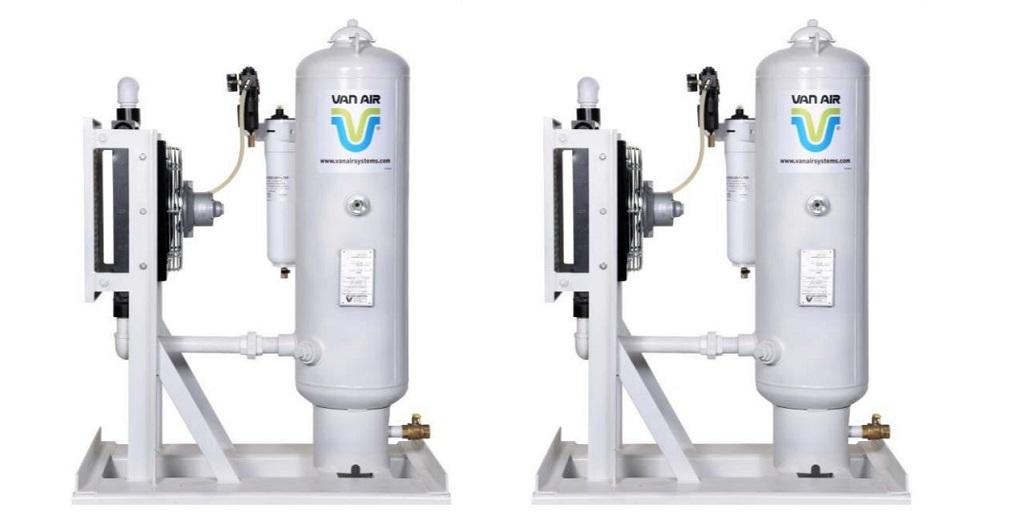
Most compressor engines at remote well sites run on fuel gas pulled straight from the wellhead or pipeline. That gas is convenient, it's already there, and it's usually wet. Fresh from a reservoir, natural gas carries water vapor to the point where it'll drop liquid the moment conditions let it. Run that into an engine without drying it first and you're not really running a gas engine—you're running a water delivery system that happens to also power a compressor.
The damage from wet fuel gas doesn't announce itself. Carbon builds on the valves slowly. Cylinder walls corrode. Combustion roughens in ways that are easy to read as normal aging until the equipment's been through two rebuilds and someone finally starts asking different questions. A natural gas dehydration unit installed upstream of the fuel gas equipment would interrupt that whole chain of events, but it's rarely what gets specified first.
What the Failure Looks Like Before Anyone Installs a Natural Gas Dehydration Unit
In warmer conditions, wet fuel gas is a slow problem. In cold weather, it gets acute fast. Water vapor in a fuel line that hits its dew point doesn't stay vapor—it condenses, and in freezing temperatures it turns to ice. A gas-fired heater protecting a tank battery goes cold. The flare pilot goes out. The compressor driving the operation shuts down for lack of fuel. Dew point control in the fuel gas stops being a background maintenance concern and becomes the reason the site is down.
Deliquescent dryers handle most of these applications because they need no electricity and work at pressures up to 1,450 PSIG. The desiccant tablets dissolve gradually as they pull moisture out, the liquid drains, and that's the whole system. For tighter specs, inline adsorbent dryers push the gas down to a -40°F dew point, also without power. A natural gas dehydration unit in either configuration sits in the fuel gas line and deals with moisture before it reaches anything combustion-related.
The Natural Gas Dehydration Unit That Should Have Been There From the Start
Gas dehydration equipment ranges from simple single-vessel installations to more involved systems depending on flow rates and dew point targets. Regenerative desiccant dryers, including molecular sieve dehydrator configurations, deliver continuous -40°F dew point and run on AC, 12VDC, or solar power, which covers most remote-site scenarios where electricity is limited but consistent drying is needed. Larger-scale natural gas processing operations typically use TEG dehydration units, where glycol regeneration strips moisture from the gas continuously without desiccant replacement. When liquid hydrocarbons or compressor oil also make it into the fuel gas, a coalescing gas dryer unit handles filtration alongside the dehydration stage.
The reason this equipment doesn't always show up in the original site design is that wet gas damage develops slowly enough to get misread. By the time the pattern becomes obvious, the site has already run through enough engine repairs to have paid for a natural gas dehydration unit several times over.
Hydrate Inhibition Is a Different Problem
Methanol or glycol injection at the wellhead suppresses hydrate formation in the pipeline—keeps ice-like crystals from growing and blocking the line. It's a legitimate approach to a real problem. Operators who run chemical hydrate inhibition sometimes assume the moisture issue is handled because of it, and it's not a strange assumption. Hydrate inhibition and gas dehydration address different things, though. Inhibition manages what the water does inside the pipeline. Dehydration removes it. An engine downstream of chemical injection is still running on wet fuel gas and will keep accumulating the same damage.
For fuel gas dryer configurations suited to compressor engines, pump jacks, and gas-fired production equipment, Air & Vacuum Process, Inc. stocks deliquescent, inline adsorbent, and regenerative options, including natural gas dehydration unit setups built for remote and off-grid installations.
For more information about Automatic Drain Valves and Silent Mini Air Compressor Please visit: Air & Vacuum Process Inc.

 English
 Arabic
 Spanish
 Portuguese
 Deutsch
 Turkish
 Dutch
Dutch
 Italiano
 Russian
 Romaian
 Portuguese (Brazil)
 Greek
Greek
